 Society
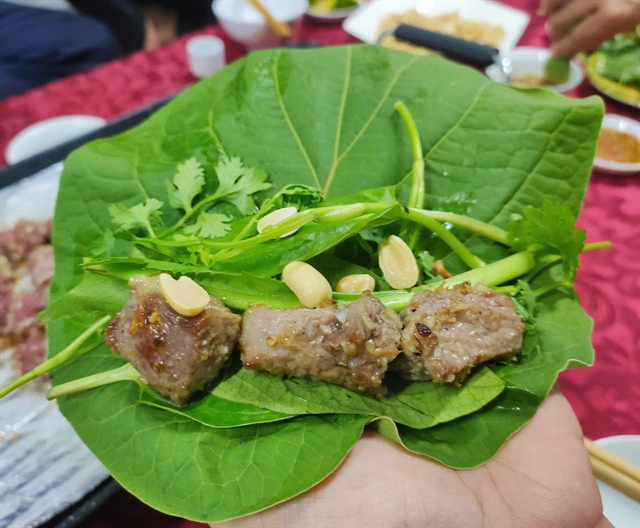
Goat meat offers a feast of choice for every diner
1.
|
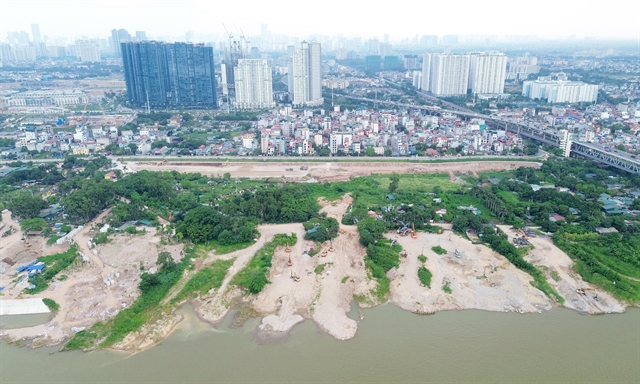
| Site clearance is underway for the first park along the Landscape Boulevard. — VNA/VNS Photo |
HÀ NỘI — Hà Nội authorities are seeking public feedback on a sweeping plan to overhaul nearly 11,500ha along the Red River, clearing the way for the landscape boulevard that would run the length of the city's Red River waterfront.
The proposed adjustment to the Red River urban master plan covers a 40-km stretch from Hồng Hà Bridge to Mễ Sở Bridge – about a third of the river's course through Hà Nội – spanning nine communes and seven wards, according to the draft now open for public comment.
At its core, the project would reorganise residential areas outside the dike system and knit together development on both banks of the river.
New urban space and services would line the main roads, with high-rise development clustered along key thoroughfares, kept low-density and tapering in height toward the dikes to preserve sightlines and airflow.
Buffer zones would separate high-rise clusters from existing villages, while traditional craft villages would be preserved and promoted for ecotourism, alongside upgraded schools, hospitals, cultural facilities, and green spaces.
A chain of riverside parks would run along the floodplain, linked to nearby neighbourhoods by east-west greenways, while flood-prone land beyond the secondary dikes would be turned into nature reserves.
Near Hà Nội's historic core, planners envision mixed-use hubs tied to cultural landmarks including Long Bien Bridge and the West Lake–Cổ Loa axis.
The corridor is divided into three segments.
The northern stretch, from Hồng Hà to Thăng Long bridges, spans about 3,436ha and is designated for ecological space, nature conservation, and sports and recreational parks, with a projected population of 160,000.
The middle segment, from Thăng Long to Thanh Trì bridges, is the largest and most significant at 4,548ha and roughly 541,000 residents, envisioned as the corridor's 'urban living room', concentrating commercial, cultural and public functions along with landmark developments linking the West Lake and Cổ Loa areas.
The southern segment, from Thanh Trì to Mễ Sở bridges, covers 3,435ha and about 499,000 people, and is slated for commercial, logistics and eco-agricultural tourism development tied to Thanh Trì Port, the Bát Tràng Pottery Village and other craft communities.
Across all three segments, building heights would be capped at 30 to 45 stories, with construction-density limits ranging from 35 to 40 per cent for residential blocks up to 60 per cent for commercial and public-service areas.
The plan also addresses Hà Nội's existing riverside villages, reviewing 12 craft-village clusters covering roughly 1,067ha. Eight would undergo selective renovation, two would be redeveloped, and two relocated entirely to comply with flood-control requirements.
On infrastructure, the boulevard itself would form two six-lane arterial roads flanking the river – a 35km route on the left bank and a 45.35-kilometre route on the right – backed by a wider network of urban roads.
River crossings would eventually total 17 bridges: six already in use, including Thăng Long, Nhật Tân, Long Biên, Chương Dương, Vĩnh Tuy and Thanh Trì; six under construction; and five more still in planning.
The area would also gain new and upgraded national rail lines, including a ring railway linked to national Ring Road 4, plus 11 urban metro lines passing through the corridor. Parking would be built into green spaces, public areas, interchanges and the space beneath elevated roads.
City officials plan to carry out the overhaul through 18 component projects between 2026 and 2038. The first phase, through 2030, will prioritise the boulevard itself, riverbank work, the central 'urban living room', and resettlement housing in Lĩnh Nam and Long Biên, with the remaining projects completed by 2038. — VNS
Society
 Society
 Society
 Society
 Society
 Society
 Society
 Society
 Society
 Society
 Society
 Society
 Society
 Society
 Society