 Sci-Tech

Siblings showcase artworks at Following Father’s Footsteps exhibition
1.
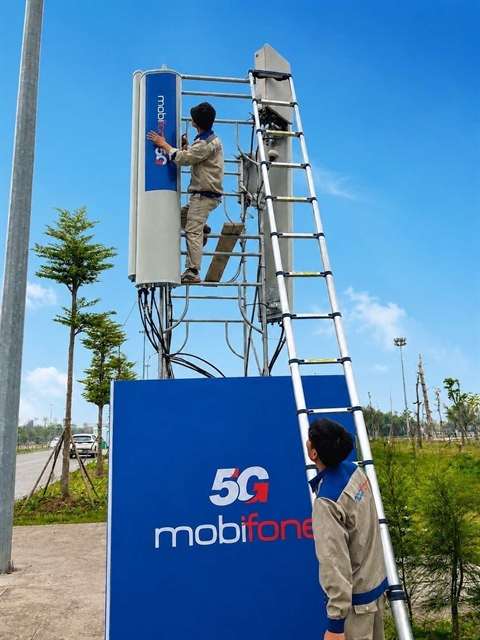 |
| Telecom operators are accelerating the rollout of 5G coverage across Hải Phòng City. VNA/VNS Photo Hoàng Ngọc |
HÀ NỘI — Việt Nam has reached a new milestone in digital infrastructure, entering the world’s top 10 countries for Internet speeds in both mobile and fixed broadband for the first time.
According to Ookla’s Speedtest Global Index for July 2026, Việt Nam’s mobile Internet ranking jumped 10 places to 10th globally, with a median download speed of 205.58 Mbps. Fixed broadband also continued its strong performance, rising to seventh worldwide with a median download speed of 307.11 Mbps.
The results reflect major improvements in Việt Nam’s telecommunications infrastructure following years of investment in fibre-optic networks and data centres, as well as the commercial rollout of 5G networks.
A remarkable leap
Việt Nam’s Internet speeds have made an exceptional jump in less than two years.
At the end of 2024, mobile Internet speeds stood at around 87 Mbps, ranking the country 37th globally.
By March 2025, the figure had risen to about 144 Mbps, putting the country among the world’s 20 fastest markets for the first time. Just over a year later, the speed surpassed 200 Mbps, propelling Việt Nam into the global top 10.
Fixed broadband has also recorded steady growth. From around 159 Mbps in early 2025, the median download speed nearly doubled to more than 307 Mbps by mid-2026, in a period of only about 18 months.
The pace of improvement is notable even compared with many developed economies. In Ookla’s July report, Việt Nam recorded one of the world’s strongest improvements in ranking, while most other markets saw relatively little change in their positions.
A major driver of the latest progress has been the nationwide deployment of 5G.
Unlike the earlier trial phase, since late 2024 Vietnamese telecom operators have accelerated investment in 5G coverage, expanded the number of base stations and upgraded transmission infrastructure. This has helped mobile Internet speeds rise rapidly.
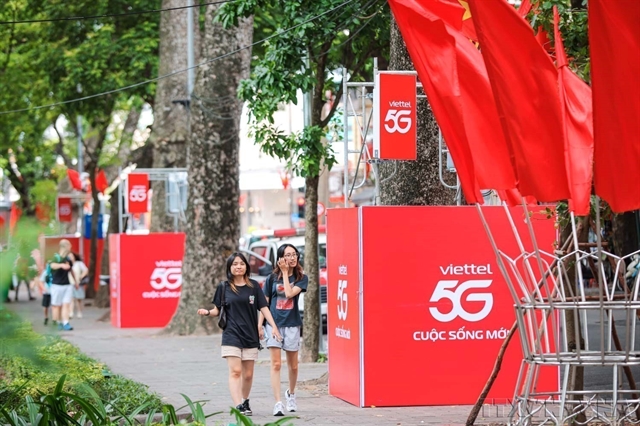 |
| A total of 1,700 5G base stations have been installed along streets across Hà Nội to meet residents’ and visitors’ Internet access needs during the National Day holiday. VNA/VNS Photo Hoàng Hiếu |
Data from the i-Speed measurement system of the Ministry of Science and Technology showed that 5G speeds in Việt Nam exceeded 594 Mbps in early 2026 and remained high at around 462 Mbps in July.
The figures indicate that 5G is increasingly becoming a major means of connectivity for Vietnamese users, replacing 4G in many applications.
The significance of 5G, however, goes beyond faster video streaming and downloads. It provides a foundation for emerging technologies and applications such as smart factories, autonomous vehicles, telemedicine, smart cities, artificial intelligence and the Internet of Things (IoT).
In this sense, Internet speed is increasingly becoming an indicator of an economy’s digital competitiveness.
The result of long-term investment
Việt Nam’s improving Internet rankings are not the result of a short-term campaign but reflect years of sustained investment in digital infrastructure.
The combination of policy support and infrastructure investment is helping build a more comprehensive digital ecosystem.
 |
| Internet connectivity has been extended to remote and isolated areas, enabling residents to make payments more easily using QR codes. VNA/VNS Photo Trần Việt |
As of August 2026, Việt Nam had about 131.7 million mobile broadband subscriptions and nearly 24.8 million fixed broadband subscriptions. IPv6 adoption had reached 66 per cent, ranking second in Southeast Asia and seventh globally.
The commercial data centre sector has also expanded rapidly, with 42 data centres and a total designed capacity of about 372.75 MW. This provides infrastructure for the development of cloud computing, AI and large-scale digital services.
These figures suggest that Việt Nam’s high Internet speeds are not merely a temporary improvement, but reflect the growing maturity of the country’s digital infrastructure.
However, breaking into the global top 10 does not provide a complete picture of Internet quality.
Ookla’s index is based on measurements voluntarily conducted by users through the Speedtest application. The figures therefore represent median speeds recorded at the time of testing and do not fully capture network stability, performance during peak hours or differences in service quality between regions.
Despite these challenges, Việt Nam’s entry into the global top 10 remains strategically significant.
High-quality digital infrastructure can help businesses reduce operating costs, attract international investment in high-tech industries and accelerate the development of data centres, cloud computing, AI and semiconductor industries.
It is also an important foundation for advancing digital government, the digital economy and digital society. These are key development goals Việt Nam is pursuing.
The next challenge is to turn the country’s infrastructure advantage into a stronger engine for digital economic growth, improve national competitiveness and help Việt Nam move faster in the digital era. — VNS
Sci-Tech
 Sci-Tech
 Sci-Tech
 Sci-Tech
 Sci-Tech
 Sci-Tech
 Sci-Tech
 Sci-Tech
 Sci-Tech
 Sci-Tech
 Sci-Tech
 Sci-Tech
 Sci-Tech
 Sci-Tech
 Sci-Tech