 Society
Kidney transplant succeeds after 1,800km journey across Việt Nam
1.
|
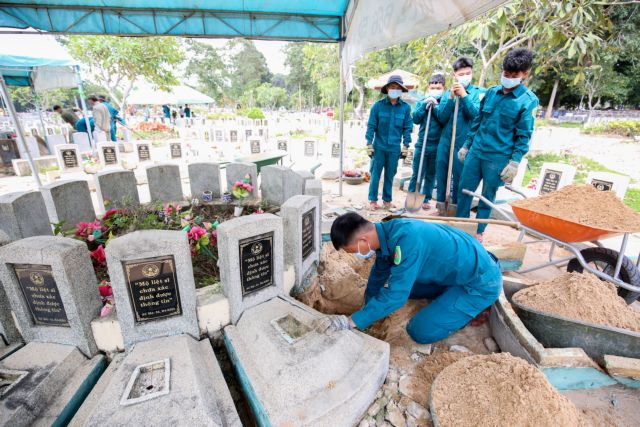
| Officials and soldiers collect samples from martyrs’ remains at Hill 82 Martyrs’ Cemetery in Tân Biên Commune, Tây Ninh Province. — VNA/VNS Photo |
TÂY NINH — The search, recovery and identification of martyrs’ remains in Tây Ninh Province is being advanced through DNA testing and witness testimony, helping restore the identities of those who sacrificed their lives and bring them home to their families and hometowns.
The work is part of the ongoing nationwide 500-day campaign to accelerate the search for, recovery and identification of martyrs’ remains, launched in preparation for the 80th anniversary of War Invalids and Martyrs’ Day (July 27, 2027).
The southern province has completed the collection of samples from martyrs’ remains for DNA-based identification at all 18 of its martyrs’ cemeteries after work began on June 4, said the provincial Steering Committee for the Search, Recovery and Identification of Martyrs’ Remains (the province Steering Committee 515).
A total of 18,593 graves of unidentified martyrs at these cemeteries were sampled. Of these, 15,336, or 82.48 per cent, met the sampling requirements and yielded DNA samples.
|
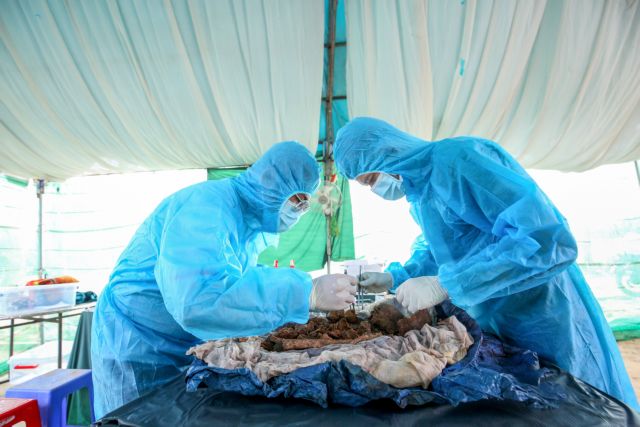
| Staff from the Tân Biên Medical Centre carefully collect DNA samples from the remains of unidentified martyrs at Hill 82 Martyrs’ Cemetery. — VNA/VNS Photo |
At Tân Biên Martyrs’ Cemetery, also known as Hill 82 Martyrs’ Cemetery, which had the largest number of graves sampled at 4,629, the work was completed by August 21.
Phạm Thị Phượng Kiều, a staff member of the Tân Biên Commune Medical Centre, joined other officials and soldiers to collect samples from martyrs’ remains at the cemetery.
“The work is not only a professional duty but also a responsibility and a way to express gratitude to those who sacrificed their lives for the Fatherland," Kiều said.
“Therefore, each remains sample is collected carefully and in accordance with procedures to ensure accuracy for DNA testing, helping bring unidentified martyrs back to their names, hometowns and families.”
|
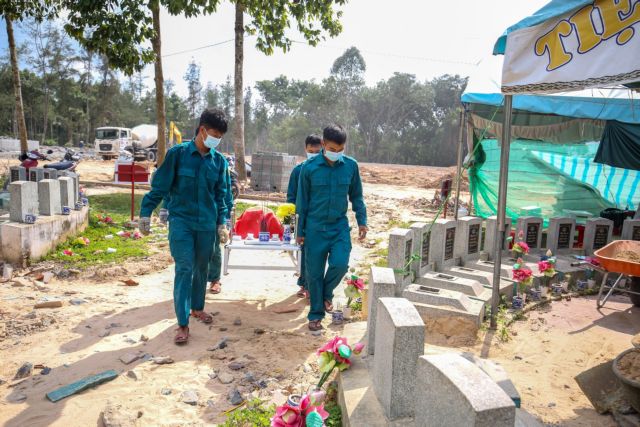
| After DNA samples are collected, the martyrs’ remains at Hill 82 Martyrs’ Cemetery are respectfully returned to their graves by officials and soldiers. — VNA/VNS Photo |
DNA samples collected
Tây Ninh has stepped up the collection of DNA samples from relatives of unidentified martyrs.
During a peak period from July 5 to 11, the provincial Police collected more than 5,751 DNA samples from relatives of more than 4,000 unidentified martyrs in all 96 communes and wards.
All collected DNA biological samples are preserved and transferred to Hà Nội–based Geneviet Molecular Biology JSC in accordance with regulations for testing, building a DNA database of martyrs’ relatives, and comparing DNA profiles to identify martyrs’ remains in the future.
DNA is only one part of the search. Information from former soldiers, witnesses and local residents remains important, particularly in areas where burial sites have disappeared or become difficult to identify over the decades.
Search teams meet witnesses, verify information and conduct field surveys before holding conferences to assess the evidence, draw conclusions and determine search locations.
Memories of battles, burial sites, personal belongings or other objects that accompanied the deceased can provide valuable clues, helping search teams trace remains decades later.
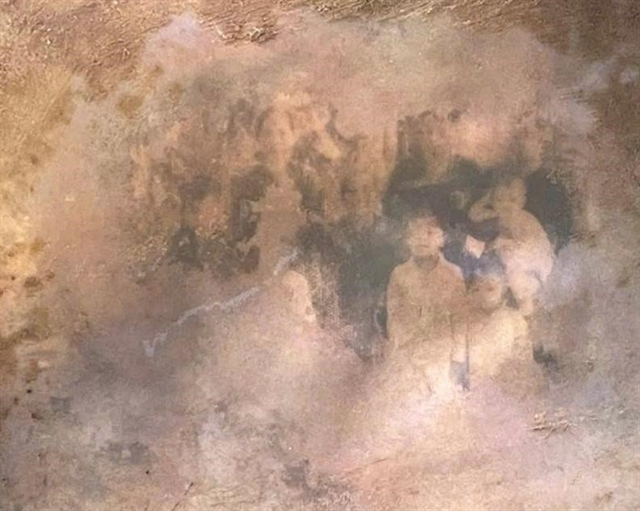
|
| A family photo buried with the remains of an unidentified martyr who died in 1968 was found by personnel collecting remains for DNA sampling at Đức Hòa Martyrs’ Cemetery in Hậu Nghĩa Commune. — VNA/VNS Photo |
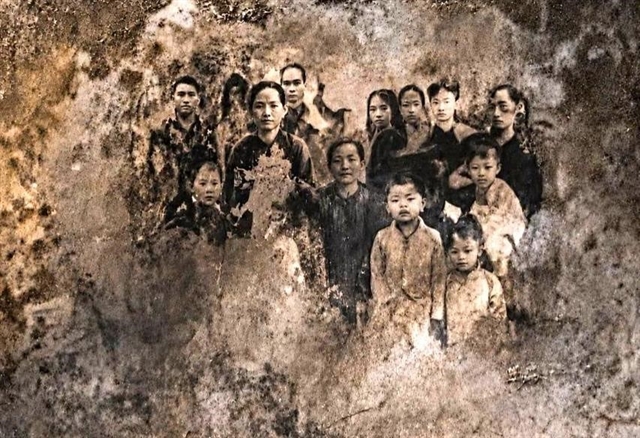
|
| The family photo buried with the martyr’s remains has been digitally restored by the Tây Ninh Military Command to aid identification. — VNA/VNS Photo |
Decades-long search
The story of Đoàn Văn Sáng, 84, former Secretary of the former Trảng Bàng District in Tây Ninh, and martyr Võ Văn Phú shows how wartime memories can help bring missing soldiers home.
At about 2.30pm on August 4, 1967, Sáng and his comrades heard an explosion at the Trảng Bàng District Party Committee Office. When they ran outside, they found Phú seriously wounded in the leg. With no medicine available amid fierce fighting, they took him to an abandoned house and tried to keep him alive.
When enemy forces swept through the area, they moved Phú to a nearby trench, covered him with leaves and then left.
“When we left, Phú was still alive...” Sáng recalled.
About half an hour later, they returned and found that Phú had died from severe blood loss.
They buried him at the spot that day. The following day, his family brought a coffin and a nylon sheet, wrapped his remains in the sheet and carefully reburied him.
After national reunification in 1975, Sáng and Phú’s family searched repeatedly but found nothing. Bombing and shelling had altered the terrain, erasing landmarks and making the burial site almost impossible to determine.
During the 500-day campaign, Sáng gave K71 Team, a specialised martyrs’ remains search and recovery team under the Tây Ninh Military Command, information about the burial site.
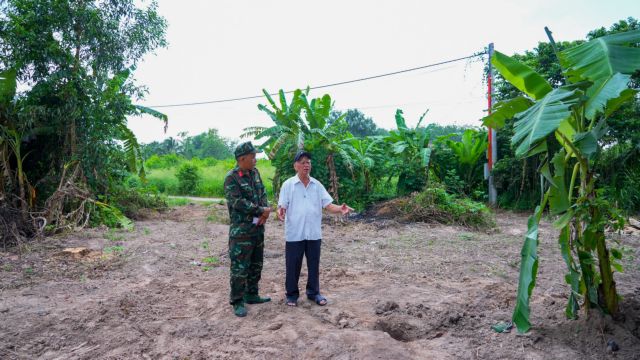
|
| Đoàn Văn Sáng points to the site where martyr Võ Văn Phú was buried in 1967, providing information to help K71 Team verify the location and organise the search and recovery of his remains. — VNA/VNS Photo |
Early this month, when he learned that K71 Team had found a set of remains at exactly the spot he had previously identified, Sáng immediately went to the site.
As he watched the officers and soldiers carefully remove each layer of soil, Sáng was almost speechless when parts of a skull, relatively intact long bones and a nylon sheet discoloured by time emerged from the ground.
“I feel as though I have finally laid down the burden I have carried for nearly 60 years,” he said.
The dossier confirming the remains’ identity is still being completed.
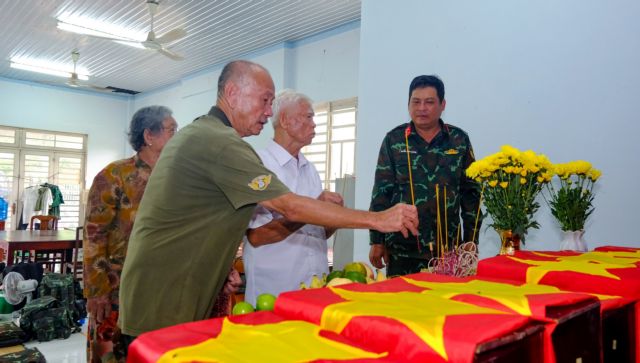
|
| Nguyễn Văn Thánh, 67, from Đồng Tâm Commune, Đồng Nai Province, a nephew of martyr Võ Văn Phú, burns incense in tribute to the martyr after authorities recovered remains believed to be those of Võ Văn Phú. — VNA/VNS Photo |
Colonel Nguyễn Minh Tấn, Deputy Political Commissar of the Tây Ninh Military Command and permanent deputy head of the provincial Steering Committee 515, said Tây Ninh aims to search for and recover the remains of more than 500 fallen soldiers, both in the province and abroad, by the end of this year.
Beyond the border
The search extends beyond the province. Across the border in Cambodia, which shares a border with Tây Ninh, Vietnamese forces continue to search for the remains of Vietnamese volunteer soldiers and military experts who died there during different periods of war.
During the 2025–26 dry season, specialised search teams K70, K71 and K73 surveyed and searched eight provinces in Cambodia for the remains of Vietnamese martyrs and recovered 511 sets, which were repatriated to Việt Nam.
On August 21, Tây Ninh held a ceremony to send off specialised search teams to Cambodia for their assigned missions in the 26th search phase.
For this phase, the teams have 143 sources of information on the possible locations of 440 martyrs’ graves across eight localities.
The teams will carry out their missions until June 30, 2027.
|
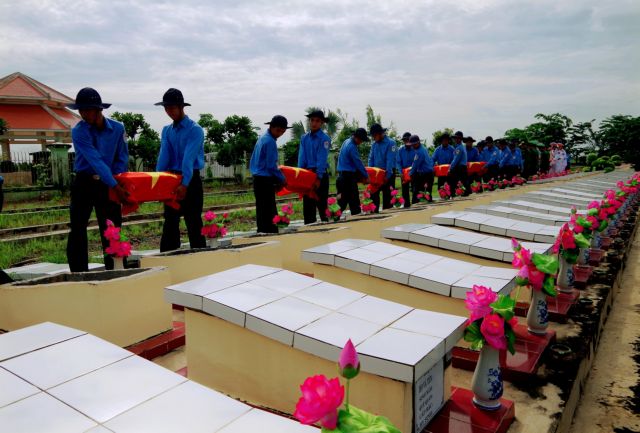
| K73 Team personnel bury the remains of martyrs who died on the Cambodian battlefield at Vĩnh Hưng Martyrs’ Cemetery in Vĩnh Hưng Commune. — VNA/VNS Photo |
Deputy Chairman of the Tây Ninh People’s Committee, Phạm Tấn Hòa, said the guiding principle for the 26th search phase is: Discover it, act immediately, and finish the work.
For the 2026–27 dry season, the goal is to basically complete the search at all 143 locations where information about martyrs’ graves is already available, while continuing to encourage local residents to provide additional information.
The work is part of an ongoing effort to identify those who died on missions and bring them home to their families.
For families who have waited for decades, the search means more than finding the remains. It means bringing their loved ones home – with their names restored, their hometowns remembered and their families finally able to lay them to rest. — VNS
Society
 Society
 Society
 Society
 Society
 Society
 Society
 Society
 Society
 Society
 Society
 Society
 Society
 Society
 Society
.jpg)



