 Society
SBV to curb property price inflation, enforce lending rate rules
1.
|
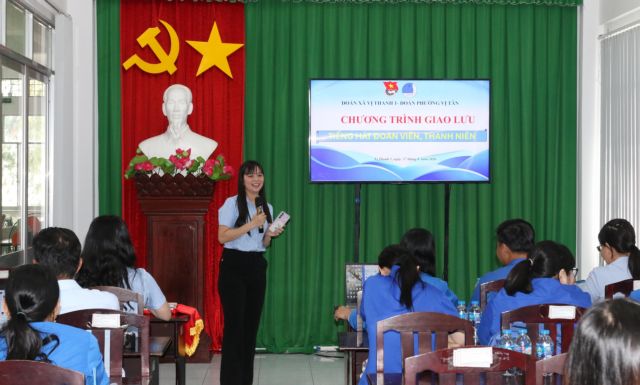
| After touring the exhibition, visitors test their knowledge of history in a quiz session. — VNA/VNS Photo |
CẦN THƠ — At the Vị Thanh branch of the Cần Thơ City Library, the moderator barely gets a question out before hands shoot into the air.
Someone answers. Before the applause dies down, another young voice jumps in to add a detail the first speaker missed, then another, until the original question has grown into something richer than anyone intended.
Get it right, and the room lights up. Get it wrong, and it isn't the end of the exchange; it's an invitation to dig a little deeper. It is, in other words, nothing like the history lessons most of these young people remember from school, the ones that asked them to memorise dates and names until the past felt like a weight rather than a story.
This is the atmosphere the Cần Thơ City Library has been cultivating this August, as it marks the 81st anniversary of the August Revolution on August 19 and National Day on September 2 with an exhibition titled 'The August Revolution – A Nation Transformed.'
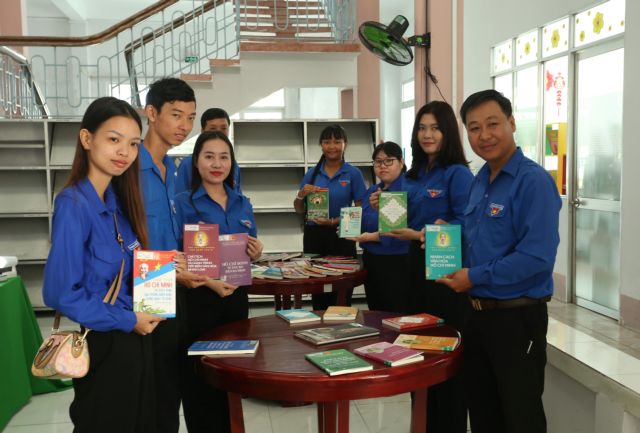
Running from August 17 to September 18 at the library's main branch in Cần Thơ and at its Vị Thanh and Sóc Trăng facilities, the exhibition brings together roughly 1,000 books at each site – on Communist Party policy, on President Hồ Chí Minh's thought and personal example, on the Revolution itself and on Cần Thơ's own political, economic and cultural development since.
But what distinguishes this exhibition from a standard shelf display is its visual ambition.
Rather than simply lining up volumes, librarians have built them into large sculptural forms: at the main branch, towers of books rise into the shape of a map of Việt Nam and a model of the Hồ Chí Minh Mausoleum. In Vị Thanh, they take the shape of a lotus flower, with a second stack spelling out the words 'Quốc Khánh 2-9'; in Sóc Trăng, they form another rendering of the mausoleum.
|
| Visitors stop to photograph their favourite titles on display. — VNA/VNS Phỏto |
The effect is meant to catch the eye of visitors who might otherwise walk past a history section without a second glance – to make the past, quite literally, something you can see the shape of.
That combination – striking visuals paired with the quiz sessions, which have drawn not only youth union members, students and schoolchildren but also police and military officers – is a deliberate bet by the library on how a younger, digitally native generation actually engages with history.
"We've found that young people respond enthusiastically when they can approach history through formats that are visual, dynamic and interactive," library director Lê Thanh Bình said.
"Activities like these exchanges and quizzes around the August Revolution and National Day make historical knowledge feel lighter, more approachable, easier to absorb."
For some of the young participants, the exhibition has clearly landed as intended. Đặng Đình Thao, secretary of the Youth Union in Vị Thanh Commune, described attending the exhibition as a genuinely moving experience.
"As a youth union member, I felt proud and moved," he said.
"Through the pages, images and documents on display, I came away with a much deeper understanding of our nation's heroic history, and of the sacrifices earlier generations made so that we could have the peace, independence and development we enjoy today."
Lưu Thị Tú Trinh, a youth union member from Vị Tân Ward, put it in more personal terms. What struck her most, she said, was the scale of the sacrifice behind a freedom her generation has never had to fight for.
"The exhibition made it clear to me that today's independence didn't come naturally. It was paid for through enormous loss and sacrifice," she said.
If there was one lesson she took away above all others, it was about unity, the idea that when people across every walk of life share a single goal and act on it together, the resulting force becomes almost impossible to stop.
It's a principle that today's Youth Union still needs to take seriously as it works out how to mobilise young people, she said.
Bình described the exhibition as something more ambitious than a simple book display: a space where the public, and especially young people, can encounter history in a way that feels immediate rather than abstract.
Marking the anniversary is as much about the present and future as it is about the past, he said. It's a chance to look back at what earlier generations achieved, take stock of what has been built since and think seriously about the responsibility that comes with inheriting it.
The library's ambitions for reaching young readers extend well beyond the current exhibition. Bình said the institution plans to keep working with local agencies, schools and Youth Union branches on a rotating slate of programmes, including travelling exhibitions, book circulation drives, a mobile library van, author talks, history quizzes and themed events tied to the country's major commemorative dates.
He said the effort will also move online, with more investment in digital archives and contemporary media formats designed to make authoritative source material easier – and more appealing – for young people to find. — VNS
Society
 Society
 Society
 Society
 Society
 Society
 Society
 Society
 Society
 Society
 Society
 Society
 Society
 Society
 Society