 Society
Top Vietnamese leader highlights new horizon for Việt Nam–Denmark cooperation
1.
|
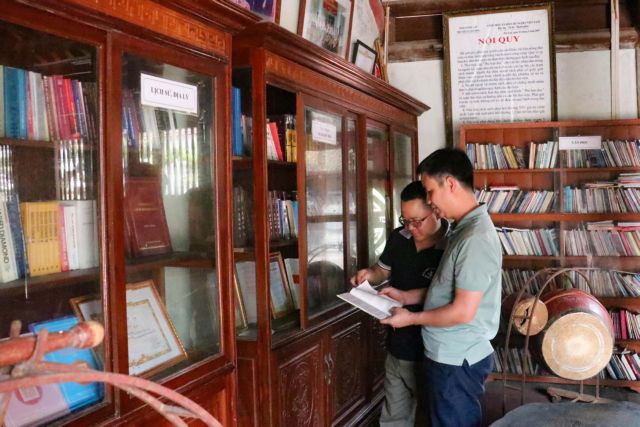
| Visitors explore the Lê Quý Đôn Library within the memorial site dedicated to renowned Vietnamese cultural figure Lê Quý Đôn in Lê Quý Đôn Commune, Hưng Yên Province. Photo: Vũ Quang |
HƯNG YÊN — Three hundred years after his birth, Lê Quý Đôn, one of Việt Nam's greatest cultural figures and the country's foremost 18th-century scholar, continues to inspire generations with his lifelong pursuit of knowledge and unwavering commitment to serving the nation.
Throughout his life, Lê Quý Đôn devoted himself to learning, research and the systematic compilation of knowledge for the benefit of the country. He left behind an extraordinary scholarly legacy of nearly 40 major works spanning history, geography, philosophy, literature, agriculture and astronomy, many of which remain invaluable references in Việt Nam's intellectual heritage.
Yet beyond his remarkable academic achievements, what has earned him lasting admiration is his lifelong dedication to learning, independent thinking and steadfast belief that knowledge should serve society. To Lê Quý Đôn, education was not merely a path to personal advancement but a means to cultivate wisdom, contribute to the people and strengthen the nation.
Three centuries later, these ideals remain strikingly relevant, especially in his native Hưng Yên Province, where efforts are under way to preserve his legacy, promote a culture of lifelong learning and build a learning society suited to the modern era.
From child prodigy to national scholar
Born in 1726 as Lê Danh Phương in Diên Hà Village of Sơn Nam Prefecture (now Lê Quý Đôn Commune in Hưng Yên Province), he grew up in a distinguished scholarly family that nurtured his passion for learning from an early age.
His father, Doctorate holder Lê Trọng Thứ, was renowned as an upright and incorruptible mandarin, while his mother's family also had a long academic tradition.
Known for his exceptional intelligence and remarkable memory, Lê Quý Đôn immersed himself in history, philosophy and classical literature while still a teenager. He spent countless hours reading, taking notes and reflecting on what he learned.
His academic brilliance was demonstrated by an extraordinary achievement. He ranked first in all three highest imperial examinations, the regional, metropolitan and royal palace examinations.
During more than three decades in public service, Lê Quý Đôn remained true to the ideals of a dedicated scholar. He not only studied extensively but also travelled widely, conducting field research to better understand people's livelihoods, local customs, natural conditions and regional economies.
These experiences enriched his writings, which today serve not only as major scholarly works but also as valuable historical records documenting Việt Nam's society, culture and history in the 18th century.
Educational philosophy ahead of its time
Lê Quý Đôn is remembered not only for his vast knowledge but also for educational ideas that remain remarkably relevant today.
He regarded knowledge as the foundation of national development and believed education should cultivate capable, ethical individuals committed to serving society.
He criticised rote learning aimed solely at passing examinations, arguing instead that education should emphasise practical knowledge and genuine ability. Learning, he believed, must be accompanied by critical thinking, practical application and meaningful contributions to the community.
|
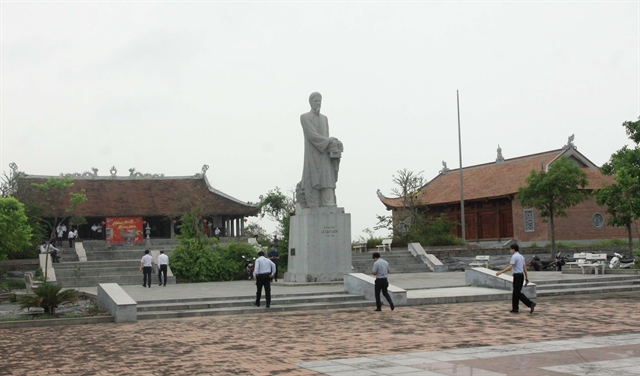
| The Memorial Site of renowned Vietnamese scholar Lê Quý Đôn in Lê Quý Đôn Commune, Hưng Yên Province. VNA/VNS Photo Thế Duyệt |
Lê Quý Đôn also advocated a broad, interdisciplinary education. He encouraged students to study history, geography, agriculture, military affairs, astronomy, medicine and other disciplines so they could solve real-world problems effectively.
Equally important was the spirit of self-directed learning. He urged learners to think independently, verify knowledge through practical experience and continually expand their understanding.
As a devoted educator, Lê Quý Đôn established schools, helped organise imperial examinations and placed great importance on identifying and nurturing talented individuals. In his view, education was not only the key to personal success but also the cornerstone of a prosperous nation.
Carrying forward a tradition of learning
Three centuries after Lê Quý Đôn's birth, his home province of Hưng Yên continues to uphold and promote the values he championed.
The province regards education as a cornerstone of sustainable development, investing in school infrastructure, improving teacher quality, modernising teaching methods and creating conditions for students to develop comprehensively.
It also places strong emphasis on identifying and nurturing gifted students while encouraging scientific research and innovation, enabling many local students to achieve outstanding results in national and international competitions.
|
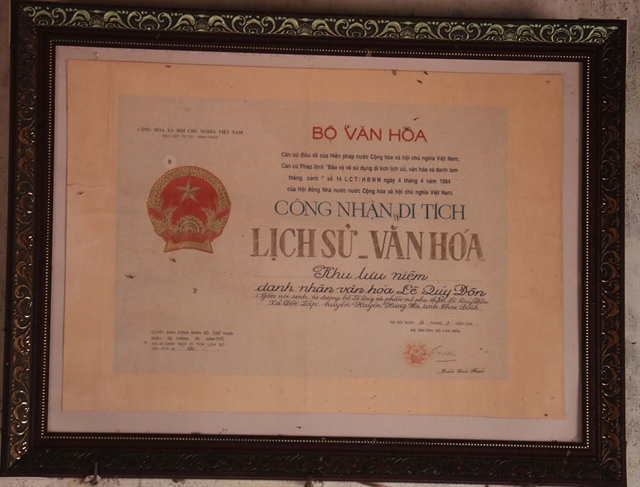
| The Memorial Site of renowned Vietnamese cultural figure Lê Quý Đôn, which was designated a National Historical Site in 1986. VNA/VNS Photo Vũ Quang |
The Hưng Yên Provincial Association for Promoting Learning, together with local authorities and organisations, has launched numerous initiatives to build a learning society. Programmes such as ‘Learning Families’, ‘Learning Clans’ and ‘Learning Communities’ encourage people of all ages to pursue lifelong learning, continuously improve their skills and adapt to a rapidly changing world.
For today's students, learning extends far beyond the classroom. Books, digital technology, hands-on experiences and scientific research all provide opportunities to acquire new knowledge. Above all, however, the enduring lesson from Lê Quý Đôn is to remain curious, embrace independent learning, apply knowledge to real life and nurture the aspiration to contribute to the nation's future. — VNS
Society
 Society
 Society
 Society
 Society
 Society
 Society
 Society
 Society
 Society
 Society
 Society
 Society
 Society
 Society