 Sci-Tech
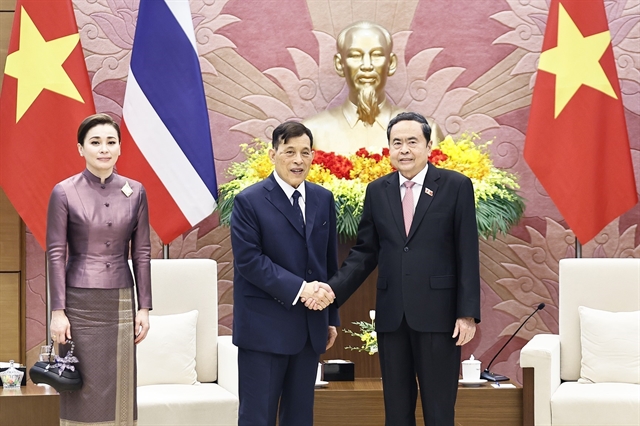
Top legislator meets with King of Thailand in Hà Nội
1.
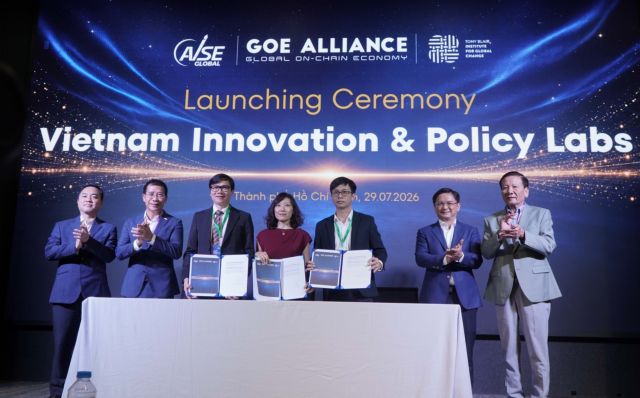 |
| An agreement is signed to launch the Vietnam Innovation & Policy Labs, an independent research and policy advisory organisation, at the Việt Nam Global Innovation Forum 2026 in HCM City on July 29. — VNA/VNS Photos Thu Hoài |
HCM CITY — Technology and high-quality human resources are the two essential catalysts for Việt Nam to achieve a digital breakthrough, attendees heard at the Việt Nam Global Innovation Forum (VGIC) 2026 opened in HCM City on July 29.
Under the theme “Future Technologies – Việt Nam’s Digital Leap”, the two-day event is co-organised by the Association of Vietnamese Scientists and Experts (AVSE Global) in France, the Saigon Innovation Hub, the Global On-Chain Economy Alliance, and the Startup Vietnam Foundation.
The forum gathers around 100 Vietnamese and origin-Vietnamese innovators, including leading experts, scientists, and technology executives working across more than 15 countries at global tech corporations, research institutes, and universities.
They join representatives from management agencies, domestic enterprises, investment funds, and start-up communities to share strategic insights and practical lessons on building an innovation ecosystem, advancing digital transformation, and applying technology to foster economic growth.
By bringing together key stakeholders, the event facilitates strong links between policy, technology, investment, and high-quality human resources.
Discussions focus on four strategic pillars shaping Việt Nam's digital future: Smart Data, Smart People, Smart Business Processes, and Smart Technology.
VGIC 2026 aims to contribute to building a smart nation through a circular and sustainable innovation ecosystem based on a multi-stakeholder model connecting the State, academia, corporations, start-ups, and investment funds.
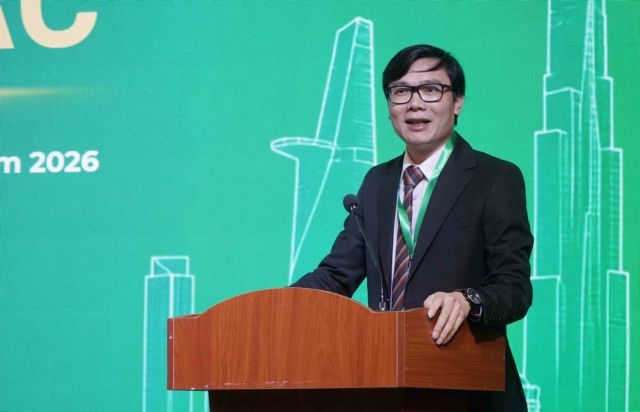 |
| Nguyễn Đức Khương, chairman of AVSE Global, delivers the opening speech at the Việt Nam Global Innovation Forum 2026 in HCM City on July 29. |
Speaking at the forum, Nguyễn Đức Khương, chairman of AVSE Global and member of the National Advisory Council for Science, Technology and Innovation, said that what connects participants is not only their expertise, but a shared aspiration to contribute to national development.
Việt Nam stands at an opportune moment to make a breakthrough via science and technology, yet human capability remains the decisive factor.
"Technology alone does not transform a nation; people do, through technology," Khương said.
In reality, many countries can buy or access technology, but that does not guarantee high growth, sustainable development, or prosperity.
Several nations were not originators or masters of core technologies in their early development stages, yet they achieved prosperity through their ability to deploy technology effectively.
“This shows that the critical factor is transforming technology into a lever for growth, with people placed firmly at the centre."
Speaking at the opening ceremony, the city People’s Committee vice chairman Nguyễn Mạnh Cường said the city aims to become a regional centre for innovation, finance, and technology, continuing its role as the country’s main economic engine.
"With a spirit of innovation, HCM City aims not only to be a place for applying advanced technology, but also strives to become a place that creates new technology and nurtures tech enterprises, with the hope of spawning 'unicorns' right here," Cường said.
To achieve these strategic goals, the city identifies science, technology, innovation, and digital transformation as primary drivers of growth in this new development phase.
Foundation technologies such as artificial intelligence, semiconductors, and digital platforms are expected to create new growth models, boost labour productivity, enhance business competitiveness, and improve urban governance efficiency.
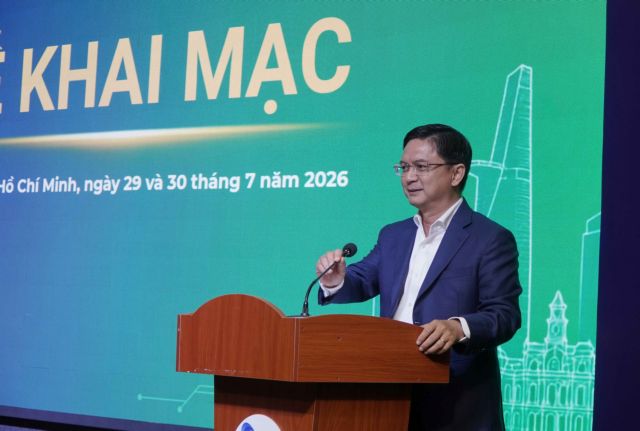 |
| Nguyễn Mạnh Cường, vice chairman of the HCM City People’s Committee, speaks at the Việt Nam Global Innovation Forum 2026 in HCM City on July 29. |
The city is focusing on developing its innovation ecosystem by fostering strong linkages between the "triple helix": the State, academia (universities and research institutes), and industry (enterprises, corporations, and investment funds) to effectively align policy, knowledge, technology, finance, and market demand.
The city’s recent inclusion in the top 100 global start-up ecosystems, as ranked by StartupBlink 2026, represents a solid foundation and encouraging milestone as it targets becoming a premier innovation hub in Asia and worldwide.
The southern metropolis will continue to promote research and development, technology transfer, support innovative enterprises, expand international co-operation, and attract technology, investment, and top global talent.
It has also initially established a venture capital fund to broaden funding channels for high-potential innovation projects.
Alongside the innovation centre, the central government has approved the establishment of an International Financial Centre in the city.
“The connection between these two initiatives is organic, laying the groundwork for development. Strategic technology solutions and scientific tasks need to be seamlessly intertwined,” Cường said.
By bridging technology and enterprise with capital and investors, the dual model is expected to form a supportive ecosystem for strategic technologies and create fresh momentum for sustainable economic growth. — VNS
Sci-Tech
 Sci-Tech
 Sci-Tech
 Sci-Tech
 Sci-Tech
 Sci-Tech
 Sci-Tech
 Sci-Tech
 Sci-Tech
 Sci-Tech
 Sci-Tech
 Sci-Tech
 Sci-Tech
 Sci-Tech
 Sci-Tech