 Society

MSM chooses AWS to accelerate next-generation technology solutions for agribusiness value chain
1.
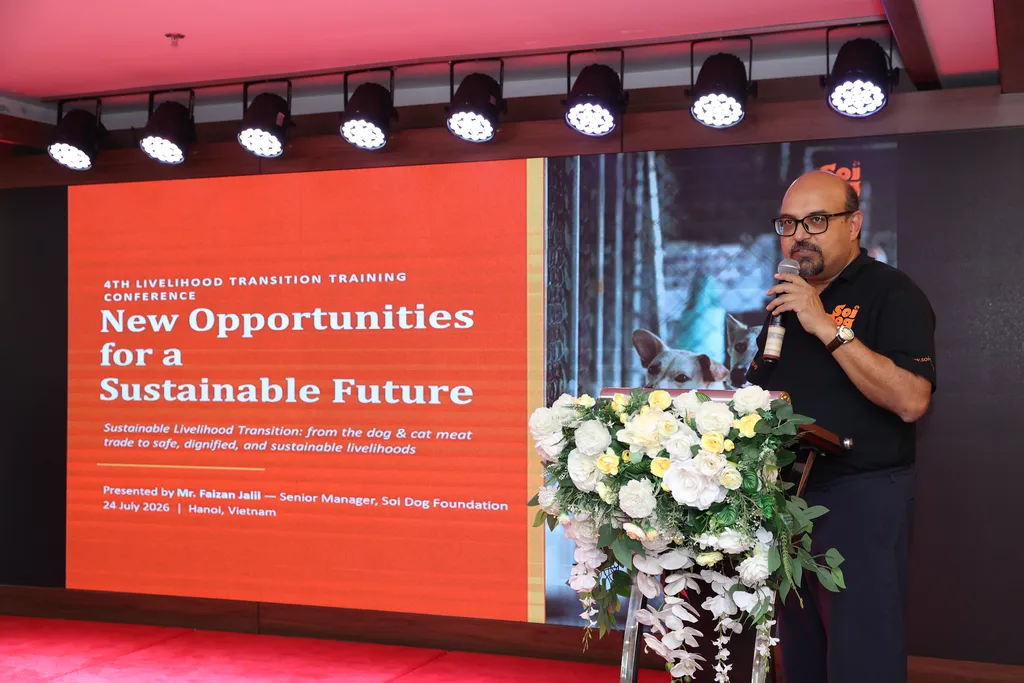 |
| Mr Faizan Jalil, Senior Manager at Soi Dog Foundation, speaks at the event. — Photo courtesy of the organiser |
HÀ NỘI — A pilot model for rabies prevention and sustainable economic development featuring a roadmap to gradually transition away from the dog and cat meat trade in 14 wards in Hà Nội has achieved notable results after just one year.
Giảng Võ Ward has become the first of the pilot 14 wards in Hà Nội to completely end the sale of dog and cat meat, according to SBCC Việt Nam Director Bùi Thị Duyên.
SBCC is a social enterprise in Việt Nam that specialises in evidence-based behavioural change for sustainable development.
To date, 28 establishments that slaughter and trade dog and cat meat have ceased operations, and 25 facilities have registered to transition their business models.
A baseline survey conducted before the project began also found no dog- and cat-meat trading facilities in Cửa Nam Ward. However, Duyên said, Giảng Võ is the first locality to achieve this result as an outcome of the project's activities, demonstrating the initial effectiveness of a model that combines State management, behaviour change communication and livelihood transition support.
 |
| SBCC Việt Nam Director Bùi Thị Duyên speaks at the event. — Photo courtesy of the organiser |
Beyond the results recorded in Giảng Võ Ward, the project has also seen positive change in areas such as Từ Liêm and Tây Mỗ, which previously had a relatively large number of dog and cat meat trading facilities. Many facilities and restaurants in these areas have either ceased operations or are progressively transitioning their business models.
This outcome reflects the combined effectiveness of various measures, including intensified public outreach and advocacy, support for livelihood transitions, improved State management regarding veterinary services, food safety and traceability, and rabies prevention efforts, as well as the consensus of local residents, according to Duyên.
Duyên spoke on July 24 at a training workshop on livelihood transition themed 'Gradual transition to sustainable livelihoods: Moving from the trade and slaughter of dogs and cats to sustainable, safe and humane occupations'.
The conference brought together representatives of State management agencies and experts in veterinary medicine, public health and sustainable economic development, along with households currently engaged in the dog and cat meat trade in the project's 14 pilot wards.
 |
| Nguyễn Đình Đảng, Director of Hà Nội's Department of Livestock, Fisheries and Veterinary Medicine, speaks at the event. — Photo courtesy of the organiser |
At the event, the organising committee introduced additional hands-on vocational training programmes in food processing and beverage preparation, further diversifying employment opportunities and giving participating households more options suited to current market demand as they transition to new occupations.
To help households transition to more sustainable livelihoods, the project has carried out vocational training programmes that align with current market demands, require reasonable initial investment, are easy to implement and suit the experience of households already operating in the food service sector.
At the conference, Nguyễn Đình Đảng, Director of Hà Nội's Department of Livestock, Fisheries and Veterinary Medicine, said: “The project's initial results show that combining stronger State management with livelihood transition support is the right direction, gradually changing public awareness and helping residents move into stable, sustainable occupations.”
“In the future, we will continue to work with local authorities, organisations and businesses to expand support activities, contributing to more effective rabies prevention and control, food safety assurance, animal disease control and the development of civilised, sustainable livestock farming."
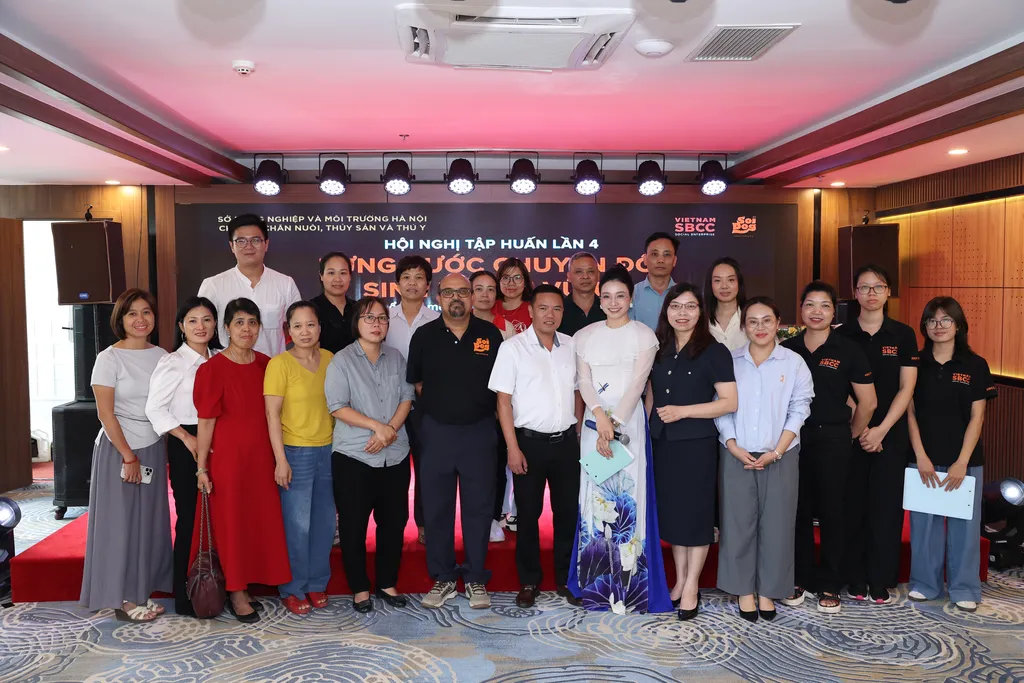 |
| The conference brought together representatives of State management agencies and experts in veterinary medicine, along with households currently engaged in the dog and cat meat trade in the project's 14 pilot wards. — Photo courtesy of the organiser |
In the near future, Hà Nội's Department of Livestock, Fisheries and Veterinary Medicine plans to continue collaborating with authorities, ward-level People's Committees, international organisations, enterprises, vocational training institutions and employment agencies to expand livelihood transition support activities.
These efforts aim to create opportunities for residents to secure stable, sustainable employment while contributing to the effective implementation of the National Programme on Rabies Prevention and Control.
Representatives of Soi Dog Foundation and SBCC Việt Nam also reaffirmed their commitment to working with city agencies on vocational training, start-up support, market links and ongoing support for households throughout their livelihood transition.
The pilot project is being implemented by Hà Nội's Department of Livestock, Fisheries and Veterinary Medicine in partnership with Soi Dog Foundation and SBCC Việt Nam.
It was approved by the Hà Nội People's Committee on July 24, and marks the first time a combined intervention model integrating disease prevention, livelihood transition and behaviour change communication has been systematically deployed in the city in this field. — VNS
Society
 Society
 Society
 Society
 Society
 Society
 Society
 Society
 Society
 Society
 Society
 Society
 Society
 Society
 Society