 Society

World Health Summit 2026: Berlin Becomes Global Meeting Point for the Future of Health
1.
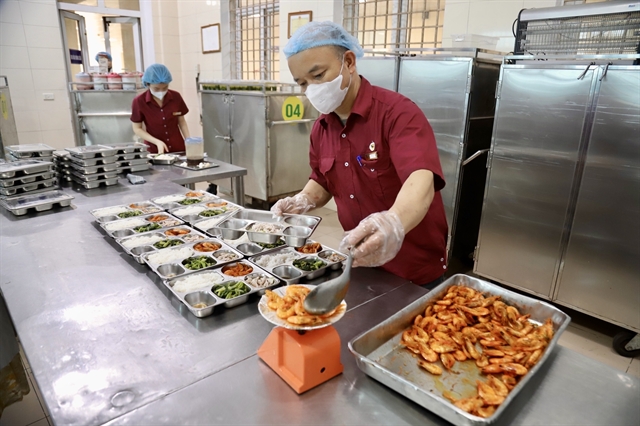 |
| Kitchen staff prepare therapeutic meals for patients at K Hospital. — Photo courtesy of the hospital |
HÀ NỘI — Nutrition plays a crucial role in patient health, particularly for those with cancer. Alongside personalised treatment regimens, a proper nutritional plan helps enhance the effectiveness of comprehensive patient care.
Dr Hoàng Việt Bách, head of the Department of Clinical Nutrition at K Hospital, said that up to 50-80 per cent of cancer patients experience weight loss or malnutrition during treatment.
"Cancer-related malnutrition manifests not only as visible weight loss, but – more dangerously – is hidden beneath severe muscle mass loss, reduced muscle strength and a decline in overall bodily function," Dr Bách said.
“Many patients may appear overweight or obese on the surface, yet in reality, they have suffered severe muscle mass loss. Screening for nutritional risk right at the time of diagnosis is therefore crucial."
According to the nutrition expert, the risk of malnutrition is present in most types of malignancies, but the highest rates are observed among patients with gastrointestinal cancers, head and neck or lung cancers, and those with advanced, late-stage or metastatic disease requiring prolonged treatment.
Malnutrition directly impacts clinical outcomes. When a patient is in a debilitated state, their body struggles to tolerate courses of chemotherapy, radiotherapy or surgery.
Malnourished patients face a higher risk of infection, delayed wound healing, increased rates of postoperative complications and prolonged recovery times. In many instances, treatment regimens have even had to be delayed because the patient's physical condition was inadequate.
Nutrition is a form of treatment
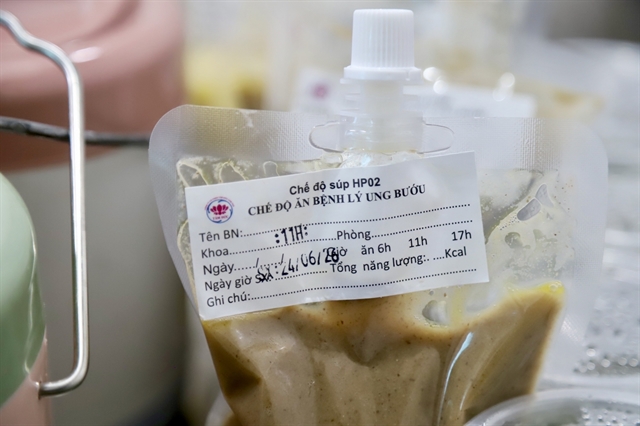 |
| A meal prepared according to the therapeutic diet for cancer patients at K Hospital. — Photo courtesy of the hospital |
According to health experts, clinical studies demonstrate that cancer patients who receive early nutritional assessment and intervention show significantly better treatment responses, experience fewer complications, have shorter hospital stays and enjoy improved quality of life and survival outcomes.
However, the majority of cancer patients tend to focus primarily on specific treatment modalities, such as surgery, chemotherapy, radiotherapy, immunotherapy or targeted therapy.
The Ministry of Health recently issued guidelines on nutritional needs and treatment for cancer patients to standardise nutritional care in healthcare facilities, thus contributing to enhanced treatment efficacy, improved quality of life and reduced rates of complications and mortality among cancer patients.
One major goal of the guidelines is to ensure that every cancer patient in Việt Nam has access to structured nutritional care from the outset – including malnutrition risk assessment at the time of diagnosis – and receives appropriate dietary planning and nutritional support throughout the course of treatment.
The guidelines go beyond purely clinical protocols to embody a profound humanistic principle: shifting the mindset of both healthcare professionals and the community to uphold nutrition as an essential form of treatment.
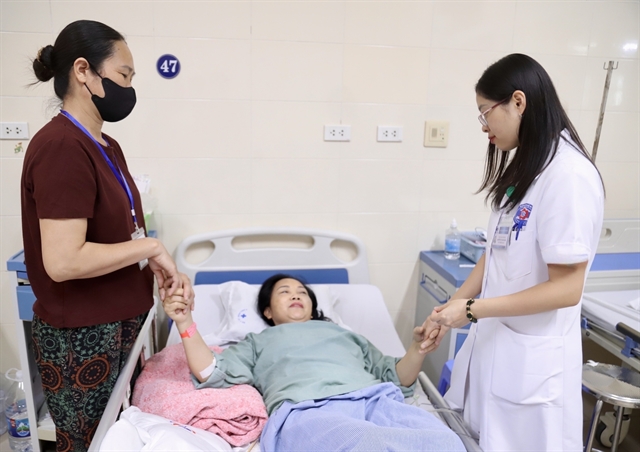 |
| A nutritionist provides dietary counseling for a cancer patient and her family at K Hospital. — Photo courtesy of the hospital |
“Nutrition is a form of treatment. Nutritionally balanced, condition-specific meals, combined with a targeted treatment regimen, help improve physical health and enhance the body's response to treatment,” said Dr Nguyễn Thị Thanh Hòa, deputy head of the Department of Clinical Nutrition at K Hospital.
Dr Hòa said that at K Hospital, patients receive counselling on therapeutic diets, with a policy of 100 per cent implementation for all patients following surgery for gastrointestinal cancer. Patients also receive personalised nutritional counselling, along with guidance on physical activity and psychological support at the treatment department.
In the near future, K Hospital will implement universal screening to maintain and enhance the quality of malnutrition risk assessments for all patients immediately upon admission, according to Dr Hòa.
The hospital will also establish a tightly coordinated process involving attending physicians, nutritionists, nurses and relevant specialists to develop personalised, optimal nutrition plans for each patient.
Communication efforts will be stepped up to ensure patients and their families adopt proper nutritional practices, thus improving the patients' quality of life.
To optimise treatment outcomes, doctors at K Hospital advise patients to strictly avoid extreme diets or the complete elimination of any essential food groups without medical indication. Daily menus should be varied and balanced, prioritising energy- and protein-rich foods to preserve muscle mass and enhance the body's recovery.
When patients notice warning signs such as weight loss, poor appetite, prolonged fatigue or muscle weakness, they should be taken to a nutrition specialist for early assessment. — VNS
Society
 Society
 Society
 Society
 Society
 Society
 Society
 Society
 Society
 Society
 Society
 Society
 Society
 Society
 Society
 Rikkeisoft ký kết MOU với LAC.Co, LTD - thúc đẩy hợp tác kinh doanh toàn diện trong lĩnh vực an ninh mạng.jpg)