 Society

HKSTP Partners with Leading Science and Technology Company Merck to Open a New Chapter in I&T Collaboration
1.
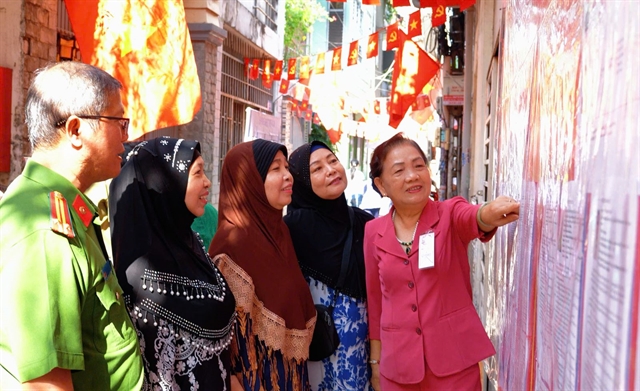 |
| People from a wide range of ethnic backgrounds live in harmony and solidarity in HCM City. — VNA/VNS Photo |
Just after 5am, a narrow alley along the canal on Bình Đông Street in Hồ Chí Minh City begins to stir. In a modest single-storey house tucked deep inside a residential neighbourhood, Nguyễn Thị Hồng, 58, prepares goods for the early-morning market.
More than three decades ago, she arrived from Quảng Ngãi Province carrying little more than a few sets of clothes and money borrowed from relatives. Today, she owns the house she once could only dream of — one of millions of people who have come to HCM City seeking opportunity and eventually found a place to call home.
"In those days, I took whatever job was offered. I worked as a kitchen helper, a street vendor, and a factory worker. My only hope was to earn enough to get by and send some money back to my hometown," she says.
From those precarious beginnings, she opened a small market stall, raised her children, and eventually bought a home after decades of renting.
"Our relatives and ancestral graves are still in our hometown, but HCM City is where our children grew up and where our future is," she says.
Her story mirrors millions of construction and factory workers, street vendors, students and entrepreneurs who have come to HCM City in search of opportunity.
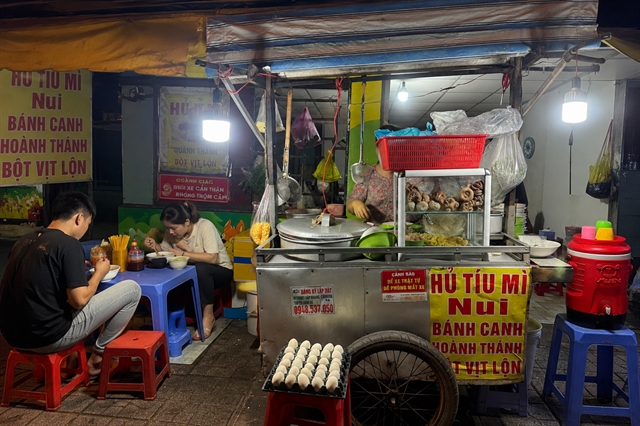 |
| Migrant workers from provinces across the country build their lives and forge lasting bonds with HCM City through a wide range of trades, including running late-night street food stalls. — VNA/VNS Photo |
Over the past 50 years, since it officially took on the name of President Hồ Chí Minh, many have built careers, raised families and put down roots in the city.
Nguyễn Trọng Hoàng, a native of northern Việt Nam and now chief executive of Phúc Thịnh Packaging Company, arrived for a different reason: education.
Having lived in the city for more than 15 years, he vividly recalls his student days, juggling work and study to cover tuition fees.
During that difficult period, the "Tiếp Sức Mùa Thi" (Supporting Students During Exam Season) volunteer campaign gave him the encouragement he needed to overcome the pressures of living far from home.
"Back then, I received drinking water, directions and moral encouragement from volunteer students during my exams. These were small gestures, but they made a student far from home feel that this city was incredibly warm," he reminisces.
After establishing his career, he returned to the programme as a supporter, providing financial assistance, bottled water and even gifts to candidates during the university entrance examination season.
Shared belonging
The most meaningful aspect of life in the city is the solidarity among people from different regions who come together to study, work and build their futures, he says.
Over the decades, a steady influx of migrants has created one of the country's most culturally diverse communities.
In a single neighbourhood live people from the central, northern and southwestern regions alongside Hoa communities whose roots stretch back generations.
Dương Thọ Minh, a long-time resident of Chinese origin, is particularly fond of the bilingual Vietnamese-Chinese Talking Book Library established in his locality, which serves as a cultural bridge between generations.
"Stories about President Hồ Chí Minh help our children understand more about their homeland and responsibility to the community. This is also a way for the older generation to pass down fine values to the young."
According to best-selling author Nguyễn Nhật Ánh, the unique charm of Sài Gòn–HCM City lies not in its infrastructure or fast-paced lifestyle, but in the way people treat one another.
It is a city marked by openness and little discrimination, always offering opportunities to those willing to work hard and pursue their ambitions.
That spirit has sustained the city's vitality across generations.
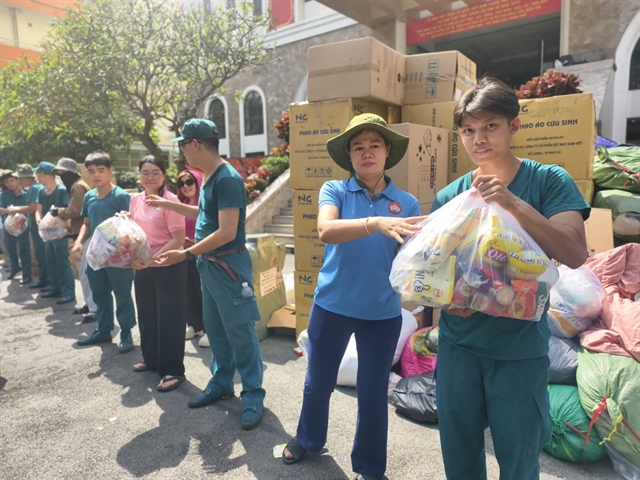 |
| HCM City residents and volunteers load relief supplies to support people in central and northern provinces affected by floods and storms. |
Nguyễn Văn Nên, former secretary of the city's Communist Party Committee, says it is a land of solidarity and tolerance that respects and honours quiet examples of virtue in everyday life.
“Alongside economic growth, the city must use moral standards as a foundation to spread humanitarian principles and strengthen community resilience.”
By the end of 2024, it had established more than 4,500 Hồ Chí Minh Cultural Spaces across government offices, schools, residential areas, and digital platforms to foster social responsibility and patriotism in daily life.
Spirit of the City
Trần Thị Diệu Thúy, former vice chairperson of the municipal People's Committee and now deputy head of the city's National Assembly delegation, says culture is regarded as both the spiritual foundation of society and a key resource for sustainable development, helping drive cultural industries and digital creative spaces.
Associate Professor Phan Anh Tú, head of the cultural studies department at the HCM City University of Social Sciences and Humanities, says the city's diversity is central to its appeal.
“On a single street, one can spot a Chinese pagoda beside a Catholic church, eateries serving central region flavours alongside southern delicacies, and bustling quarters filled with a medley of dialects.”
According to cultural experts, the city's enduring appeal lies not in its rapid growth or towering skyscrapers, but in its remarkable capacity to embrace people and cultures from across the country.
For generations of migrants, that openness has transformed a place of opportunity into a place of belonging.
Whatever their origins, millions have come to regard HCM City not simply as where they work or study, but as their true second home. — VNS
Society
 Society
 Society
 Society
 Society
 Society
 Society
 Society
 Society
 Society
 Society
 Society
 Society
 Society
 Society