 Society

Việt Nam, Singapore promote cooperation through Party-to-Party channel
1.
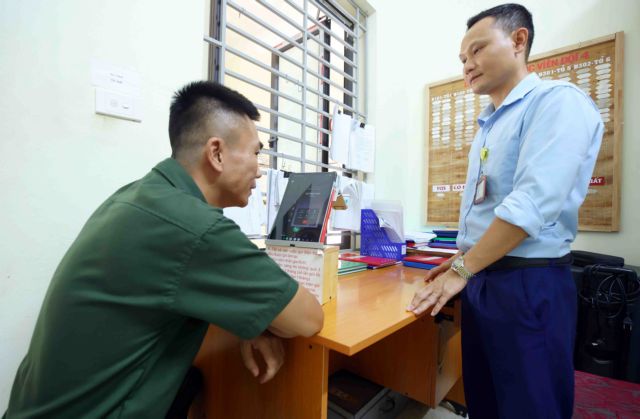 |
| A resident communicates with their families via a smartphone calling system using QR codes at Drug Rehabilitation Centre 3 in Hà Nội. — VNA/VNS Photo Phạm Kiên |
HÀ NỘI — One day in June, in the student management area of Drug Rehabilitation Centre 3 in Tùng Thiện Ward, Hà Nội, a resident held up a card bearing a QR code, scanned it using a device and selected a family member's telephone number displayed on the screen.
Within seconds, the call was connected.
At the other end of the line were the voices of his mother, wife and loved ones, telling him they await the day he can return home.
While such a scene may appear commonplace in today's digital world, it represents a significant shift within the highly specialised environment of drug rehabilitation centres.
Although the calls last only a few minutes, they help ease residents' psychological burdens and serve as a vital link connecting them with their families.
Nguyễn Đức C., 34, a resident at the facility, said he is allowed to call home once or twice each month.
“Every time I hear my mother's voice and speak to my family, I feel much more reassured. It also motivates me to work harder so that I can return and become a useful member of society," he said.
For another resident, Trần Tiến Đ., the change has been particularly noticeable, as he experienced life at the centre both before and after the introduction of the smart calling system.
When he first arrived, the system did not exist and he could only wait for family visits.
“Many times I worried about how my parents, wife and children were coping at home. Since the new system was introduced, being able to call home twice a month and hear my family's voices has given me much greater peace of mind," he said.
The QR code-based smart telephone system is being implemented at the centre as part of efforts to realise the Politburo's Resolution 57-NQ/TW on breakthroughs in science and technology development, innovation and national digital transformation.
The system was introduced after the Hà Nội Police Department assumed State management responsibilities for drug rehabilitation from the labour, invalids and social affairs sector on 1 March 2025.
Major Nguyễn Mạnh Hùng, deputy director of the centre, said all 738 residents at the facility have been issued personalised QR codes, integrating their personal information and the telephone numbers of family members registered in accordance with regulations.
Under the Ministry of Public Security regulations, residents are permitted to call their families on a monthly basis.
The entire process is conducted through a digital system, with all calls recorded and archived for management purposes while fully safeguarding the residents' rights and entitlements, he said.
Hoàng Phi Vũ is an officer from the centre’s Resident Management and Vocational Education Unit who is directly involved in operating the smart calling system. Vũ said the model was designed to improve management efficiency while meeting residents' legitimate need to maintain contact with their families.
According to Vũ, each QR code contains comprehensive information about the resident, including their name, year of birth, residential address, rehabilitation period, rehabilitation status and a list of registered family contact numbers.
Residents simply scan their QR code to make a call.
The system automatically displays their personal information and authorised family contacts, eliminating the need to memorise or manually enter telephone numbers as in the past.
For many residents, the change has proven highly practical.
Owing to the effects of drug addiction, some newcomers experience memory difficulties and may no longer remember their relatives' telephone numbers accurately.
Integrating such information into QR codes enables them to reconnect with their families more easily.
"When necessary, officers can retrieve call records to support management work. This both safeguards security and ensures that call duration and content remain within regulatory requirements," Vũ noted.
Beyond the smart calling model, the centre is also using Gmail, Google Sheets and other digital platforms to manage pharmaceutical inventories, medication distribution and professional records.
The digitalisation of data has significantly reduced processing times, minimised manual paperwork and enhanced monitoring, security and information retrieval capabilities.
It has cut data entry and reporting time by around 50 per cent, while substantially reducing errors associated with handwritten record-keeping.
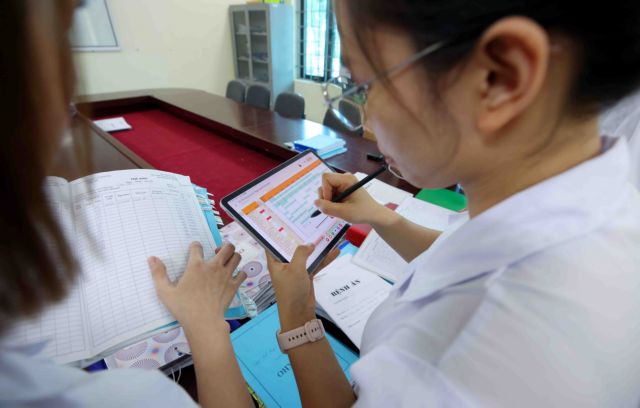 |
| Drug Rehabilitation Centre 3 uses digital platforms to manage its pharmaceutical inventory, dispense medication and store professional records. — VNA/VNS Photo Phạm Kiên |
All data is centrally managed with clearly defined access permissions.
“The approach helps reduce administrative burdens on staff, allowing them to devote more time to resident management and education," said Giang Thi Minh Anh, a healthcare officer at the facility.
In line with the ministry's policy of developing smart rehabilitation centres, the facility plans to continue investing in technological infrastructure and introducing additional digital initiatives.
From 1 July, the centre plans to begin deploying electronic monitoring bracelets for individuals who have completed rehabilitation and remain under community-based management.
The initiative is regarded as the next step in applying digital technology throughout the entire rehabilitation process, from treatment and supervision to community reintegration support.
Supporting community reintegration
Alongside treatment and management activities, the centre has developed a range of vocational and production models, enabling residents to gain practical work experience during their rehabilitation period.
At the facility's livestock area, a pigeon-rearing project has attracted considerable interest among residents.
Lưu Văn D. said he was initially surprised to see the centre introducing vocationally oriented agricultural activities.
He said he thinks the model is more than just a farming project. It's seen as an opportunity for residents to gain hands-on experience in a real occupation.
“Once we complete rehabilitation, we can apply the skills to create jobs, generate income and build stable lives," he said.
In implementing Prime Minister’s Decision 08/2026/QĐ-TTg on credit support for individuals who have completed drug rehabilitation programmes, the centre has coordinated with the Vietnam Bank for Social Policies and local authorities to provide information and counselling on preferential loan programmes.
Residents are guided through loan eligibility requirements, application procedures and the development of suitable business and production plans for life after rehabilitation.
Recently, the centre worked with Vật Lại Commune Police to assist Nguyễn Văn T., 56, from Trung Hà Hamlet, in completing procedures to secure a VNĐ80 million (US$3,040) preferential loan from the Vietnam Bank for Social Policies to expand his family farming and livestock operations.
T. completed his rehabilitation programme at the centre and returned to his local community in January.
Since then, the facility has provided him with technical support, equipment and breeding stock to develop a commercial cricket farm.
The loan will enable him to expand both cricket and poultry farming activities, helping to improve his family's economic prospects.
Providing stable employment and income opportunities for individuals after rehabilitation is regarded as one of the most effective measures to reduce the risk of relapse. — VNS
Society
 Society
 Society
 Society
 Society
 Society
 Society
 Society
 Society
 Society
 Society
.jpeg) Society
Society
 Society
 Society
 Society