 Society

Young people’s mental health: We need to listen – and act
1.
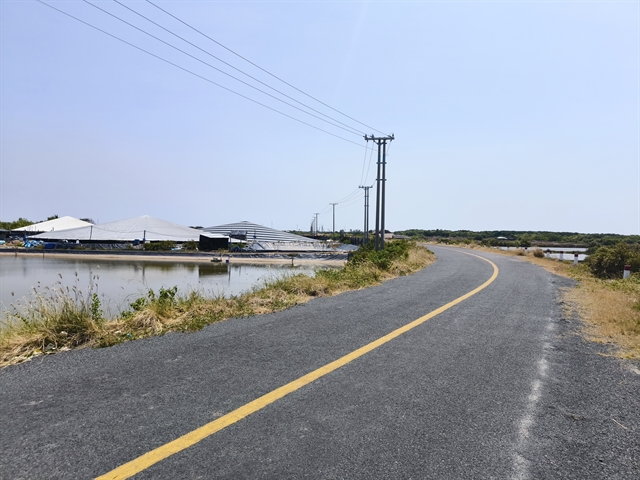 |
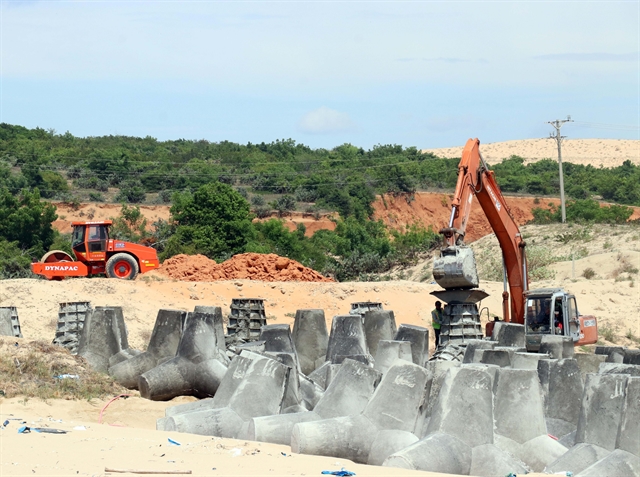
| Transport infrastructure improvements are helping coastal residents in Vĩnh Long Province expand production and improve livelihoods. — VNA/VNS Photo |
VĨNH LONG— Improved transport infrastructure is helping unlock the economic potential of coastal communes in Vĩnh Long Province, where high-tech shrimp farming, modern salt production and eco-tourism are expanding rapidly.
For many years, Bảo Thạnh and Tân Thủy communes faced difficulties developing their marine economy because of poor transport connections.
Roads were narrow and heavily damaged, making the transportation of goods costly and time consuming.
In recent years, however, the province has invested heavily in transport infrastructure, including the construction and upgrading of key coastal roads linking national and provincial routes with farming and production areas.
At the same time, three phase electricity systems and irrigation infrastructure have been developed synchronously, helping remove long standing bottlenecks and encouraging residents to expand production.
Võ Văn Lực, a salt farmer in Bảo Thạnh Commune, said transport difficulties previously created significant challenges for local producers.
Large trucks could not access salt fields directly, forcing farmers to hire labourers to transport salt to river wharves for traders to collect by boat.
Transport costs ranged from VNĐ10,000 to VNĐ15,000 (US$0.38-0.57) for every 40 kilogrammes of salt, with costs even higher for fields located far from waterways.
“Since the roads were upgraded, transporting goods has become much easier. Farmers can now sell products more conveniently while reducing costs and increasing profits,” Lực said.
Trần Văn Hùng, who has worked in aquaculture in Tân Thủy Commune for more than 20 years, said shrimp farmers previously had to transport feed and farming materials by motorbike or small boats at high cost.
At harvest time, traders often lowered purchasing prices because of poor road conditions and expensive transportation fees, reducing farmers’ profits by around 10 to 15 per cent.
According to Hùng, improved coastal roads have significantly supported local production activities by reducing investment costs and improving economic efficiency.
He has since shifted to multi-stage high-tech shrimp farming, increasing annual profits to more than VNĐ1 billion ($38,300).
Large trucks can now access shrimp ponds and salt fields directly, helping reduce logistics costs and improve the competitiveness of local products, he said.
According to Võ Quốc Đạt, vice chairman of the People’s Committee of Bảo Thạnh Commune, improved infrastructure has created favourable conditions for the rapid development of high-tech shrimp farming in Bảo Thạnh and Tân Thủy.
Modern intensive white leg shrimp farming models require large roads for transporting feed and equipment, stable three-phase electricity systems and fast transport connections for fresh shrimp after harvest.
“With stable electricity and better roads, local residents have become more willing to invest billions of đồng in high-tech shrimp farming models that generate returns five to six times higher than traditional farming,” Đạt said.
Improved infrastructure has also encouraged local residents to shift from traditional salt production to lined salt field models using scientific techniques.
The new production methods create cleaner and higher quality salt suitable for export and industrial processing, helping increase added value.
According to local authorities, better transport access is also supporting tourism development in coastal areas.
Cồn Nhàn Beach in Bảo Thạnh Commune currently attracts thousands of visitors during holidays and weekends.
The commune is proposing further investment in coastal embankments and transport infrastructure to attract more tourists and support the development of tourism, services and trade.
According to the Vĩnh Long People’s Committee, the infrastructure project serving high-tech shrimp farming areas in Bảo Thạnh and Tân Thủy provides stable transport and electricity systems for around 2,000 hectares of aquaculture land, including 500 hectares designated for high-tech shrimp farming.
The project includes six transport routes with a total length of more than 18 kilometres, along with one bridge and 18 irrigation culverts.
It also includes more than 24 kilometres of new three-phase medium voltage power lines and 26 transformer stations serving high-tech shrimp farming areas.
The project has a total investment of VNĐ164 billion ($6.3 million) sourced from the central budget.
Local authorities expect the project to help attract more investment, strengthen coastal economic development and promote sustainable livelihoods for residents in the coming years. — VNS
Society
 Society
 Society
 Society
 Society
 Society
 Society
 Society
 Society
 Society
 Society
 Society
 Society
.JPG) Society
Society
 Society