 Society

Vietnamese Prime Minister meets Cambodian National Assembly President
1.
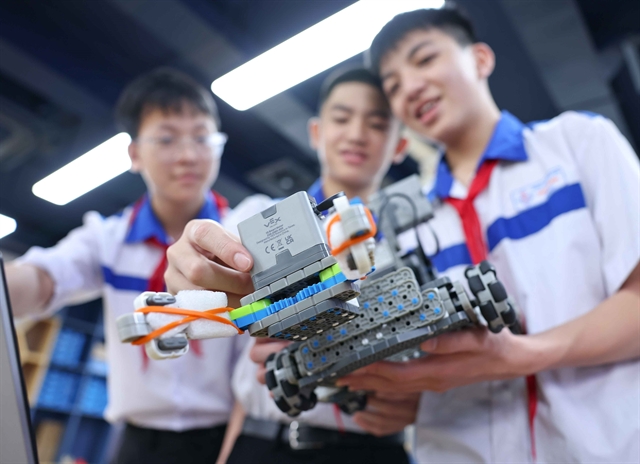 |
| Three middle school students in the northern province of Tuyên Quang hold a robot they assembled themselves as they prepare for the provincial STEM, AI and Robotics Competition. — VNA/VNS Photo |
HÀ NỘI — Việt Nam has set an ambitious target of getting 35 per cent of its students into science, technology, engineering and mathematics (STEM).
Officials and educators say hitting the enrolment number is the easy part. The harder challenge is finding the right people, training them well and keeping them from leaving.
"The shortage of high-quality human resources remains a major barrier to attracting investment and restructuring the economy," says Đặng Văn Huấn, Deputy Director of the Higher Education Department at the Ministry of Education and Training.
As artificial intelligence (AI), semiconductors and the digital economy reshape industries at breakneck speed, the question is no longer how many graduates Việt Nam produces, it's what kind and whether the system is geared to develop them, he adds.
So far, experts say, it isn't.
Lê Viết Khuyến, vice president of the Association of Vietnam Universities and Colleges and a former senior official at the Ministry of Education, argues that the way Việt Nam thinks about talent may be part of the problem.
"We tend to think of talent as a small number of exceptional scientists. That's not wrong, but it's not enough," he says, noting that a handful of world-class scientists cannot by themselves drive national development.
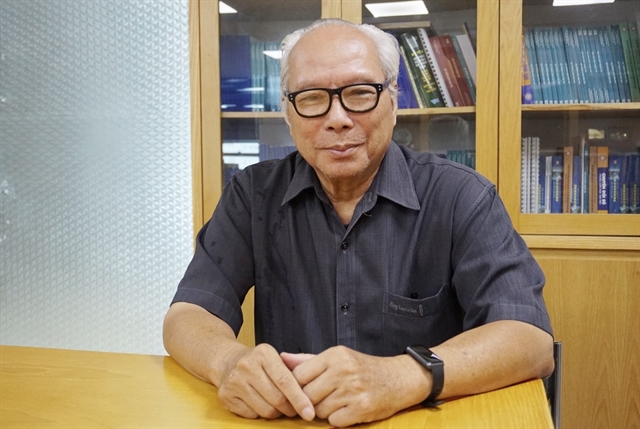 |
| Lê Viết Khuyến, vice president of the Association of Vietnam Universities and Colleges. — Photo phunuvietnam.vn |
What is needed, he says, is a system that recognises two distinct tracks, one academic and the other applied, and develops both deliberately. Lumping them together under the label of talent, he warns, leads to mismatches that hold the country back.
"If we don't make that distinction and build a rational structure around it, industrialisation and modernisation will be very hard to achieve," he says.
The consequences are already visible: talent is not necessarily scarce in Việt Nam, but much of it goes unrecognised and underused. Promising students often end up in programmes that do not fit their strengths, while elite training initiatives remain small and underfunded.
Experts say the fix requires a fundamental shift in mindset, away from searching for talent and towards building an ecosystem that identifies it early, tracks it consistently and invests in it strategically, from high school all the way through postgraduate study.
Việt Nam's STEM enrolment has grown sharply in recent years, with nearly 200,000 students now studying in the field. More than 150 institutions have launched programmes in semiconductor chip design alone.
But Khuyến says scale is not the issue; structure and quality are.
In many developed countries, he notes, core technology workers come out of specialised institutes where training, research and industrial application are tightly integrated.
That model, however, has yet to take hold in Việt Nam. Instead, universities are judged largely on academic output, international publications, with little attention paid to whether they are producing patents, practical technologies or industry-ready engineers.
"Science isn't connected to training, and manufacturing companies aren't connected to either," he says. "These three things exist in separate silos."
Individual institutions are trying to close that gap.
At Hanoi University of Science and Technology, Vice President Nguyễn Phong Điền says the university has concentrated its efforts on two fronts: admissions and curriculum.
On the intake side, the institution uses rigorous aptitude-based testing to draw in top students, particularly national competition winners and graduates of specialised high schools.
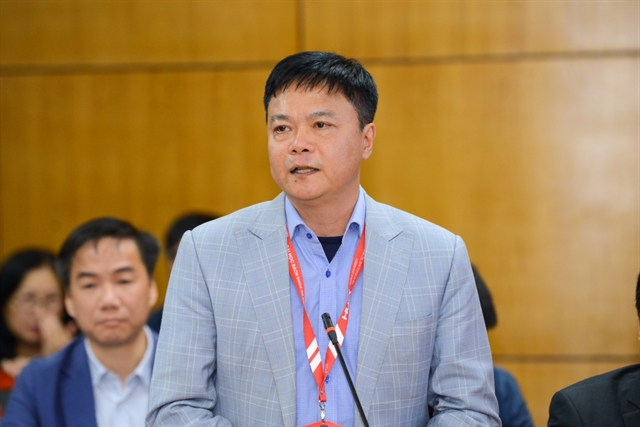 |
| Nguyễn Phong Điền, Vice President of the Hanoi University of Science and Technology. — Photo vov2.vov.vn |
Once enrolled, they work on projects in laboratories and alongside industry partners, not just sitting through lectures. Talent tracks are kept deliberately small, around 25 to 30 students, to allow for more individualised development.
"We're not just designing courses. We're building an open training structure that stays current with AI and the digital economy, where students are doing real work before they ever graduate," he says.
Still, he acknowledged that the pace of change is outrunning the system.
"Training hasn't kept up with AI. Even the best students will struggle to reach their potential if their education isn't grounded in practice."
At the VNU University of Engineering and Technology, Rector Chử Đức Trình has pushed a different but complementary model: getting students into research as early as possible. By their first or second year, students at his institution are already working in laboratories and research groups.
"They're not just learning to know things; they're learning to do, to test and to create," Trình says, arguing that early exposure to real research is what builds the independent thinking and creative capacity that define genuine technology talent.
Even when Việt Nam produces skilled graduates, holding onto them is another matter.
"Brain drain and the waste of talent are still very real," says Nguyễn Tiến Thảo, Director of the Higher Education Department at the Ministry of Education and Training.
For Khuyến, the root of the problem is structural: the three-way partnership among government, universities and enterprises has been widely discussed for years, but the mechanisms to make it work remain weak.
He also notes that calls for linking training to industry have been made for decades but with little to show for it.
David Trần, a professor at the University of Massachusetts Boston, offers an international perspective, arguing that Việt Nam needs to build a talent ecosystem that actively brings together government, universities and enterprises.
He also argues that the country should take a more flexible approach to the Vietnamese diaspora, drawing on the expertise of overseas intellectuals without necessarily requiring them to return home full-time.
The stakes are high in the semiconductor industry. The global chip market is projected to reach US$1 trillion by 2030, with demand for more than a million workers worldwide.
 |
| Nguyễn Tiến Thảo, Director of the Higher Education Department at the Ministry of Education and Training. — Photo congdankhuyenhoc.vn |
Việt Nam has set targets to train thousands of engineers for the sector, but experts say that without a comprehensive strategy covering infrastructure investment, competitive compensation and genuine ecosystem-building, those numbers alone will not be enough to establish the country as a serious player.
Retention, experts agree, ultimately comes down to more than pay. Talented people stay where they feel trusted, where they have real autonomy and where they can see a path forward. Building that kind of environment, not just writing policies about it, is what Việt Nam's system has yet to fully deliver.
When it does, they say, talent will no longer be a mystery. Việt Nam will not just be producing more capable graduates; it will have the workforce to lead its core technology industries, generate real value and claim a meaningful place on the global tech map. — VNS
Society
 Society
 Society
 Society
 Society
 Society
 Society
 Society
 Society
 Society
 Society
 Society
 Society
 Society
 Society