 Society
Cambodian PM Hun Manet chairs welcome ceremony for Vietnamese counterpart Lê Minh Hưng in Phnom Penh
1.
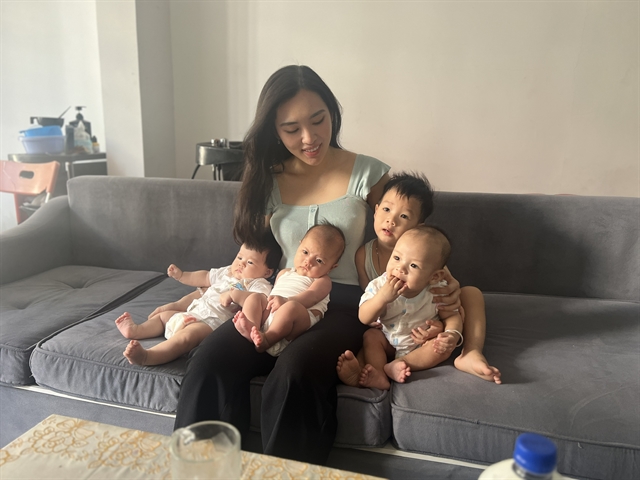 |
| Trương Quý Linh spends time with children at the Thiện Nhi shelter in HCM City. Photos courtesy of Trương Quý Linh |
By Khánh Linh
HCM CITY — The call came in urgency, edged with panic. A young woman, alone in a rented room in HCM City, was in labour. By the time Trương Quý Linh called back, the voice on the other end trembled: she had already given birth alone in the bathroom.
When Linh arrived, the scene was one she still struggles to recount without pausing. The newborn lay wrapped in a towel, the umbilical cord hastily cut, the room thick with the metallic scent of blood.
Linh, an actress and MC who once feared even the sight of blood, forced herself forward. There was no time to hesitate. She gathered the baby, steadied the mother and rushed both to hospital. Doctors later said a slight delay could have cost a life.
“In that moment, I didn’t have the luxury to be afraid,” she recalled. “I only thought: just stay alive. As long as we are alive, everything else can be figured out.”
It is a belief forged not in theory but in lived experience. Over the past four years, Linh has quietly stepped away from the spotlight to build something far removed from the entertainment world: a small shelter in HCM City that has become a lifeline for pregnant women with nowhere else to go.
Founded in late 2021, the Thiện Nhi shelter has since taken in nearly 60 women and welcomed more than 50 babies into the world. Behind each number is a story of abandonment, violence or a single misstep that altered the course of a young life. Many, mostly young and unmarried, arrive carrying not only a child but also the weight of rejection from families, partners and often from society itself.
Turning point
Linh traces the origins of her work back to the COVID-19 pandemic, when she encountered a scene that stayed with her long after the lockdown ended.
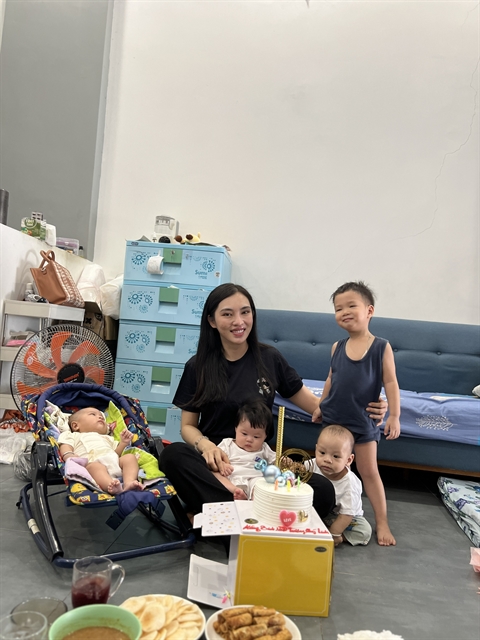 |
| The Thiện Nhi shelter has taken in nearly 60 women and welcomed more than 50 babies into the world over the past five years. |
“A mother sat there crying, holding her newborn who was crying from hunger because there was no milk,” she said. “I had never imagined I would witness something so painful in this day and age.”
The image lingered, unsettling her in ways she could not ignore.
“I kept asking myself, but had we forgotten that newborns also need milk just to survive?”
From then on, alongside rice and essentials, Linh began adding infant formula, nappies and newborn supplies to her relief trips, items she knew would quietly make the difference between despair and survival in cramped boarding houses across the city.
But the deeper realisation came later.
She recalled coming across the concept of the first 1,000 days of a child’s life — from pregnancy to the age of two — a critical window that shapes long-term physical and cognitive development.
“That gave me the answer,” she said. “There is a group we need to support in a sustained way, not just for a moment, but to ensure the development of a whole life, even a generation.”
What began as short-term aid soon turned into a long-term commitment. Together with fellow volunteers, Linh made a decision that would redefine her life: to open a shelter.
“At that time, we didn’t really understand how difficult it would be,” she said. “We just did it because we cared.”
The shelter is sustained partly through Linh’s own income from her work, alongside contributions from friends, donors and a wider community that has quietly rallied around the initiative.
Hidden wounds
At Thiện Nhi, support extends far beyond providing a place to stay. Daily life unfolds through shared meals, prenatal check-ups and first lessons in caring for a newborn. These are small, steady steps towards rebuilding stability.
The women who arrive, including students, survivors of abuse, those abandoned by partners or rejected by families, often carry invisible wounds as heavy as their circumstances.
“Each woman comes with deep pain and trauma,” Linh said. “Sometimes even they don’t fully recognise it.”
Trương Quý Linh provides round-the-clock skin-to-skin care for a premature baby boy whose mother is being supported by the shelter at Từ Dũ Hospital in HCM City.
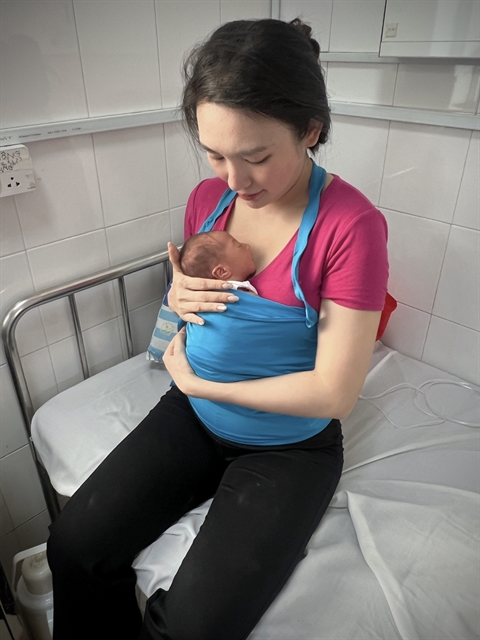 |
| Trương Quý Linh provides round-the-clock skin-to-skin care for a premature baby boy whose mother is being supported by the shelter at Từ Dũ Hospital in HCM City. |
For Linh, the hardest part is not financial strain but emotional endurance.
“To walk with them, you have to listen, understand and be strong enough for them to lean on,” she said. “There are days when the stories are so heavy that I feel like I can’t breathe.”
At times, the weight has pushed her to consider stopping altogether.
“I have wanted to give up many times because I was exhausted, because I lost faith,” she said. “Sometimes what you give is met with deception or disappointment.”
Yet each time she stepped back, something pulled her forward again.
“Messages like — they don’t let you turn away,” she said. “Compassion doesn’t allow you to stay still.”
Faith forward
Working closely with vulnerable mothers has also challenged Linh’s own beliefs.
She once insisted on only helping women who chose to raise their children, convinced that a biological mother would always provide the best care. That view changed after witnessing a young mother, overwhelmed by trauma, lash out at her crying baby.
“I was shocked,” Linh said quietly. “I started questioning whether my own thinking had been too rigid.”
Later, she encountered stories of children growing up in environments filled with resentment and verbal abuse that left lasting scars.
“That’s when I realised it’s not about whether the mother is biological or not,” she said. “What matters is the child’s life and future.”
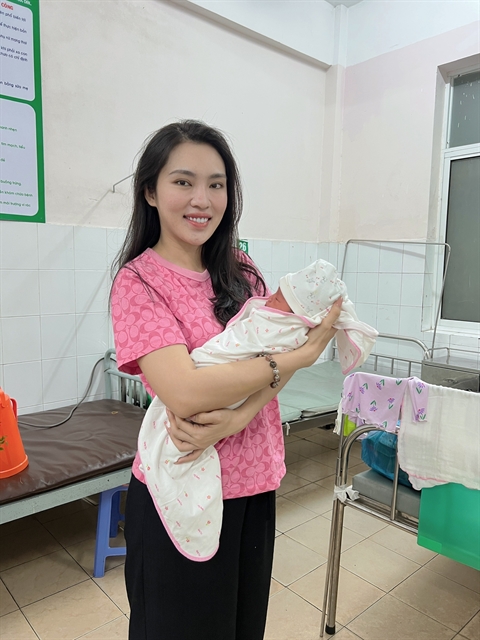 |
| Trương Quý Linh holds a newborn baby of a woman supported by the shelter at Lê Văn Việt Hospital in HCM City. |
Much of Linh’s work unfolds in hospitals, where survival is often uncertain.
On some nights, she lies on the corridor floor, waiting for updates from intensive care units while her team moves between wards to care for both mother and child.
“You lie in the corridor, waiting,” she said. “You see parents eating charity meals, hear their stories and you realise how precious life is.”
In those moments, priorities shift.
“Everything else becomes insignificant,” she said. “You just hope they can survive.”
Deeper wounds
For many women at the shelter, the deepest pain lies not only in hardship but in broken trust.
“Choosing the wrong person, losing connection with family — those are wounds that hurt the most,” Linh said. “The feeling of being abandoned by someone you trusted, and then abandoned by your own family can break a person.”
Some carry resentment. Others cling to fragile hope, sometimes returning to the very situations that hurt them.
“It’s heartbreaking,” she said. “And sometimes there is nothing more you can do.”
Despite never having been a mother herself, Linh has learned how to care for newborns and respond to emergencies many first-time parents would find overwhelming.
She credits compassion, a willingness to learn and the support of a wider community.
“This is not something I do alone,” she said. “It is the effort of many people.”
Over time, the work has reshaped her.
“I used to care about what people said, about things that didn’t work out,” she said. “Now I think: if we are still alive, we still have time. That is enough.”
After years of witnessing both hardship and resilience, Linh holds on to a simple conviction.
“Faith in love and kindness,” she said. “Only compassion can heal pain, turn setbacks into lessons and turn dead ends into new beginnings.”
When asked what she would say to a woman facing pregnancy alone, she paused.
“I would tell her not to be afraid,” she said. “As long as you are still here, there is always a way forward.” — VNS
Society
 Society
 Society
 Society
 Society
 Society
 Society
 Society
 Society
 Society
 Society
 Society
 Society
 Society