 Society

LANDMARK Launches ‘Destination CENTRAL’: A District-Wide Invitation to Explore the Dynamism, Luxury, and Soul of Central
1.
|
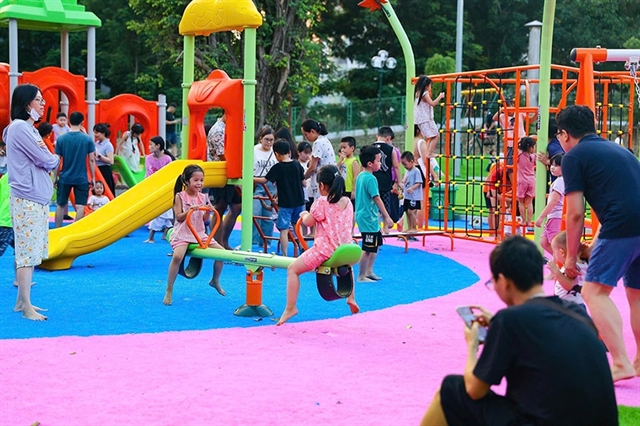
| Children in Hà Nội's Cầu Giấy Partk. — Photo hanomoi.vn |
HÀ NỘI — As dawn breaks over Cầu Giấy Park, a new pattern of city life emerges.
Elderly residents gather under wide canopies for morning exercise, small groups of students share breakfast on benches and joggers cut directly through the grass, unimpeded by the heavy iron fences that, just a year ago, marked the park’s border.
A quiet but far-reaching transformation is unfolding across the capital as fences come down at public parks, opening up green spaces and reshaping how residents experience the city, Hà Nội Mới (New Hà Nội) newspaper reported.
“Before, we had to walk far to get in through the main gate,” said Hoàng Thị Hiền, a resident of Thanh Xuân Ward. “Now I can enter the park from anywhere. It feels open and natural, like it’s part of my neighbourhood.”
A new rhythm in the capital
Entering a park is no longer a deliberate act. It has become as natural as daily movement itself.
What may appear to be a modest infrastructure adjustment is in reality part of a broader shift in urban thinking. Parks are no longer treated as isolated destinations but as extensions of everyday life, spaces to pass through, pause in and return to without intention.
Behind the removal of fences is a shift from enclosure to connection, from control to service and from static oversight to more adaptive urban governance. Aligned with major policy directions on Hà Nội’s development in the new era and the capital’s long-term master plan, the move reflects a rethink of how public space should function in a modern city.
|
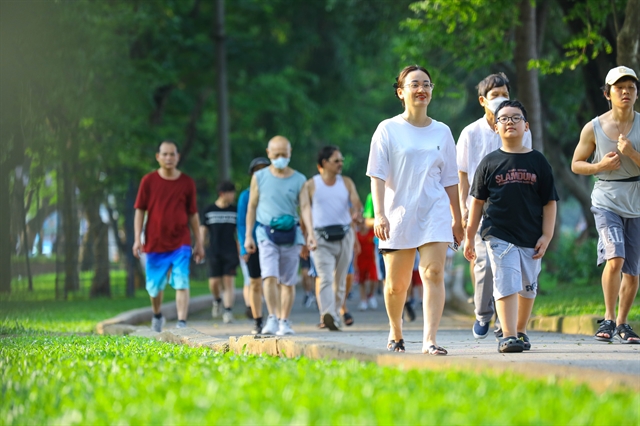
| Green spaces in Thống Nhất Park serve as a place for Hanoians to relax and exercise. — VNA/VNS Photo |
Across parks such as Cầu Giấy, Bách Thảo, Thống Nhất and Indira Gandhi the impact is already visible.
At Cầu Giấy Park, daily life unfolds in a steady rhythm throughout the week. Elderly residents practise morning exercises under the trees, children fill playgrounds with laughter and joggers trace familiar routes along winding paths. Without gates dictating entry, visitors drift in naturally, often as part of their daily commute.
“After the fences were removed, people feel much more comfortable and have strongly appreciated how easy it is to access the park. Not only residents but also those from nearby areas now come to enjoy it. Access has become significantly easier,” said Vũ Trung Kiên, head of the Cầu Giấy ward’s economic, infrastructure and urban division.
The change is not just physical but perceptual. Early mornings and late afternoons now draw a wider cross-section of residents, from elderly groups to young families, creating a more dynamic and visible urban life.
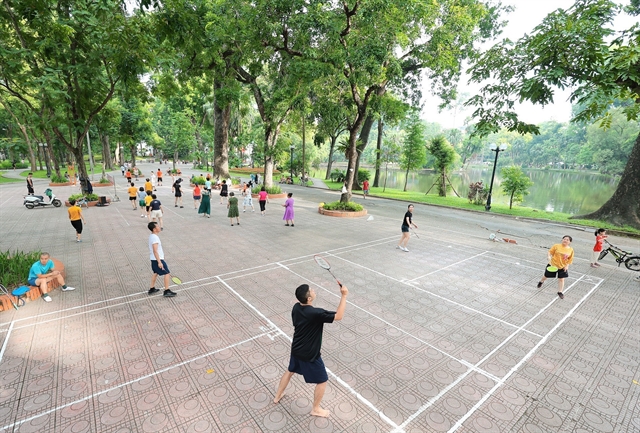
At Bách Thảo Park, the shift is especially evident along its edges. With fences removed, the park appears to extend into surrounding streets, absorbing the flow of pedestrians.
“Removing the fences and eliminating entrance fees allows residents in the Ba Đình area to enter the park from multiple directions instead of only through the main gates as before,” said Nguyễn Thị Lành, head of the park’s maintenance team.
“In addition to people exercising, we are seeing more young visitors coming to take photos, picnic and children playing in areas newly connected to sidewalks.”
The presence of younger visitors signals a broader evolution: parks are becoming more flexible, accommodating not just physical activity but also social interaction and creative use.
A similar shift is taking place at Indira Gandhi Park, where the removal of barriers has altered how the space is perceived within the wider urban fabric.
“When the fences were removed, the park fully integrated with surrounding sidewalks and streets. The open views help reduce the sense of congestion from surrounding concrete blocks, creating a softer transition between urban spaces,” said Nguyễn Anh Dũng, vice chairman of Giảng Võ Ward.
Urban planners say such transitions play an important role in improving city landscapes. Without rigid enclosures, green spaces help ease visual pressure, soften dense built environments and create a more welcoming atmosphere.
At Thống Nhất Park, one of the earliest sites to implement the policy, more than two kilometres of fencing have been dismantled, connecting the park seamlessly with surrounding streets.
“Previously, access to the park was mainly through designated gates and the space felt enclosed and separate from surrounding residential areas,” said Nguyễn Tiến Quang, vice chairman of Hai Bà Trưng Ward.
“Now people can enter and exit from many directions, making access much more convenient and significantly increasing usage. The park is no longer just a place to visit, it has become directly integrated into residents’ daily lives.”
|
| Green spaces at Bách Thảo Park help promote community physical activity. — VNA/VNS Photo |
With increased accessibility has come a broader range of activities. Visitors now read, picnic, work outdoors or simply spend extended periods in the space. The presence of international visitors and students has also added new layers of cultural interaction.
From a professional perspective, the shift represents a meaningful improvement in spatial organisation.
“Even before the fences were removed, access to parks was not particularly difficult. However, in terms of spatial organisation, removing the fences has created a much more open environment,” said architect Phạm Anh Tuấn of Hà Nội University of Civil Engineering.
“More importantly, it brings a sense of closeness, parks become a natural part of daily life.”
Open space, open challenges
Yet the transition is not without challenges. Increased foot traffic has placed greater pressure on management, sanitation and infrastructure. Issues such as illegal parking and spontaneous commercial activities have emerged in some locations.
“In the past, management was concentrated at entry gates. With open parks, control must now extend across the entire space,” said Quang.
“We have increased patrols, organised functional areas for exercise and leisure, monitored service activities and stepped up public awareness efforts.”
|
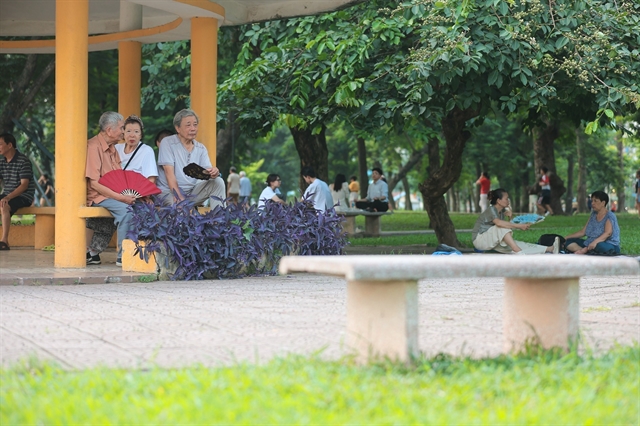
| The park offers a quiet spot for old people to rest and chat. — VNA/VNS Photo |
Nguyễn Mạnh Hùng of the Hà Nội Department of Construction said that parks are often described as the city’s green lungs and that easier access can improve both physical and mental health, contributing to a better quality of life.
Experts note that long-term sustainability will depend not only on infrastructure but also on public awareness and shared responsibility.
“Organising cultural and artistic activities suited to each space will attract more people. When they participate, they not only use the space but also own it in a spiritual sense, which helps raise awareness of preservation,” Tuấn said.
From the simple step of taking down fences, Hà Nội is shaping a new public space approach that emphasises openness, easier access and people-first design.
As the city continues to grow, these green spaces are no longer just places to visit but places to belong. — VNS
Society
 Society
 Society
 Society
 Society
 Society
 Society
 Society
 Society
 Society
 Society
 Society
 Society
 Society
 Society