 Society

Việt Nam, China seek stronger substantive parliamentary cooperation
1.
|
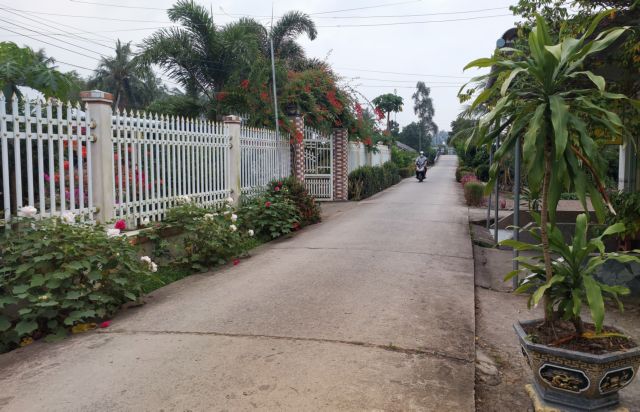
| A rural road in Cà Mau Province is paved, grows flowers and trees, improving local transport and beautifying rural landscape. — VNA/VNS Photo |
CÀ MAU — The southernmost province of Cà Mau is accelerating rural development alongside sustainable poverty reduction to steadily improve living standards.
Most of the province’s population lives in rural areas and depends largely on agriculture. However, its dense network of rivers and canals continues to limit transport and trade, affecting household economic growth.
After the merging of Bạc Liêu Province into Cà Mau in July last year, the expanded Cà Mau has seen significant changes in scale.
Lê Văn Sử, Deputy Chairman of the province People’s Committee, said Cà Mau now has 43 out of its 55 communes meeting all the criteria of the national target programme on building new-style rural areas, accounting for 78.18 per cent.
Of the 43 communes, three meet advanced new-style rural area standards. Of the three, one has reached exemplary standards.
Alongside rural development, poverty reduction efforts have been carried out effectively.
The province had 3,456 poor households as of the end of last year, or 0.63 per cent of its total households, and 7,489 near-poor households, or 1.37 per cent.
Rural transport infrastructure has been developed in a more synchronised manner, while many roads are lined with ornamental plants and flowers.
Sử Công Hầu, a resident of Bình Tốt A Hamlet in Vĩnh Phước Commune, said: “Since the start of the implementation of the programme to build new-style rural areas, local households have paid greater attention to maintaining hygiene, and planting trees and ornamental plants around their homes, contributing to a peaceful and liveable countryside.”
|
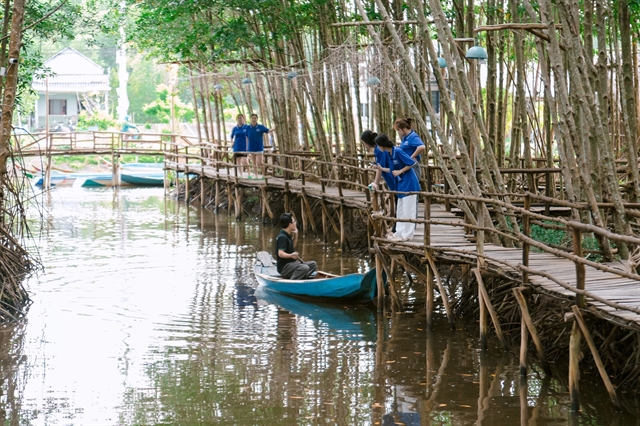
| Cà Mau Province has identified ecotourism as a key tourism sector, helping to make effective use of its distinctive forest–sea ecosystem. — VNA/VNS Photo |
Development goals
Cà Mau has defined its development goals by issuing a plan to implement national target programmes on building new-style rural areas, sustainable poverty reduction, and socio-economic development in ethnic minority areas for the 2026–30 period.
The plan aims to build modern, sustainable rural areas that can adapt to climate change, while developing a green, circular and ecological rural economy.
It targets average rural income to increase by 2.5–3 times by 2030 compared to 2020.
It aims for about 65 per cent of communes to meet new-style rural standards under the updated criteria for 2026–30, including 10 per cent of communes reaching modern standards by 2030.
The province People’s Committee is implementing various measures to support livelihoods for poor, near-poor and disadvantaged households across the province in 2026–30.
It is reviewing and proposing housing support needs for about 700 households, including policy beneficiary families as well as poor, near-poor and disadvantaged households, with more than VNĐ42 billion (US$1.7 million) from the “For the Poor” Fund to be used to provide new homes.
It will instruct local authorities to accelerate the implementation of projects under national target programmes, improve infrastructure and develop transport systems to support socio-economic growth.
Training and capacity building for officials involved in rural development and poverty reduction programmes will be strengthened.
|
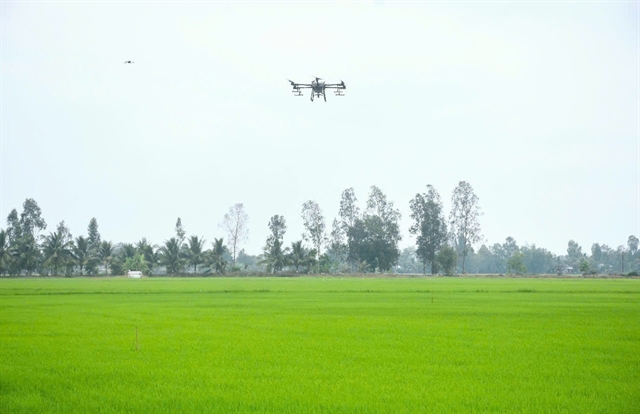
| Cà Mau Province is promoting modern agricultural production through advanced farming techniques, including the use of drones in rice cultivation. — VNA/VNS Photo |
The province has identified agriculture as a key pillar of the rural economy, closely linked to export targets.
It will focus on developing four main agricultural products – shrimp, mud crab, rice and salt – in 2026–30.
Shrimp remains the leading sector, with a target output of 750,000 tonnes and export turnover expected to exceed $3.5 billion by 2030.
Cà Mau is the country’s largest producer of shrimp and mud crab.
For mud crab, the province plans to expand farming areas by 15–20 per cent compared to last year, while developing at least two enterprises to lead export value chains. Exported crab products must meet traceability and quality standards.
In crop production, the province aims to maintain the rice farming area at more than 189,000ha, with a target output of 1.89 million tonnes.
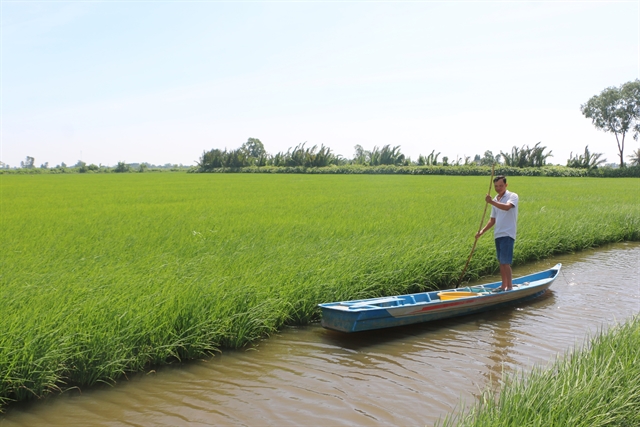
Ecological rice–shrimp farming models covering about 10,000ha will also be expanded in suitable areas to improve land use efficiency and adapt to climate change.
|
| Rice–shrimp farming in Cà Mau Province not only helps farmers raise income on the same field but also produces clean products. — VNA/VNS Photo |
Salt production will continue on 1,670ha in coastal communes, with a focus on improving quality and linking production with processing and stable consumption.
To achieve these goals, the province is working to complete production zoning plans, promote the application of science and technology and digital transformation, and encourage businesses to invest in deep processing and post-harvest preservation.
Trade promotion activities are also being strengthened, particularly on digital platforms, to expand markets and increase export value. — VNS
Society
 Society
 Society
 Society
 Society
 Society
 Society
 Society
 Society
 Society
 Society
 Society
 Society
 Society
 Society