 Society
Cambodian PM Hun Manet chairs welcome ceremony for Vietnamese counterpart Lê Minh Hưng in Phnom Penh
1.
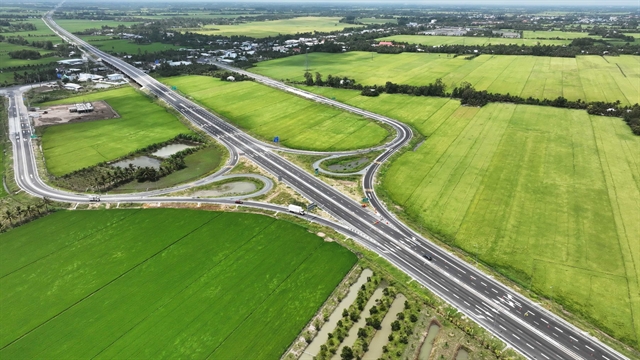 |
| The northern terminus of the Cần Thơ–Cà Mau Expressway. — VNA/VNS Photo |
By Phi Long
HÀ NỘI — For Nguyễn Nhật, a produce haulier from the Mekong Delta, a surge in new expressways has transformed how he works — and how goods move across Việt Nam.
Every few days, he loads his truck with fresh fruit in the southern province of Đồng Tháp Province and heads north to a wholesale market in Hà Nội — a journey that once meant grinding hours on the chronically congested National Highway 1A, but is now significantly faster thanks to a growing network of expressways.
Now he strings together a chain of newly opened expressways, cutting significantly into travel time and arriving with his cargo still crisp.
"We're much happier and more relaxed," he told VOV E-Magazine.
"The North-South Expressway is so much faster than the old National Highway 1A, which was always jammed. Less stopping, less fuel, less stress on the driver. The fruit gets to Hà Nội perfectly fresh."
Nhật's story has become a familiar one across Việt Nam, where a historic five-year highway drive is doing more than moving goods faster – it is opening up new economic opportunities that officials say could reshape how the country grows.
A pace without precedent
By the end of 2025, Việt Nam had completed roughly 3,188km of expressway nationwide, with the total rising to about 3,513km when interchanges and approach roads are included, according to the Ministry of Construction.
To put the pace in context: the country built just 89km of expressway in the entire decade from 2001 to 2010, and added just over 1,000km in the following decade. In the past five years alone, it has more than doubled that combined total.
Nguyễn Thế Minh, deputy director of the ministry's Construction Economics, Management and Investment Authority, called it a pace of development without precedent in the country's transportation history.
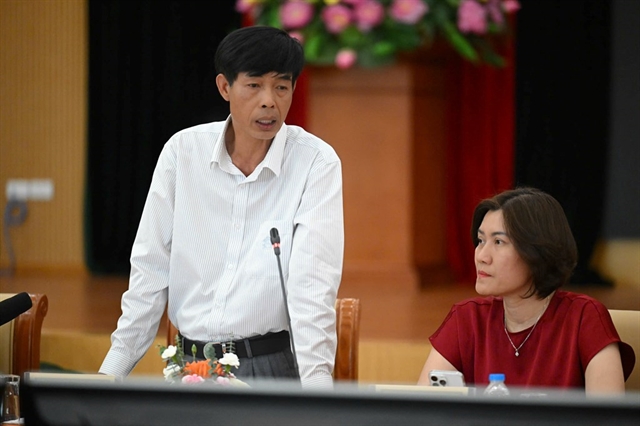 |
| Nguyễn Thế Minh (left), deputy director of the Constructỉon Economics, Management and Investment Authority under the Ministry of Construction. — VNA/VNS Photo |
The North-South Expressway backbone is now essentially complete, he said, linking the country from the Chinese border to the southern tip of the Mekong Delta and connecting mountain highlands, river plains and coastlines along the way.
"It shortens the development gap between regions, cuts logistics costs and gives Việt Nam the kind of synchronised, modern road network that can support the next stage of growth," he said.
The government's ambitions, however, don't stop there. It has set a target of 5,000km of expressway by 2030, meaning the country must build nearly as much again in the next five years as it did in the last five.
Economic corridors take shape
The effects are already visible beyond the windshields of truckers like Nhật. In the north, the expressways linking Hà Nội to Hải Phòng and the coastal, border city of Móng Cái have knit together an economic corridor anchored by the deep-water port at Lạch Huyện, slashing the cost of moving goods from industrial zones to the sea.
Tourism arrivals to Quảng Ninh surged 1.8 times after those routes opened; Hải Phòng saw a 1.63-times increase.
In the south, the connection between the HCM City–Long Thành–Dầu Giây Expressway and the Cái Mép–Thị Vải Port Complex has strengthened the competitiveness of one of Southeast Asia's busiest deep-water port clusters.
In the Mekong Delta, more than 220km of new expressway have opened since 2020, including the Cần Thơ–Hậu Giang and Hậu Giang–Cà Mau corridors, reducing congestion and lowering transport costs for agricultural produce officials say are translating into higher incomes for residents.
Phạm Minh Thành, a Hà Nội resident who recently travelled through the delta, said the difference was striking.
"Before, it took nearly two hours from Đồng Tháp to the Cần Thơ International Airport because the roads were narrow and crowded. Now, on the Mỹ Thuận-Cần Thơ Expressway, it takes about an hour. The road is good, travel is safe and much less tiring," he said.
Shifting economic geography
Economist Lê Xuân Nghĩa argued that the benefits extend well beyond travel time. The simultaneous construction push drove demand across the steel, cement and building materials industries and created jobs, he said.
 |
| Economist Lê Xuân Nghĩa. — Photo vneconomy.vn |
The longer-term payoff is a fundamental shift in Việt Nam's economic geography – drawing investment away from saturated urban cores and into provinces and cities with advantages in land availability and infrastructure connectivity.
The results were real, but so were the barriers that had to come down first.
The government streamlined investment procedures, permitted direct contractor assignment on large packages and allowed material quarries to be assigned directly to construction firms, clearing bottlenecks that had persisted for years.
Crucially, it also pushed authority down to provincial governments, making local officials directly responsible for land clearance, historically the single most intractable obstacle to highway construction.
The approach worked, according to Trần Chủng, chairman of the Vietnam Association of Road Traffic Investors. Contractors invested heavily in modern equipment and updated construction methods, helping projects stay on schedule without sacrificing quality.
"People used to say, 'Wherever the schedule gets rushed, quality suffers'. But what we've seen recently proves the opposite is possible when modern technology and management are applied," he said.
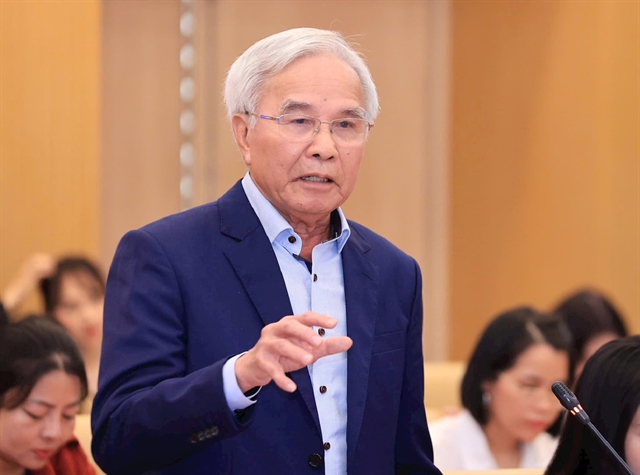 |
| Trần Chủng, chairman of the Vietnam Association of Road Traffic Investors. — Photo congluan.vn |
The next infrastructure leap
Việt Nam's highway ambitions don't stop at 5,000km of expressway. The recent 14th National Congress of the Communist Party of Vietnam, which set national priorities, identified the development of modern, integrated transport infrastructure as one of three strategic national priorities for the coming years.
The agenda includes major international seaports and airports, urban transit systems in Hà Nội and HCM City, and, most prominently, a high-speed North-South Railway. The Government has also set a target of completing the Lào Cai–Hà Nội–Hải Phòng high-speed rail line before 2030.
Construction Minister Trần Hồng Minh said the ministry aimed to raise seaport throughput capacity to between 1.2 billion and 1.4 billion tonnes and expand the country's aviation network to handle some 275 million passengers a year.
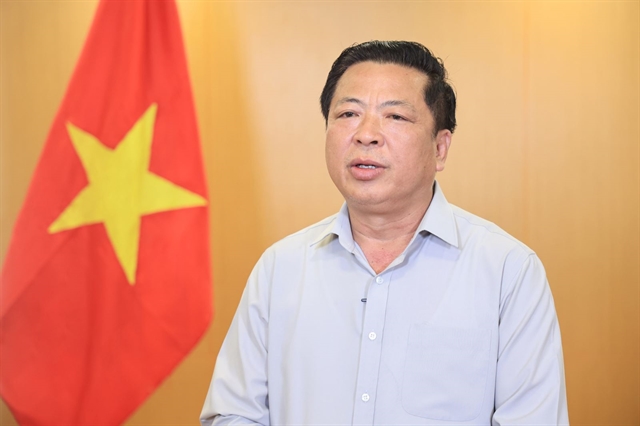 |
| Minister of Construction Trần Hồng Minh. — Photo moc.gov.vn |
Private capital will be essential to getting there. In 2024 and 2025, the Government revised the public-private partnership law to address issues in BOT toll road contracts and strengthen confidence among private developers and lenders.
Phùng Đức Dũng, who heads the public-private investment management division at the Department for Roads under the Ministry of Construction, said the legal changes lay the groundwork for unlocking the private financing needed to hit the 2030 expressway target.
Still, the scale of what lies ahead is daunting.
Phạm Đăng Hoạt, chairman of Định An Group LLC, estimated that the workload for the next term would be four to five times greater than the last, requiring contractors to expand significantly and operate at a pace well beyond what most have managed before.
What contractors are calling for, according to Hoạt, is a better working environment – starting with serious investment in workforce training, which he called nearly decisive to project outcomes – along with more flexible policies on sourcing local materials and a selection process that puts only capable, experienced firms on the job.
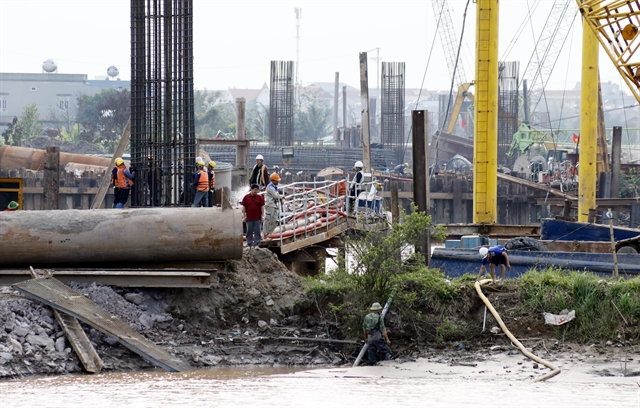 |
| A bridge takes shape over the Ninh Cơ River on the Ninh Bình–Hải Phòng Expressway. — VNA/VNS Photo |
"After the North-South Expressway, we move straight into the high-speed railway. When both are finished, the country will truly break through, and we'll unlock everything this country is capable of," he said.
For now, the highways themselves tell much of the story. Twenty-seven component projects opened in 2025 alone, from the Bãi Vọt–Hàm Nghi sections of the Eastern North-South corridor to the Biên Hòa-Vũng Tàu Expressway.
Taken together, they mark more than the rise of a national highway network — they signal a shift in how Việt Nam moves, works and grows, from drivers like Nhật to the economy as a whole. — VNS
Society
 Society
 Society
 Society
 Society
 Society
 Society
 Society
 Society
 Society
 Society
 Society
 Society
 Society
 Society