 Society
SBV to curb property price inflation, enforce lending rate rules
1.
|
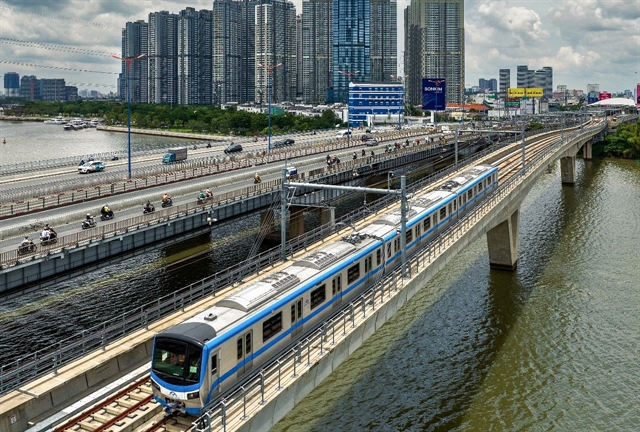
| HCM City’s Metro Line No. 1, connecting Bến Thành Market and Suối Tiên Theme Park, has been in operation since late 2024. The Bến Thành-Thủ Thiêm metro line is set to break ground on April 30. — VNA/VNS Photo |
HCM CITY — HCM City will break ground this month on two major infrastructure projects worth more than VNĐ97 trillion (US$3.7 billion) in bid to improve connectivity to Long Thành International Airport and support investment in southern Việt Nam.
The projects, a metro line linking the city centre to the Thủ Thiêm urban area and an expressway connecting Long Thành to coastal tourism hubs, are scheduled to begin construction around the National Reunification (April 30) public holiday.
The 6km Bến Thành-Thủ Thiêm metro line will be developed under a public-private partnership model and is expected to link the central business district with Thủ Thiêm, a planned financial centre across the Sài Gòn River.
The 42km Hồ Tràm-Long Thành expressway will provide a direct route between the future airport and key tourism and industrial zones, improving access to ports and satellite cities in the region.
Integrated transport network
The projects are part of the city's push to build an integrated transport network, with urban rail at its core. Under a recently approved plan, the city aims to complete six metro and urban railway lines with a combined length of 187km by 2030.
The plan follows a National Assembly resolution that allows for faster approval processes and greater decentralisation in urban rail development.
The city’s first metro line, the 19.7-km Bến Thành-Suối Tiên route, began operations in late 2024 and carries more than 55,000 passengers a day, according to city data.
Construction of Metro Line No. 2, which will run from Bến Thành to Tham Lương, is expected to start soon and will be the first project to use the new policy framework.
Additional planned routes include a railway linking Thủ Thiêm with Long Thành airport, an extension of the existing metro line to Bình Dương province, Metro Line No. 6 connecting Tân Sơn Nhất airport to Phú Hữu, and a line to Cần Giờ.
Urban rail is expected to account for 20-30 per cent of travel demand by 2030, rising to as much as 60 per cent by 2045 as the network expands to about 700 km.
Improved transport links, particularly to Long Thành airport, could support real estate development and attract foreign investment, analysts say, especially in industrial and logistics sectors tied to global supply chains.
HCM City attracted nearly $2.9 billion in foreign direct investment in the first quarter of 2026, underscoring continued investor interest despite global economic uncertainty.
Authorities plan to mobilise funding through a mix of public investment and private capital, while promoting transit-oriented development to maximise land value along transport corridors. — VNS
Society
 Society
 Society
 Society
 Society
 Society
 Society
 Society
 Society
 Society
 Society
 Society
 Society
 Society
 Society