 Society

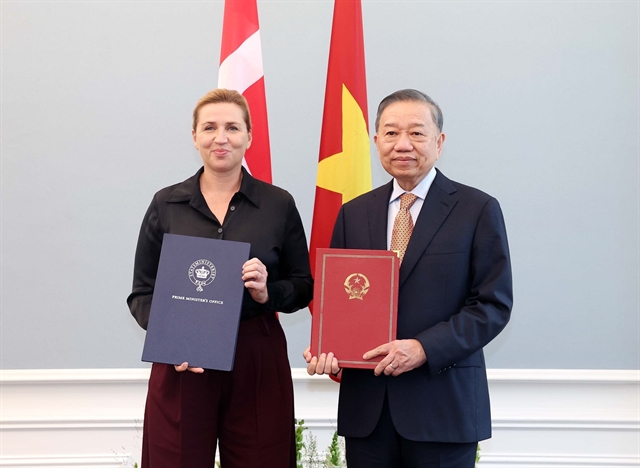
Việt Nam, Denmark issue joint statement on establishment of Comprehensive Strategic Partnership
1.
In a conference room bringing together regulators, scientists, and food safety experts from Việt Nam and Canada, the most familiar items on Vietnamese dining tables were examined from a different perspective: fish sauce, fresh fish, chicken, and mushrooms. The objective was not to debate right or wrong, but to address a fundamental question: which hazards truly warrant concern for these foods, and which risks should be prioritised for management?
The consultation workshop shared results of food safety risk assessment studies supported by the Safe Food for Growth (SAFEGRO) Project which were selected as priorities by the respective government agencies (Ministry of Health -MOH, Ministry of Agriculture and Environment -MAE, and Ministry of Industry and Trade -MOIT). This work forms part of a long-term effort for Việt Nam to adopt a risk-based approach to food safety management. Risk-informed national food safety management and inspection is considered international best practice to ensure that more cost effective regulatory decisions are grounded in solid scientific evidence and not focused on end-product testing.
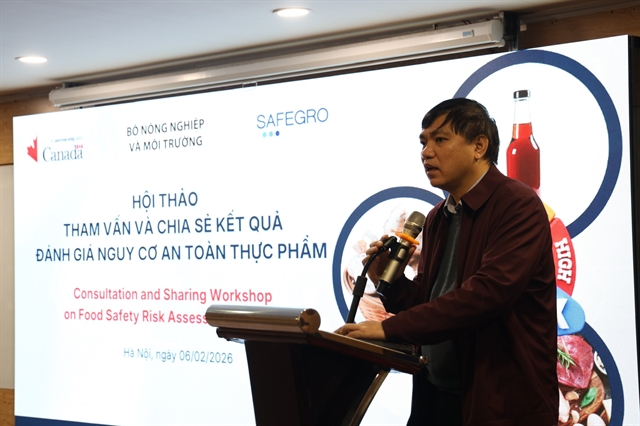 |
| Nguyễn Văn Thuận,delivers the opening remarks at the Consultation and Sharing Workshop on Food Safety Risk Assessment in Hà Nội. |
In his opening remarks, Nguyễn Văn Thuận, Head of the Policy and Legal Affairs Division, Department of Quality, Processing and Market Development (MAE), and Member of SAFEGRO’s Steering Committee, emphasised the central role of food safety risk assessments. “In food safety risk analysis, risk assessments are the foundation for risk management and risk communication. Risk assessment plays a particularly critical role because if hazard identification and assessment are incomplete or inaccurate, subsequent risk management decisions will be inappropriate, reducing the effectiveness and significance of food safety assurance efforts.”
Risk assessment is not merely a standalone technical report but provides a foundation for decision-makers and regulatory authorities to correctly identify issues, direct resources efficiently, and avoid policy responses lacking scientific basis.
Through SAFEGRO, the Government of Canada has supported Việt Nam in building risk assessment capacity through years of in-depth training and the launching of the Vietnam Food Safety Risk Assessment Centre (VFSA) with the shift from theoretical instruction to practical, hands-on application of quantitative risk assessments. Trained risk assessors from two specialised Vietnamese agencies completed four risk assessments on food groups with high consumption rates and significant public health relevance, including fish sauce, fresh fish, chicken, and mushrooms.
These studies were designed as intensive practical exercises, in which designated Vietnamese risk assessors were trained over several years to carry out comprehensive quantitative risk assessments from hazard identification and hazard characterisation, to exposure assessment and risk characterization. The process generated scientific research results, but, more importantly, enabled these professional staff to progressively master and institutionalise the risk assessment methodology in a systematic and sustainable manner.
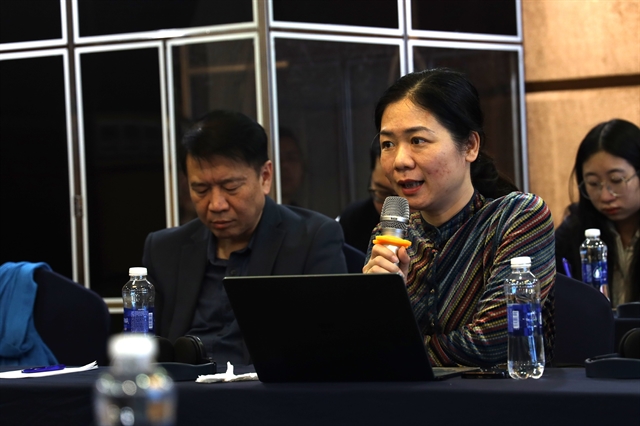 |
| Nguyễn Thị Băng Tâm, representative of the Directorate of Fisheries and Fisheries Surveillance, presents the pilot risk assessment findings, underscoring their scientific rigor and practical significance under the SAFEGRO Project. |
From a sectoral management perspective, representative of the Directorate of Fisheries and Fisheries Surveillance Nguyễn Thị Băng Tâm highly appreciated the practical value of the research outcomes, while emphasising the importance of risk assessments in supporting evidence-based decision-making. “I highly commend the efforts and results of the two research teams. The studies were implemented methodically, ensuring scientific rigor and delivering strong practical relevance.”
Regarding fish sauce, Tâm noted that the risk assessment results provided a more balanced perspective for management. “The study results confirm that histamine in fish sauce, for example, does not adversely affect consumer health due to the low level of consumption.” At the same time, she stressed the importance of risk communication to prevent unnecessary public concern. “Communication is needed to ensure that people are not alarmed and can continue to safely consume traditional fish sauce.”
Speaking online from Canada, Dr. Brian Bedard, the SAFEGRO food safety expert, stated that the greatest value of the process lies in understanding the true nature of risk assessment work.
“The most important thing we aim to support and demonstrate is the level of complexity involved in conducting a comprehensive quantitative risk assessment, as well as the recognition of the professional expertise required for qualified “risk assessors” to do so. This is not an easy task and drawing sound conclusions from risk assessments results for risk management decision-making is a major challenge,” he said.
 |
| Brian Bedard, food safety expert of the SAFEGRO Project, joins the workshop virtually from Canada. |
According to Dr. Bedard, risk assessment is truly effective only when embedded within a clear process of risk ranking and prioritisation.
If we undertake risk assessment, from the outset we must ensure comprehensive hazard identification, through risk ranking and prioritization. In other countries the risk assessment process begins with overall risk ranking and risk prioritization to determine which food safety risks genuinely warrant the allocation of limited resources for targeted risk assessments.”
A noteworthy point emphasised by Dr. Bedard during the discussion was Việt Nam’s use of the FDA-iRisk tool for quantitative risk assessments. “It is very interesting that, among all countries applying iRisk on-line tool, Vietnam stands out as the most prominent user.”
Mastering iRisk demonstrates that Việt Nam has begun to access advanced risk assessment tools used by leading food safety regulatory agencies worldwide. However, the tool and other more sophisticated risk assessment methodologies and modelling they were trained on can only realise their full potential when embedded within an overarching strategy in which risks are ranked and prioritised transparently to focus limited resources on costly risk assessments.
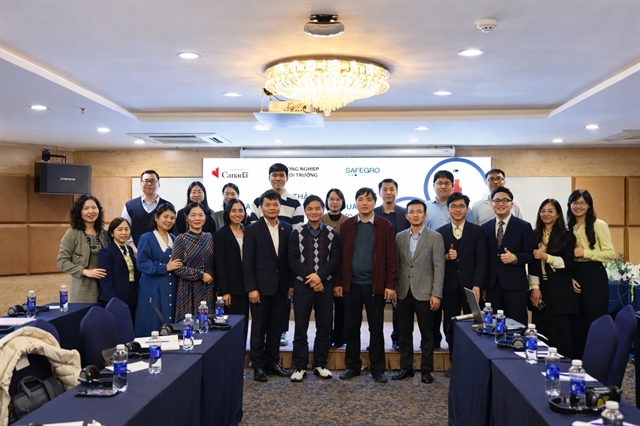 |
| Delegates from the ministries of Agriculture and Environment, Health, and Industry and Trade, and Canadian partners pose for a group photo, marking strengthened collaboration and capacity building in risk-based food safety management. |
Beyond disclosing technical capacity, the workshop also reflected the formation of a network of risk assessment experts for Việt Nam. Risk assessors from the MOH, MAE, and MOIT were trained together, engaged in joint research, and exchanged expertise within a common methodological framework. According to Canadian experts, this is an essential condition for ensuring that risk assessment does not remain limited to pilot studies but gradually becomes a routine function within the national risk-informed food safety management system.
These pilot studies therefore reflect not only reinforced technical capacity, but also a profound shift in regulatory thinking. Food safety is no longer merely a reactive response to incidents; it is progressively being anchored in a more preventive approach based on science, data, and close intersectoral coordination. VNS
Society
 Society
 Society
 Society
 Society
 Society
 Society
 Society
 Society
 Society
 Society
 Society
 Society
 Society
 Society