 Society
Cyber CARE Summit 2026 launched to connect capital-wide school digital safety
1.
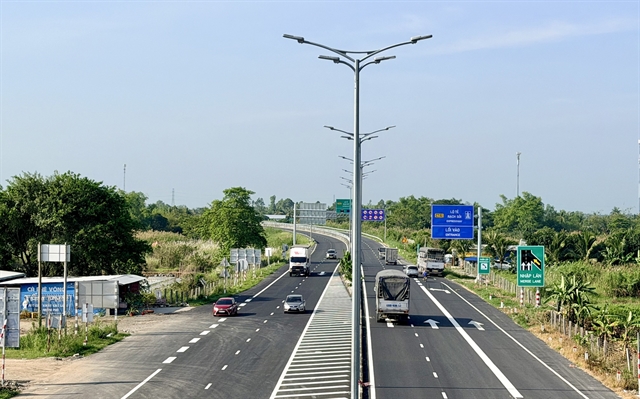 |
| The Lộ Tẻ–Rạch Sỏi expressway has proven effective in strengthening connectivity between An Giang Province and other provinces in the Mekong Delta. — VNA/VNS Photo Thanh Sang |
AN GIANG — An Giang Province plans to achieve rapid and sustainable socio-economic development this year, aiming to become a new growth engine of the Cửu Long (Mekong) Delta.
It targets economic growth of 10.71 per cent or higher, generating momentum for the wider region, per capita of US$3,600 and a 0.1–0.2 percentage point reduction in multidimensional poverty.
It also aims to develop into a spiritual–ecological tourism centre to attract international visitors, a hub for high-tech agriculture and export of rice and seafood, and a gateway to Cambodia, boosting trade and international integration.
It eyes a place in the top 10 in the Digital Transformation Index (DTI) and the Provincial Innovation Index (PII), thereby attracting investment.
In restructuring the economy, An Giang identifies innovation, science and technology and digital transformation as key drivers, allocating at least 3 per cent of total state budget expenditure to these areas.
In agriculture, a pillar of its economy, An Giang targets annual rice output of around 8.8 million tonnes, with high-quality rice accounting for more than 68 per cent, and seafood output of over 1.6 million tonnes.
Lê Hữu Toàn, director of An Giang's Department of Agriculture and Environment, said the province is focusing on effectively implementing projects in agricultural, livestock and fisheries development, restructuring production towards high-tech application, organic and clean agriculture, raising value and linking production with preservation, processing and consumption.
He said An Giang is accelerating implementation of the Ministry of Agriculture and Environment’s project for growing one million hectares of high-quality, low-emission rice associated with green growth in the delta by 2030, describing it as a strategic move to adapt to climate change and meet international standards.
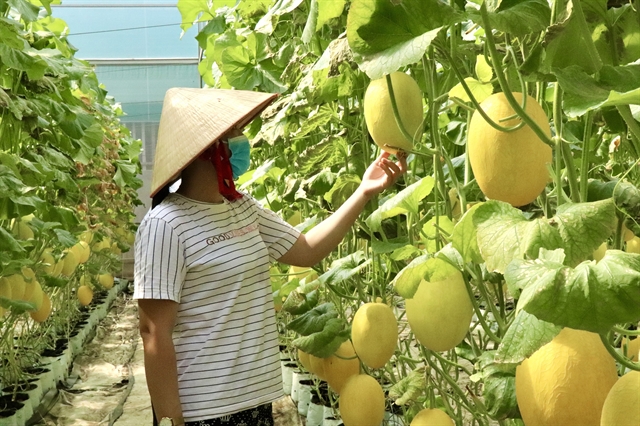 |
| Honeydew melon planted in a net house in An Giang Province’s Mỹ Hoà Hưng Commune delivers consistent yields and quality. — VNA/VNS Photo Thanh Sang |
Nguyễn Thống Nhất, director of the provincial Department of Industry and Trade, said An Giang is reorganising and optimising industrial development to increase the sector’s contribution to the economy, while improving export quality by raising the share of deeply processed, high-tech and high value-added goods and expanding export scale.
The province is stepping up trade promotion and supporting businesses to maintain traditional markets and expand into new ones.
Export this year is targeted to rise by 5.4 per cent from 2025 to $2.56 billion.
With its border and coastal advantages, An Giang is building strategic economic corridors, including developing border trade linked with a multi-sector border-gate economic zone and digitising the customs process to shorten clearance times.
It is finalising a project to develop it into a national marine economic centre.
It is building a large fisheries centre and forming an urban–seaport–tourism–services chain linking Thổ Châu, Kiên Hải, Hà Tiên, Rạch Giá, and Hòn Đất.
Tourism has been identified as a spearhead sector.
The province targets receiving 25 million visitors this year, up 3.6 per cent year-on-year, including more than 2.1 million overseas visitors, up 11 per cent, and tourism revenues of VNĐ70 trillion ($2.66 billion).
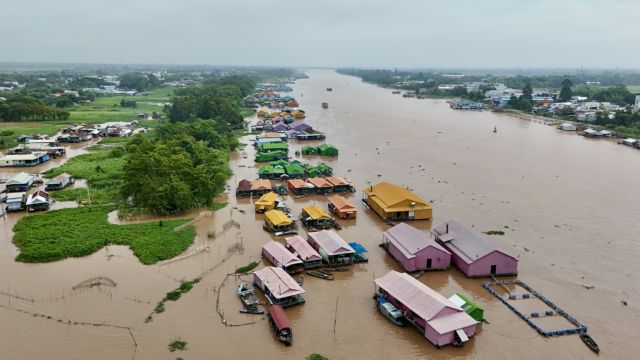 |
| The Sắc Màu (Colourful) floating village along the Hậu River is a well-known tourist attraction in An Giang Province’s Vĩnh Hậu Commune. — VNA/VNS Photo Thanh Sang |
Bùi Quốc Thái, director of the Department of Tourism, said a highlight of the 2026 tourism development strategy is building Phú Quốc Island into a high-quality, internationally classed services and ecological tourism centre, ready to host the Asia-Pacific Economic Cooperation (APEC) Economic Leaders’ Meeting in 2027.
This is a strategic move to elevate the image of Phú Quốc and An Giang on the global tourism map, creating opportunities to boost infrastructure, attract investment and strengthen the island’s international standing, he said.
APEC Summit 2027 is also an opportunity to promote Phú Quốc as a high-end ecological resort destination of international standards, closely associated with the image of a modern, friendly and globally integrated Việt Nam.
Hồ Văn Mừng, Chairman of the An Giang People’s Committee, said to realise breakthrough goals, the province is placing special emphasis on governance under the principle of “six clarities”: clear people, clear tasks, clear timelines, clear products, clear responsibilities, and clear authority.
It would strengthen accountability for agency heads in carrying out assigned tasks and refine priority mechanisms and policies to promote rapid and sustainable socio-economic development, he said.
Key tasks for socio-economic development in 2026 include accelerating public spending to achieve 100 per cent of the plan and removing obstacles for production and business activities, particularly by supporting enterprises to maintain stable output and boost export processing.
The province will improve infrastructure and planning, speed up progress on the Châu Đốc–Cần Thơ–Sóc Trăng expressway and prepare facilities to serve the APEC 2027 Leaders’ Meeting.
It will continue to refine the two-tier local government model and the Public Administrative Service Centre to better serve the public and businesses. — VNS
Society
 Society
 Society
 Society
 Society
 Society
 Society
.jpg) Society
Society
 Society
 Society
 Society
 Society
 Society
 Society
 Society




