 Society

Lotte, Phát Đạt combine strengths in Thu Thiem project
1.

|
| Officers at the Bắc Giang Ward Public Administration Service Centre in Bắc Ninh Province receive citizens coming to complete administrative procedures. Photos courtesy of Bắc Ninh Province |
BẮC NINH — After the two-tier local administration model officially came into operation in early July this year, public administration service centres at commune and ward levels across the northern province of Bắc Ninh have gradually stabilised.
With a proactive, flexible and highly responsible approach, these centres are increasingly meeting the needs of residents and businesses.
Bắc Giang Ward in Bắc Ninh Province was established through the merger of seven former wards of Bắc Giang City, including Thọ Xương, Ngô Quyền, Xương Giang, Hoàng Văn Thụ, Trần Phú, Dĩnh Kế and Dĩnh Trì, bringing the population to nearly 123,000.
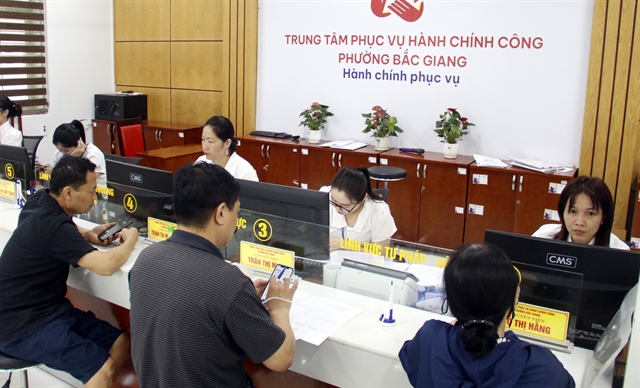
As a central area with high population density, the ward’s Public Administration Service Centre has faced heavy pressure since beginning operations on July 1, handling an average of around 500 visitors per day, with peak days exceeding 700.
|
| Hundreds of citizens visit the Bắc Giang Ward Public Administration Service Centre in Bắc Ninh Province each day to carry out administrative procedures. |
In response, the Bắc Giang Ward People’s Committee has invested in upgrading facilities, adding equipment and reinforcing staffing at the service centre to ensure administrative procedures are received and processed quickly, smoothly and without disruption.
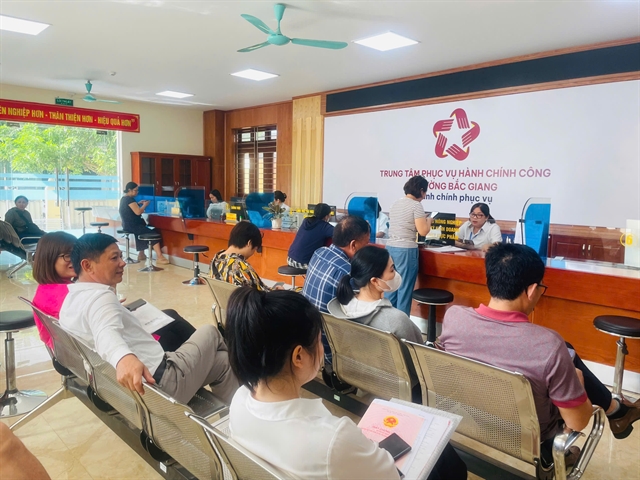
Currently, the centre operates at two locations, including the headquarters of the former Ngô Quyền Ward People’s Committee and the headquarters of the former Dĩnh Kế Ward People’s Committee, each equipped with 10 service counters. Additional officials and Youth Union members have been deployed to assist residents with online applications, create VNeID electronic identification accounts and guide them in using digital services.
Lê Thiện Tích, a resident of Bắc Giang Ward who visited the centre to complete procedures for receiving his pension and war invalid allowance via bank transfer, said: “I was given careful and dedicated guidance by the staff, so I completed the procedures quickly and did not have to return multiple times.”
According to Lương Văn Huy, Deputy Director of the Bắc Giang Ward Public Administration Service Centre, on the first day of operation, the centre publicly posted the full set of administrative procedures under ward-level authority.
It also coordinated with a consulting unit and the provincial Department of Science and Technology to operate the administrative procedure processing software, ensuring staff were fully proficient in its use.
|
| Citizens complete administrative procedures at the Bắc Giang Ward Public Administration Service Centre in Bắc Ninh Province. |
Huy added that many residents have expressed positive feedback on the two-tier local administrative model, noting that consolidating procedures at the ward level has saved time and effort by eliminating the need to travel between multiple offices. However, to further improve service quality, the software system needs to be completed and access speeds increased to ensure smooth and stable operation.
Trần Văn Thanh, Chairman of the Bắc Giang Ward People’s Committee, said: “As we have taken over the workload of seven former wards, the number of residents coming to complete procedures is very large. We have proactively added service counters, reinforced staffing and required officials and civil servants to work overtime, including weekends, to promptly meet public demand.”
In the coming period, the ward plans to review public land and facilities in order to develop a more modern and centralised administrative centre to better serve residents.
Tân Dĩnh Commune in Bắc Ninh Province was formed through the merger of three former communes of Lạng Giang District in the former Bắc Giang Province, including Tân Dĩnh, Thái Đào, and Đại Lâm.
From the outset, the locality made thorough preparations for the organisational structure of Party bodies, government agencies, mass organisations and specialised units in accordance with regulations, ensuring smooth operations during the transition to the two-tier local administrative model.
The reception and processing of administrative dossiers in the commune are currently carried out at two locations. According to commune leaders, after more than a week of implementation, the commune’s Public Administration Service Centre has handled nearly 500 visits, with procedures processed in compliance with regulations, results returned on time and no complaints recorded.
However, because many residents concentrate at the central location, the use of only one official seal of the commune People’s Committee has resulted in longer waiting times for citizens at the other site. In addition, many administrative procedures have not yet been fully integrated into the national public service portal, limiting online processing. The application of information technology remains uneven and the absence of unified provincial regulations on fees and charges has also caused difficulties.
To ensure the smooth operation of the two-tier local administrative model, the province needs to provide timely training and capacity building for officials and civil servants to help them adapt to new responsibilities, particularly those previously handled at the district level. At the same time, clear regulations should be issued on the scope of delegated authority for commune-level officials to ensure effective leadership, management and timely administrative processing.
Central and provincial agencies should continue to connect and complete administrative procedure systems with national and sectoral databases, including electronic civil status, population, business registration, criminal records, land, taxation, treasury and insurance systems in line with the two-tier governance model. Relevant agencies also need to make coordinated investments in facilities and equipment to meet current digital transformation requirements.
Since the rollout of the two-tier local government model, Bắc Ninh’s entire political system has responded decisively and is gradually adapting well to new demands and tasks. The mindset and attitude of officials and civil servants have shifted from performing administrative tasks to serving the public. The province has prioritised investment in facilities for the two-tier system, particularly public administration service centres.
In the coming period, Bắc Ninh will continue to strengthen the operations of public administration service centres at all levels. For new software systems, each unit will assign dedicated technical staff to support effective operation. Localities and agencies will also proactively review facilities and equipment and propose timely additions to avoid disruptions in services for residents and businesses. — VNS
Society
 Society
 Society
 Society
 Society
 Society
 Society
 Society
 Society
 Society
 Society
 Society
 Society
 Society
 Society