 Society
84 individuals investigated for transnational online frauds
1.
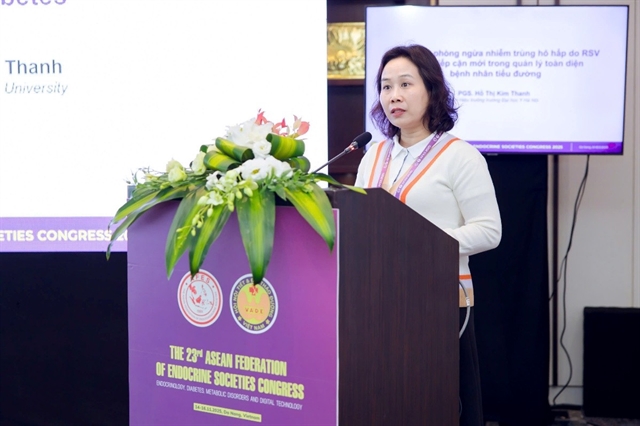 |
| Dr Hồ Thị Kim Thanh, Vice Rector of Hanoi Medical University, speaks at the event. — Photo courtesy of the organiser |
ĐÀ NẴNG — Adults with diabetes have a higher risk of hospitalisation due to respiratory syncytial virus, speakers said at the 23rd ASEAN Federation of Endocrine Societies Congress in the central city of Đà Nẵng.
Speaking at the event, Dr Hồ Thị Kim Thanh, Vice Rector of Hanoi Medical University, said that adults with diabetes have a 2.4–11.4 times higher risk of hospitalisation due to RSV, compared to those without diabetes.
"The disease caused by RSV can lead to severe complications and significantly impact quality of life. This challenge is compounded by the fact that RSV treatment is mainly supportive, with no specific antiviral treatment available,” said Dr Thanh.
With the theme 'Endocrine Diseases, Diabetes, Metabolic Disorders, and Digital Technology', the event was organised by the Vietnam Association of Diabetes and Endocrinology in collaboration with GSK Vietnam.
Facing the growing burden of disease among older adults and the presence of comorbidities that increase susceptibility to infectious diseases, health care experts discussed the importance of integrating vaccination against infectious diseases into comprehensive care for people with diabetes.
RSV is a highly contagious seasonal virus that can spread via the respiratory route through inhalation of droplets when a person coughs or sneezes or through contact with respiratory secretions from infected individuals.
It can transmit within households and is estimated, on average, one infected person can spread the virus to three others.
The clinical presentation of RSV varies from asymptomatic carriage through cold-like symptoms to acute respiratory distress. In certain cases, RSV can lead to serious conditions associated with an increased risk of cardiovascular complications, hospitalisation or death.
In Việt Nam, an estimated seven million people are living with diabetes, with more than 55 per cent already experiencing complications, including cardiovascular, neurological and renal issues.
Research indicates that people with diabetes could have a higher risk of contracting infectious diseases (including RSV infection) compared to those without diabetes.
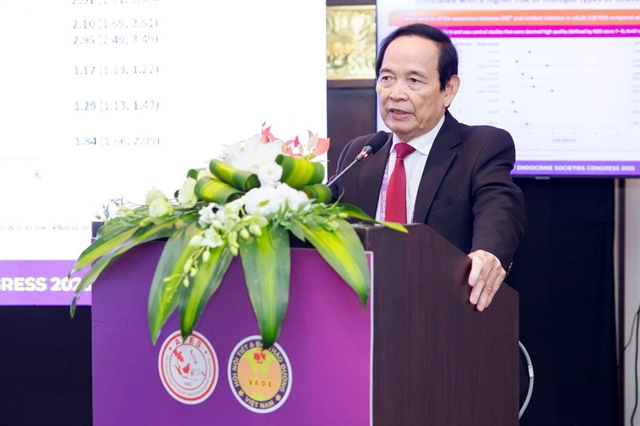 |
| Professor Dr Trần Hữu Dàng, President of the Vietnam Association of Endocrinology and Diabetes, speaks at the event. — Photo courtesy of the organiser |
Health experts said that focusing on the prevention of infectious diseases in individuals with diabetes is essential to mitigate the impact of these conditions on personal lives, society and the health care system.
Current vaccine strategies are being implemented using advanced technologies that enhance immune response, potentially delivering more positive impacts for older adults.
More than 80 per cent of people with diabetes express trust and agree to receive influenza vaccination when recommended by a diabetologist, underscoring the critical role of health care professionals in promoting immunisation and reducing the burden of vaccine-preventable diseases in the community.
Professor Dr Trần Hữu Dàng, President of the Vietnam Association of Endocrinology and Diabetes, said that people with diabetes should receive essential vaccines based on age, including vaccines against hepatitis B, COVID-19, influenza, pneumococcal, RSV, diphtheria, pertussis and tetanus.
”In Việt Nam, the Ministry of Health’s 2020 guidelines for type 2 diabetes diagnosis and treatment also recommend annual influenza and pneumococcal vaccination as well as hepatitis B immunisation," said Dr Dàng.
"In 2025, the Vietnam Association of Endocrinology and Diabetes continues discussions on consensus to include diphtheria, pertussis and tetanus and RSV vaccination for type 2 diabetes patients, emphasising proactive disease prevention in high-risk groups.” — VNS
Society
 Society
 Society
 Society
 Society
 Society
 Society
 Society
 Society
 Society
 Society
 Society
 Society
 Society
 Society