 Society

AITO Looks Ahead to Europe, Building a Thriving Automotive Ecosystem
1.
 |
| Heavy rains and flooding severely damaged aquaculture cages and rafts in Xuân Cảnh Commune, Đắk Lắk Province. — VNA/VNS Photo Đỗ Trưởng |
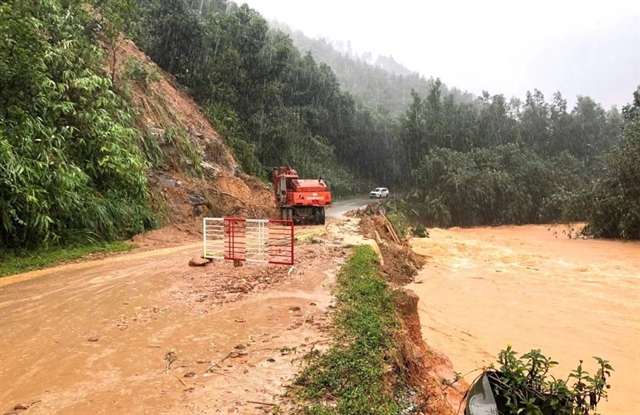
HÀ NỘI — Late-year storms and floods in 2025 caused extensive damage to aquaculture operations across the central region, sweeping away more than 1,800ha of farming areas and tens of thousands of cages and rafts.
Total losses are estimated at nearly VNĐ5.3 trillion (around US$200 million).
As affected communities struggle to recover, fisheries authorities are putting forward a series of urgent support measures.
From October to November, storms No. 10, 12 and 13 brought heavy rain and severe flooding to the region, hitting Đắk Lắk, Gia Lai and Khánh Hòa the hardest.
Figures from the Department of Fisheries and Surveillance show that 1,848ha of aquaculture farms, mostly brackish-water operations, were damaged.
More than 23,000 cages, equivalent to over 331,000cu.m of floating structures, were destroyed or washed away. In total, over 4,045 farming households suffered direct losses.
As of November 28, Khánh Hòa, Đắk Lắk and Gia Lai provinces reported combined damage of more than VNĐ4 trillion.
During the storms, fisheries authorities maintained around the clock monitoring of fishing vessels through the vessel monitoring system and issued guidance to localities on disaster response.
When waters receded, working teams were deployed to the worst-hit areas to assess damage, check environmental conditions and help farmers clean ponds and repair cages. Dead fish collection, disinfection and assessments of material and seed-stock needs were carried out promptly.
The department has also asked provinces to coordinate with banks on debt freezing, rescheduling and credit support. Market regulators have been instructed to prevent speculation and price increases for aquaculture materials and seed stock.
Several businesses have joined the recovery effort by supplying nets, tarpaulins, veterinary drugs and other essentials to support farmers in restarting production.
Fisheries officials say the scale of losses will have knock-on effects for production in 2026.
To address this, the sector is outlining both urgent and longer-term measures.
In the short term, provinces are being asked to speed up loss verification so households can access support, while guiding farmers on environmental treatment, safe restocking and short-cycle species to meet year-end demand. A regional meeting will also be held to connect banks, credit funds and suppliers of seed and materials.
Longer-term proposals focus on restructuring production towards greater resilience, including revising and replanning cage farming zones and tightening control over stocking density as extreme weather becomes more unpredictable.
The sector is also calling for further investment in core aquaculture infrastructure, such as embankments, drainage systems and automatic monitoring stations. Environmental monitoring and early-warning systems will be strengthened, with digital technologies more widely applied to track conditions in farming areas.
To help farmers better withstand natural disasters, the Department of Fisheries and Surveillance is proposing the creation of a dedicated credit mechanism and a risk-insurance model for marine aquaculture. — VNS
Society
 Society
 Society
 Society
 Society
 Society
 Society
 Society
 Society
 Society
 Society
 Society
 Society
 Society
 Society