 Society

AITO Looks Ahead to Europe, Building a Thriving Automotive Ecosystem
1.
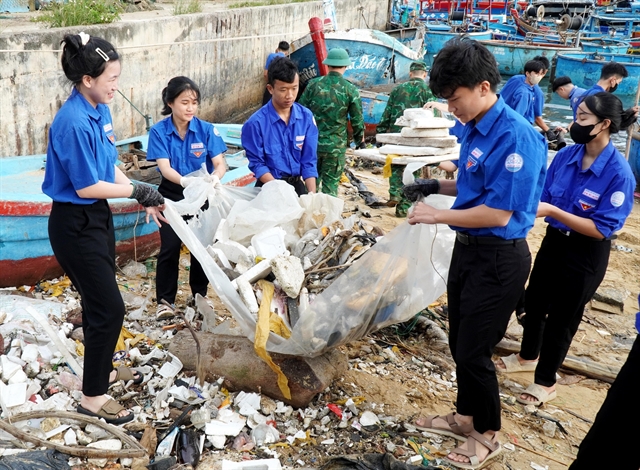 |
| Youth volunteers clean up a beach in the southern province of Gia Lai in March. — VNA/VNS Photo |
HÀ NỘI — Việt Nam has unveiled an ambitious nationwide campaign to cut waste, overhaul sanitation practices and push households to sort their rubbish at source by the end of the decade, marking one of the country’s most sweeping environmental efforts to date.
The plan, issued this week under a new Government resolution, calls for every province and city to organise weekly clean-up drives, expand recycling infrastructure and eliminate illegal dumpsites that have long blighted urban and rural communities.
By 2030, all local administrations will be required to implement household waste sorting, supported by adequate collection points and technical standards to prevent pollution.
The Government also urges at least 95 per cent of urban waste and 90 per cent of rural waste to be properly collected and treated, with less than half of all collected rubbish going to direct landfill.
It calls for more than half of Việt Nam’s unsanitary landfill sites to be converted to be more environmentally compliant and all improvised dumps that cause pollution to be shut down.
The resolution also puts strong emphasis on community participation.
Mass organisations such as the Youth Union, Women’s Union, Farmers’ Union and Veterans’ Association, have been tasked with mobilising volunteers, running public-awareness campaigns and monitoring local compliance.
Schools will roll out waste-sorting activities, while youth volunteers are expected to lead clean-up teams along waterways, streets and coastal areas.
Plastic consumption is another target.
Authorities aim to phase out single-use plastics and non-biodegradable bags, backed by expanded media campaigns on television, radio, social networks and local loudspeaker systems – a key communication tool in many rural areas.
Local governments must also restore polluted riverside and coastal areas, dredge drainage channels and keep public spaces clear of accumulated rubbish.
Provinces and cities are encouraged to invest in more advanced recycling and treatment technologies, moving away from basic landfilling toward cleaner, higher-value waste-processing systems.
Performance will be tightly monitored. Ministries, provinces and cities must submit annual reports from mid-December each year, and a nationwide review will be conducted in 2030.
The Ministry of Agriculture and Environment will oversee implementation and consolidate progress for reporting to the Prime Minister. — VNS
Society
 Society
 Society
 Society
 Society
 Society
 Society
 Society
 Society
 Society
 Society
 Society
 Society
 Society
 Society