 Society
Vietnamese scientist wins ASEAN-US Science Prize for Women
1.
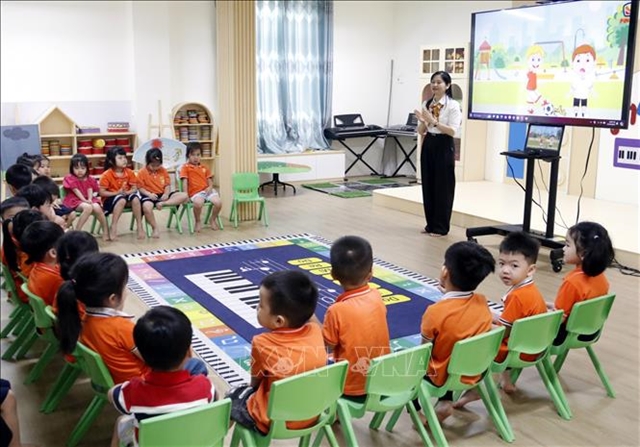 |
| A teacher in Ngô Quyền Kindergarten in Bắc Ninh Province is applying Artificial Intelligence (AI) to instruct the pupils. VNA/VNS Photo |
HÀ NỘI – Up to 64 per cent of Vietnamese teachers have used artificial intelligence (AI) in teaching, ranking fifth among 55 countries and territories participating in the Teaching and Learning International Survey (TALIS) 2024, far exceeding the OECD average of 36 per cent.
The TALIS 2024 survey, conducted by the Organisation for Economic Co-operation and Development (OECD), provides internationally comparable data on lower secondary teachers and school principals, reflecting their characteristics, perspectives, and professional experiences amid education reform and digital transformation.
Việt Nam joined TALIS 2024 with a nationally representative sample of 202 schools across 58 provinces and cities, involving 202 principals and 4,410 teachers. The entire process was conducted digitally under OECD’s rigorous technical and data security standards to ensure objectivity and reliability.
According to the results, the average age of Vietnamese teachers is 42, younger than the OECD average of 45; 70 per cent are women, and 91 per cent hold a permanent contracts. Việt Nam’s teaching workforce is characterised as young, dedicated, technologically competent, and highly satisfied with their profession.
Remarkably, 92 per cent of Vietnamese teachers believe their profession is valued by society, the highest rate among all participating countries (compared to the OECD average of 22 per cent). Meanwhile, 87 per cent feel that their opinions are heard and respected by policymakers, an 8 per cent increase from 2018.
Job satisfaction remains exceptionally high: 97 per cent of teachers are satisfied with their work (OECD average: 89 per cent), and only 3 per cent of those under 30 plan to leave the profession within the next five years (OECD: 20 per cent). Moreover, 58 per cent are satisfied with their current salary, 19 percentage points higher than the OECD average and up 6 per cent from 2018.
However, 71 per cent say their schools lack the infrastructure for AI application, nearly double the OECD average of 37 per cent. Among teachers who report that they have not used AI in their teaching in the 12 months prior to the survey, 60 per cent report that they do not have the knowledge and skills to teach using AI (lower than the OECD average: 75 per cent).
The survey also revealed that 95 per cent of Vietnamese teachers view professional learning activities as having a positive impact on teaching (OECD: 55 per cent). In Việt Nam, 96 per cent of recent graduates (teachers who have completed their initial teacher education in the five years prior to the survey) “agree” or “strongly agree” that the quality of their initial education was high overall (higher than the OECD average: 75 per cent).
Professional collaboration has also improved notably, with 69 per cent of teachers engaged in team teaching (a sharp rise from 2018) and 98 per cent expressing trust in their colleagues and principals. Particularly, 97 per cent agreed or strongly agreed that school leaders maintain good professional relationships with staff (OECD: 86 per cent).
Work-related stress among Vietnamese teachers remains low, with only 4 per cent of teachers experiencing stress “a lot” in their work, though 54per cent admitted to pressure related to student achievements and maintaining classroom discipline.
The TALIS 2024 results reaffirm the positive standing of Vietnamese teachers in the region, consistent with the strong performance of Vietnamese students in PISA 2022 and SEA-PLM 2024. The report, however, underscores the urgent need to invest in digital capacity, professional development, and school management reform.
Based on these findings, the Ministry of Education and Training has proposed key policy recommendations, including the issuance of national digital competency standards for teachers, investment in technological infrastructure, and flexible short-term training in educational technology and data safety. It also calls for integrating special education and educational psychology into teacher training, and establishing interdisciplinary support networks linking teachers with school psychologists and healthcare professionals.
The ministry further emphasised building a model of “professional learning schools”, enhancing academic autonomy for key teachers, and fostering instructional leadership among principals and core educators. Other priorities include performance-based salary reform, reducing administrative workload, increasing time for professional activities, and supporting young teachers’ welfare and housing, especially in rural areas. VNA/VNS
Society
 Society
 Society
 Society
 Society
 Society
 Society
 Society
.jpg) Society
Society
.jpeg) Society
Society
 Society
 Society
 Society
 Society
 Society