 Politics & Law
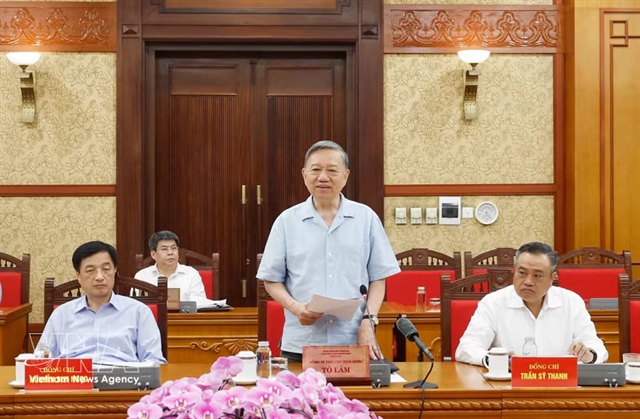
Việt Nam, Singapore promote cooperation through Party-to-Party channel
1.
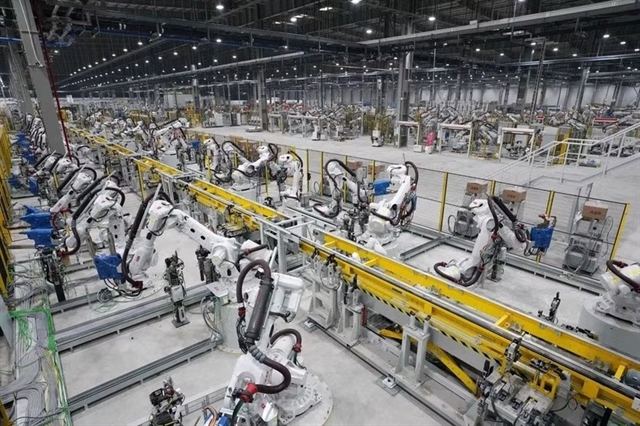 |
| Inside a manufacturing workshop operated by VinFast Trading and Production Joint Stock Company. — VNA/VNS Photo |
DECISION No. 604/QD-TTg of April 2, 2026
Approving the adjusted and supplemented Strategy for development of science, technology and innovation through 2030
THE PRIME MINISTER
Pursuant to the February 18, 2025 Law on Organisation of the Government;
Pursuant to the June 27, 2025 Law on Science, Technology and Innovation;
Pursuant to the Political Bureau’s Resolution No. 57-NQ/TW of December 22, 2024, on breakthroughs in the development of science, technology, innovation and national digital transformation;
Pursuant to the 2021-2030 Ten-Year Socio-Economic Development Strategy;
At the proposal of the Minister of Science and Technology,
DECIDES:
Article 1. To approve the adjusted and supplemented Strategy for development of science, technology and innovation through 2030 (below referred to as the Strategy) with the following contents:
I. VIEWPOINTS ON DEVELOPMENT OF SCIENCE, TECHNOLOGY AND INNOVATION
1. Science, technology and innovation constitute the foremost national policy and serve as the principal driving force for establishing a new growth model, improving productivity, quality, efficiency, added value and the competitiveness of the economy; accelerating national industrialisation and modernisation; and, at the same time, strengthening national defence and security and the country’s capacity for strategic autonomy.
2. The development of science, technology and innovation shall be closely associated with socio-economic development and the modernisation of national governance; enterprises shall be regarded as the centre of the innovation system, while the market, commercialisation efficiency and development impacts serve as the principal measures of performance. The State shall play the role of institution builder, orientator and guide; concentrate investment on key priorities, place orders for strategic tasks, and strongly shift from theme-based management to governance based on programmes, products and outcomes.
3. Technological autonomy shall be promoted. Resources shall be prioritised for the development of strategic technologies, high technologies prioritised for development investment, digital technologies and core technologies; strategic technology products and hi-tech products shall be encouraged for development. Technology research and development shall be closely linked with industrial development and must meet the demands of enterprises participating in domestic, regional and global value chains.
4. Human resources for science, technology and innovation are the decisive factor. A contingent of highly qualified scientists, engineers, experts and technology entrepreneurs shall be developed; a force of chief engineers and strategic technology experts shall be formed; and a transparent and competitive research and innovation environment that accepts controlled risks and values talents shall be fostered.
5. Modern, synchronised, open and efficiently shared science, technology and innovation infrastructure shall be developed; data, digital platforms and computing capacity shall be regarded as new strategic resources. Selective international integration shall be proactively pursued, combining internal strengths with global knowledge and technologies, while ensuring technological sovereignty, technological security and national interests.
II. OBJECTIVES OF DEVELOPMENT OF SCIENCE, TECHNOLOGY AND INNOVATION
1. General objectives
Science, technology and innovation will become the principal driving force of economic growth and a decisive factor for improving productivity, growth quality and national competitiveness; and directly contribute to rapid and sustainable development, ensuring national defence and security, environmental protection and improvement of the people’s quality of life. Vietnam’s science, technology and innovation potential and level will attain advanced standards in a number of important fields; the capacity for mastering and developing a number of core technologies and strategic technologies will be established, creating a foundation for national technological autonomy. A modern national innovation system aligned with international integration requirements will be built; the innovative start-up ecosystem will be strongly developed while Vietnamese technology enterprises will possess regional competitiveness and gradually expand into global markets.
2. Specific objectives through 2030
- The contribution of total factor productivity (TFP) to economic growth will exceed 55%.
- The proportion of exports of hi-tech products in the total export value of goods will reach at least 50%.
- The Global Innovation Index (GII) will continuously be improved, placing Vietnam among the world’s top 40 countries.
- Total social investment in research and development will reach at least 2% of GDP, of which non-state budget sources will account for more than 60%. At least 2% of total annual state budget expenditure will be allocated for the development of science, technology and innovation, with gradual increases in line with development requirements.
- Human resources for scientific research and technological development (converted into full-time staff) will reach 12 persons per 10,000 inhabitants.
- At least 50 science and technology organisations will be regionally and internationally ranked.
- The number of international scientific publications will increase by 10% per year on average.
- The number of patent applications and patent protection titles will increase by 16%-18% per year on average; the commercialisation rate will reach 8%-10%.
- The national quality infrastructure (NQI) will rank among the world’s top 50.
- Vietnam will be among the top 3 countries in Southeast Asia in artificial intelligence research and development.
- The technological and innovation level and capacity of enterprises will reach the world average.
- The proportion of enterprises engaged in innovation activities will exceed 40% of the total number of enterprises.
- The rate of commercialisation of research outcomes generated by research institutes and universities will reach at least 30%.
- At least 5-10 regionally scaled technology enterprises in strategic technology fields will be formed.
- Vietnam will master and domestically manufacture a number of strategic technology products having major impacts on its economy and national security.
III. CENTRAL TASKS FOR DEVELOPMENT OF SCIENCE, TECHNOLOGY AND INNOVATION
1. Implementing programmes and tasks for the development of strategic technologies and strategic technology products
a/ To organise the implementation of national programmes and tasks for the development of strategic technologies and strategic technology products according to approved lists; to select a number of priority products for concentrating resources on their research, design, integration, manufacture, testing and application, thereby building the capacity to master core technologies and gradually expanding to other groups of strategic technologies.
b/ To prioritise the development of core digital technologies and digital platforms, “Make in Viet Nam” key digital technology products and services associated with the development of strategic industries with high added value and export potential.
c/ To formulate national projects addressing major issues of sectors, regions and localities; to promote the participation of enterprises, research institutes and universities in the implementation of these projects in order to form strategic industries and digital technology industries.
d/ To develop systems for testing, inspection, certification, standards, measurement, quality assurance, safety and security, giving priority to strategic technology products; to formulate standards, technical regulations and assessment methods in conformity with international practices.
2. Developing science and technology fields serving as the foundation for innovation
a/ To intensify basic research and applied research in social sciences and humanities in order to provide scientific and practical grounds for the formulation, improvement and implementation of the Party’s line and the State’s policies and laws.
b/ To intensify basic research towards combining the pursuit of new knowledge with the training of highly qualified human resources and the identification of talents; to attach importance to basic research in fields in which Vietnam has strengths, such as mathematics, physics, chemistry, biology, data science and emerging interdisciplinary fields, serving as a foundation for the absorption, mastery and development of core technologies, strategic technologies and digital technologies.
c/ To develop research centres, modern laboratories, excellent research groups and key universities; to closely link basic research, high-quality human resource training and strategic technology development.
d/ To strengthen interdisciplinary research among natural sciences, engineering sciences, technology, social sciences and humanities; to intensify baseline surveys of natural resources, disasters, climate change, the environment, biodiversity and sustainable development issues.
3. Developing science, technology and innovation infrastructure and national data infrastructure
a/ To build, upgrade and modernise systems of research centres, testing centres, national key laboratories, open testing facilities, simulation platforms, high-performance computing platforms, data infrastructure and shared-use infrastructure serving the research, development and testing of strategic technology products.
b/ To prioritise infrastructure investment for fields with urgent needs and significant spillover effects, such as artificial intelligence, big data, semiconductor chips, 5G/6G networks, robotics, unmanned aerial vehicles, biomedical technology, cybersecurity, new energy, new materials and marine technology.
c/ To develop data infrastructure and digital infrastructure serving the design, simulation, model training, testing and trial production of strategic technology products and key digital technology products; to promote the connectivity, sharing and efficient exploitation of science and technology databases, enterprise databases and national databases.
d/ To develop testing, inspection, standards and conformity assessment infrastructure in support of the research, development and commercialisation of new technologies; to enhance the capacity of the national quality infrastructure system to serve the development of hi-tech industries.
dd/ To develop hi-tech technical infrastructure (including hi-tech parks, technology incubators and research facilities); to establish and develop technology infrastructure for strategic technologies, digital technology industries and key digital technology products.
4. Developing science and technology organisations and high-quality human resources
a/ To reorganise, consolidate, and enhance the capacity of, science and technology organisations, higher education institutions and innovation centres towards a streamlined and specialised structure associated with strategic technology development tasks; to select and support research institutes and universities to accompany enterprises in technology research, development and commercialisation.
b/ To implement appropriate mechanisms for the selection, employment and remuneration of chief engineers, leading experts and talented individuals participating in tasks for the development of strategic technology products and high technologies prioritised for development investment; to ensure the delegation of authority and responsibility and the linking of benefits with outcomes.
c/ To train high-quality human resources, giving priority to strategic technology sectors; to attract and effectively employ outstanding domestic scientists and experts, overseas Vietnamese and international experts in key projects.
5. Developing the innovation system, innovative start-up ecosystem, technology enterprises, the science and technology market and intellectual assets
a/ To develop enterprises as the centre of the processes of technology research, development, absorption, mastery, improvement and commercialisation, focusing on strategic technologies; to encourage, and create favourable conditions for, enterprises to lead or jointly lead science, technology and innovation tasks; to closely link technology research and development with the formation of technology enterprises, digital technology enterprises, strategic industries and market development.
b/ To support science and technology enterprises, technology innovation enterprises and digital technology enterprises in acquiring technologies, receiving technology transfer, and decoding and mastering technologies; to prioritise funding, placing orders to, and supporting enterprises in applying technologies to address Vietnam’s development challenges; to form and develop an ecosystem of auxiliary enterprises and enterprises supplying equipment, components, software, data and services related to strategic technology products and key digital technology products, thereby enhancing their capacity for participation in domestic, regional and global value chains.
c/ To support innovative start-ups, spin-off enterprises, spin-out enterprises and fast-growing technology enterprises through financial instruments, incubation infrastructure, testing facilities, technology validation, legal consultancy, intellectual property and investment connection.
d/ To develop the science and technology market towards modernity, transparency and connectivity; to develop intermediary organisations, technology exchanges, digital transaction platforms and technology and intellectual asset transfer services.
dd/ To promote the commercialisation of research outcomes, the development of intellectual assets, standardisation and branding for strategic technology products; to establish funds and cooperation mechanisms among research institutes, universities, enterprises and investors for the efficient exploitation of research outcomes.
6. Proactively promoting international integration and science, technology and innovation diplomacy
a/ To intensify science, technology and innovation diplomacy; to expand selective international cooperation in research, technology transfer and investment; to link international cooperation with the objectives of absorbing, mastering and co-developing technologies and participating in global value chains.
b/ To attract multinational technology corporations and leading international research organisations to establish headquarters and research and development centres in Vietnam and participate in the development of Vietnam’s innovation ecosystems.
(To be continued)
<Source: Official Gazette Nos 44-48/2026>
Politics & Law
 Politics & Law
 Politics & Law
 Politics & Law
 Politics & Law
 Politics & Law
 Politics & Law
 Politics & Law
 Politics & Law
 Politics & Law
 Politics & Law
 Politics & Law
 Politics & Law
.jpg) Politics & Law
Politics & Law
 Politics & Law