 Politics & Law
ASEAN, China to develop e-court and AI in judicial adjudication for future prospects
1.
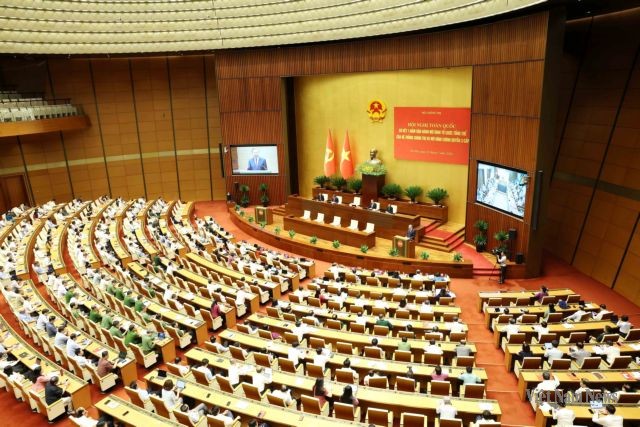 |
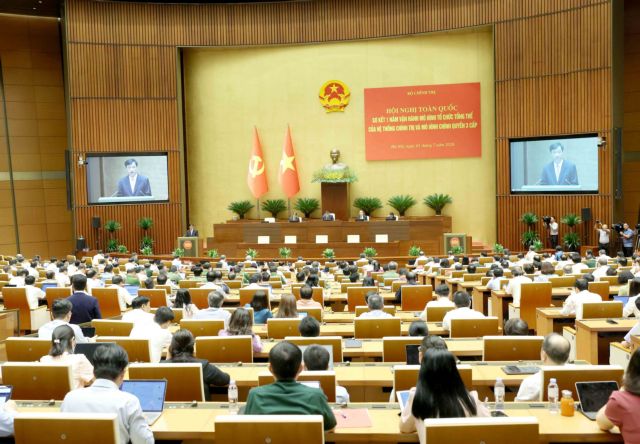
| The Political Bureau of the Party Central Committee convened a conference in Hà Nội on Wednesday to review the one-year implementation of the overall organisational model of the political system and the three-tier administration model. — VNA/VNS Photo |
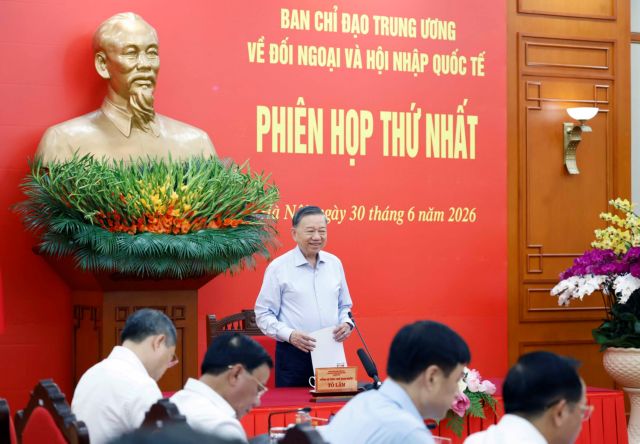
HÀ NỘI — Party General Secretary and State President Tô Lâm on Wednesday called for improving the operational quality of the newly restructured State apparatus while continuing to refine the legal and institutional framework to build a modern, integrity-driven, development-oriented and people-centred national governance system.
Speaking at a conference reviewing the first year of the restructured political system and the three-tier administration model, which was held both in person and online with participation from 3,651 venues nationwide, the top leader described the organisational overhaul as a sweeping reform affecting the entire political system from the central to grassroots levels.
With the restructuring phase completed, he said the priority now is to improve the new system's operational efficiency, public service capacity and ability to drive development.
He commended ministries, agencies, localities and public officials nationwide for implementing the reform under demanding conditions, while stressing that further work remains and requires greater determination, more scientific approaches and stronger innovation.
To address remaining shortcomings, the top leader called for continued institutional reforms through a comprehensive review of regulations governing the organisation, functions, responsibilities and authority of agencies, ensuring there are no overlaps, gaps or ambiguities in accountability.
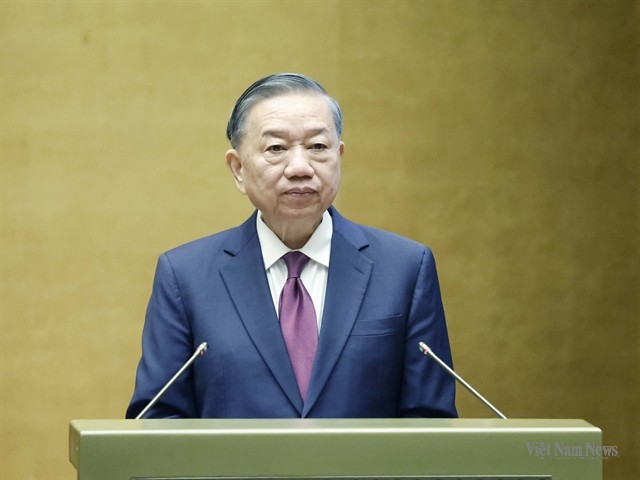 |
| Party General Secretary and State President Tô Lâm addresses the conference. — VNA/VNS Photo |
He also urged continued reforms to the Party's leadership methods, focusing on strategic direction, institution-building, personnel work and inspection rather than administrative intervention in the operations of State agencies and socio-political organisations.
Provincial governments, he said, should focus on strategic planning and development coordination, while commune-level administrations should serve as the frontline in delivering public services. Organisational structures and resource allocation should be tailored to local conditions rather than applying uniform standards nationwide.
The top leader stressed that decentralisation must be accompanied by adequate resources and effective oversight. Delegated responsibilities should come with corresponding authority, personnel, funding, data and management tools, alongside strengthened inspection, supervision and accountability mechanisms.
He also called for building a capable civil service suited to the new model, describing the performance of commune-level authorities as a key measure of its success. Priority should be given to assigning qualified personnel to grassroots positions in critical sectors while accelerating digital infrastructure development and digital transformation across the political system.
He further emphasised the need to strengthen the role of the Việt Nam Fatherland Front and socio-political organisations in collecting public feedback and supervising the performance of local administrations.
Regarding public assets following the restructuring, he instructed authorities to make efficient use of surplus offices and State-owned property by repurposing or reallocating them transparently, with priority given to education, healthcare, culture and social welfare. He also ordered the preservation and digitisation of official records to safeguard the legitimate interests of citizens and businesses.
He required to modernise inspection, supervision and governance through greater use of data-driven management and the development of performance indicators to evaluate the effectiveness of the new administrative model. At the same time, he urged protection for officials who act responsibly in the public interest while calling for strict action against those exploiting reforms for personal gain or to evade responsibility.
For areas where functions remain overlapping, the General Secretary and President instructed agencies to quickly clarify responsibilities under the principle that each task should have a single lead agency and a clearly accountable authority, while continuing to reform personnel evaluation and deployment based on performance.
Concluding the conference, he urged relevant agencies to finalise action plans with clearly defined tasks, responsibilities, timelines, resources and performance indicators, ensuring prompt implementation at all levels without delays or bottlenecks.
"The new organisational structure must create new governance capacity. New decentralisation mechanisms must go hand in hand with new responsibilities, and new data must support new methods of governance," he said, adding that the ultimate goal is to improve services for citizens and businesses while building a modern, integrity-driven and development-oriented administration.
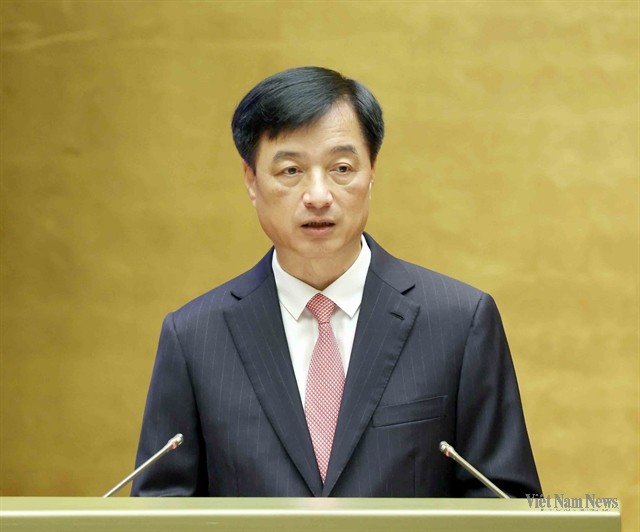 |
| Secretary of the Party Central Committee and Chairman of its Organisation Commission Nguyễn Duy Ngọc presented the review report at the conference. — VNA/VNS Photo |
Presenting the review report, Secretary of the Party Central Committee and Chairman of its Organisation Commission Nguyễn Duy Ngọc, who also serves as head of the steering committee for the review, said the first year of operation had demonstrated the effectiveness of the new political system and three-tier administration model, marking a shift from an administrative management mindset to one focused on development.
He said the new apparatus became operational smoothly nationwide immediately after its launch, ensuring uninterrupted services for citizens and businesses.
According to the report, six major achievements were recorded during the first year.
The legal and institutional framework was strengthened through the timely issuance of Party and State regulations, while decentralisation was further clarified, reducing overlaps and improving accountability.
The administrative restructuring significantly streamlined the system, reducing the number of provinces and centrally governed cities from 63 to 34, communes from 10,035 to 3,321, and abolishing the district level. The leaner structure has shortened decision-making processes, improved coordination between central and local authorities and enhanced governance capacity at the commune level.
Personnel restructuring was carried out in tandem with organisational reform. Authorities reassigned 134 officials under central management and reorganised 1,853 personnel positions across 23 newly merged localities, while implementing policies for redundant staff. For the first time, all provincial Party secretaries and provincial People's committee chairpersons were appointed from outside their home localities.
Administrative reform and digital transformation also delivered notable results. Public satisfaction reached 83.08 per cent, while 89.09 per cent of respondents said bureaucratic harassment and unnecessary inconvenience had largely been eliminated.
The report also highlighted progress in managing public assets, with surplus State-owned facilities being repurposed to serve community needs and social welfare.
The new governance model has also contributed to socio-economic development. Việt Nam exceeded all 15 major annual targets in 2025 and met or surpassed 22 of the 26 socio-economic targets set for the 2021–25 period. Macro-economic stability was maintained, national defence and security remained firm, and living standards continued to improve. The successful organisation of the 14th National Party Congress and elections to the 16th National Assembly was also cited as evidence of the new system's effective operation.
Ngọc said the achievements demonstrated that the organisational restructuring had created a leaner, more effective and efficient political system, earning broad support from officials, Party members and the public, as well as positive recognition from the international community. — VNS
Politics & Law
 Politics & Law
 Politics & Law
 Politics & Law
 Politics & Law
 Politics & Law
 Politics & Law
 Politics & Law
 Politics & Law
 Politics & Law
 Politics & Law
 Politics & Law
 Politics & Law
 Politics & Law
 Politics & Law