 Politics & Law
Vietnamese Prime Minister meets Cambodian National Assembly President
1.
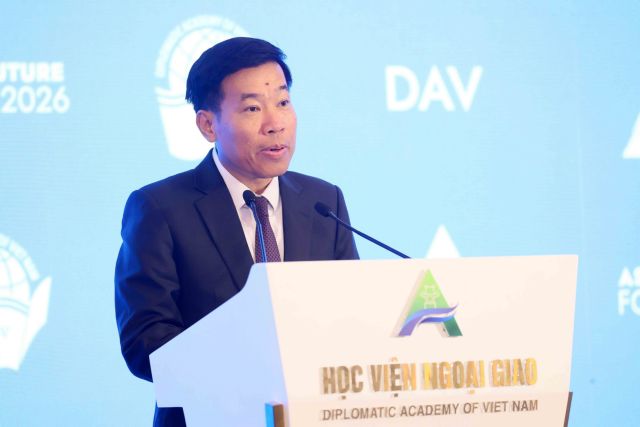 |
| Deputy Foreign Minister Nguyễn Mạnh Cường speaks at the first plenary session of the ASEAN Future Forum (AFF 2026). VNA/VNS Photo |
HÀ NỘI — Deputy Foreign Minister Nguyễn Mạnh Cường has said that in an increasingly uncertain world, cooperative resilience offers a pathway for countries in the region to strengthen their internal capacities while expanding development opportunities and safeguarding the peace and stability that ASEAN has painstakingly built over decades.
He made the remarks during the first plenary session of the ASEAN Future Forum (AFF 2026), held under the theme 'Resilience and Unity in a Changing World'.
The discussion was moderated by former Deputy Foreign Minister Đặng Đình Quý.
Opening the session, former Indonesian Foreign Minister Marty Natalegawa said ASEAN’s greatest challenge today does not stem from any single crisis, but from its ability to adapt to an international environment characterised by constant change, where shifting power dynamics, competing interests and both traditional and non-traditional security issues are becoming increasingly intertwined.
Drawing on ASEAN’s development experience, Natalegawa stressed that the bloc must continue to play a proactive role, not only adapting to change but also anticipating developments and helping shape the strategic environment around it.
He argued that ASEAN centrality must be continuously reinforced through proactive diplomacy and substantive contributions to the evolving regional architecture.
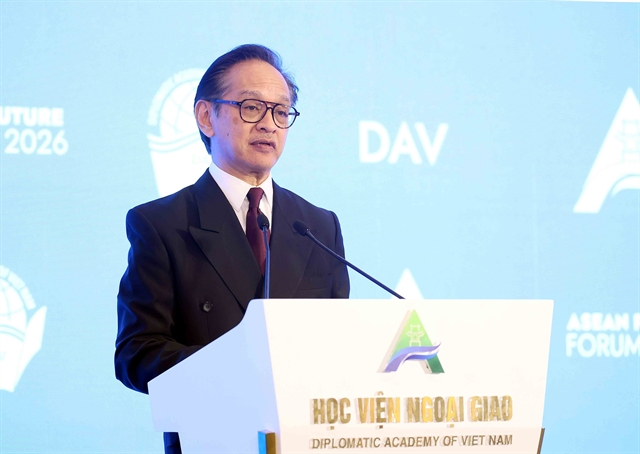 |
| Former Indonesian Foreign Minister Marty Natalegawa speaks at the first plenary session of the event. VNA/VNS Photo |
The Indonesian diplomat also warned that intensifying competition among major powers could undermine ASEAN’s cohesion and influence if not carefully managed.
To address this challenge, he advocated a 'dynamic equilibrium' approach maintained through dialogue, inclusiveness and the active management of power relations within the region.
Responding to questions about balancing the diverse interests of ASEAN member states, Natalegawa emphasised that unity should not be mistaken for uniformity.
“ASEAN can maintain unity and cohesion while respecting the diversity of its members,” he said.
Natalegawa also expressed hope that the ASEAN Future Forum would provide greater opportunities for younger leaders to contribute ideas on the challenges likely to emerge over the next two or three decades, enabling ASEAN to shape its future proactively rather than simply react to immediate developments.
He praised Việt Nam’s intellectual leadership within ASEAN, noting that constructive initiatives and long-term strategic thinking would help strengthen the bloc’s adaptability and resilience in the years ahead.
He praised Việt Nam’s intellectual leadership within ASEAN, noting that constructive initiatives and long-term strategic thinking would strengthen the bloc’s adaptability and resilience.
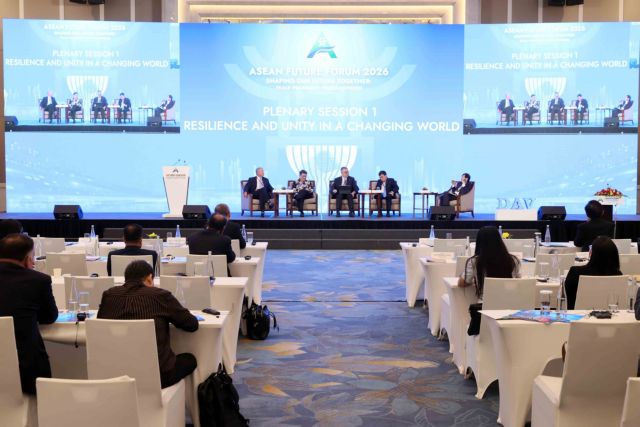 |
| The plenary session was held under the theme 'Resilience and Unity in a Changing World'. VNA/VNS Photo |
Building on the discussion, Deputy Foreign Minister Nguyễn Mạnh Cường stressed that resilience should not be understood as isolation or disengagement from international cooperation. Instead, it involves strengthening domestic capabilities while expanding connections and diversifying partnerships.
“Resilience and cooperation go hand in hand,” he said.
According to Cường, strong internal foundations enable countries to engage in international cooperation with greater confidence and strategic autonomy, while cooperation itself creates development opportunities for development and further strengthens resilience.
From this perspective, he argued that genuine autonomy comes not from standing outside networks of cooperation but from actively participating in, contributing to and making choices within regional and international frameworks.
The Deputy Foreign Minister stressed that the quality of cooperation should take precedence over the mere number of mechanisms established. Cooperation networks should also be broadened to include businesses, research institutions, local authorities, youth and socio-political organisations.
Countries should play a more active role in shaping agendas, contributing to rule-making processes and supporting efforts to maintain peace, stability and regional cooperation, he added.
For ASEAN, resilience cannot be measured simply by aggregating the strengths of individual member states. Rather, it is built on three interconnected pillars: internal solidarity, effective ASEAN centrality and practical cooperation mechanisms that deliver concrete outcomes.
To strengthen these foundations, Cường said ASEAN should prioritise investment in areas that are both urgent and strategic, including knowledge development, technological capabilities, infrastructure connectivity and resilient supply chains.
The bloc should also improve information-sharing, develop early-warning systems and make greater use of preventive diplomacy to enhance its collective capacity to act. He further proposed expanding ASEAN’s dialogue space to enable deeper participation by parliaments, political parties, businesses, academics and younger generations.
The discussion also explored the economic dimensions of resilience.
Professor Tetsuya Watanabe, President of the Economic Research Institute for ASEAN and East Asia (ERIA), argued that ASEAN needs a new approach to economic development, with stronger regional industrial cooperation becoming a strategic priority.
He said resilience should be built on complementarities among member economies rather than competition alone.
Sub-regions such as the Mekong, he added, could emerge as new engines of growth through enhanced infrastructure connectivity, policy coordination and stronger supply chains.
Professor Kuik Cheng-Chwee of the National University of Malaysia offered a broader interpretation of resilience, describing it not only as the ability to respond to crises but also as the capacity to absorb shocks, recover and sustain development momentum afterwards.
According to Kuik, ASEAN already possesses significant advantages in this regard thanks to the multilayered cooperation networks it has built over decades.
He noted that ASEAN serves both as a platform for dialogue and as a mechanism that helps member states maintain balance amid external pressures, thereby strengthening their ability to adapt to an increasingly complex international environment.
Closing the discussion, Adam Schwarz, Chief Executive Officer of Asia Group Advisors, argued that ASEAN’s biggest challenge today is not identifying problems but translating assessments into concrete action.
He called for stronger efforts to deepen regional economic integration to reduce vulnerability to external shocks.
Schwarz also stressed the importance of improving the effectiveness of ASEAN institutions and enhancing coordination across economic, foreign policy and security sectors.
The private sector, he added, should be given a greater role in policymaking processes.
A dynamic ASEAN Economic Community can only be achieved when businesses genuinely benefit from integration and can contribute actively to the region’s development, he said.
As the region prepares to implement the ASEAN Community Vision 2045, participants agreed that resilience and unity will remain essential foundations for maintaining ASEAN’s relevance, stability and prosperity in a rapidly changing world. — VNS
Politics & Law
 Politics & Law
 Politics & Law
 Politics & Law
 Politics & Law
 Politics & Law
 Politics & Law
 Politics & Law
 Politics & Law
 Politics & Law
 Politics & Law
 Politics & Law
 Politics & Law
 Politics & Law
 Politics & Law