 Politics & Law
Vietnamese Prime Minister meets Cambodian National Assembly President
1.
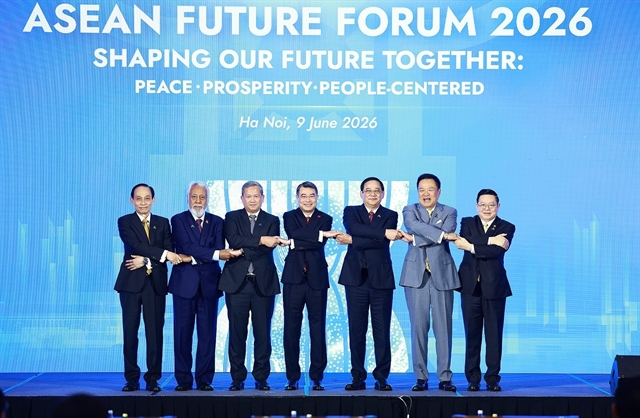 |
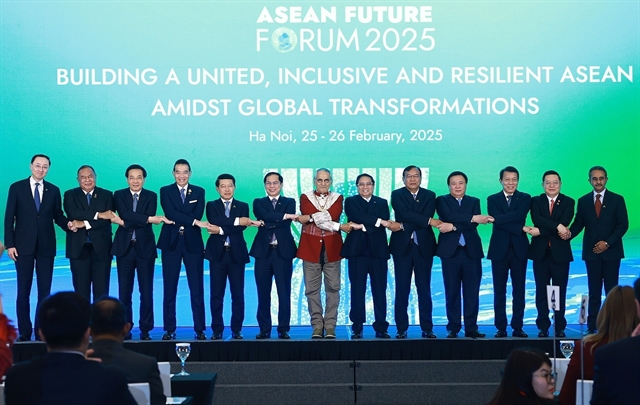
| Prime Minister Lê Minh Hưng (centre) and Minister of Foreign Affairs Lê Hoài Trung (first left) with Lao Prime Minister Sonexay Siphandone (third right), Cambodian Prime Minister Hun Manet (third left), Thai Prime Minister Anutin Charnvirakul (second right), Timor-Leste Prime Minister Kay Rala Xanana Gusmão (second left) and ASEAN Secretary-General Kao Kim Hourn (first right) at the third ASEAN Future Forum in Hà Nội on Tuesday. VNA/VNS Photo Dương Giang |
Vũ Khánh Linh
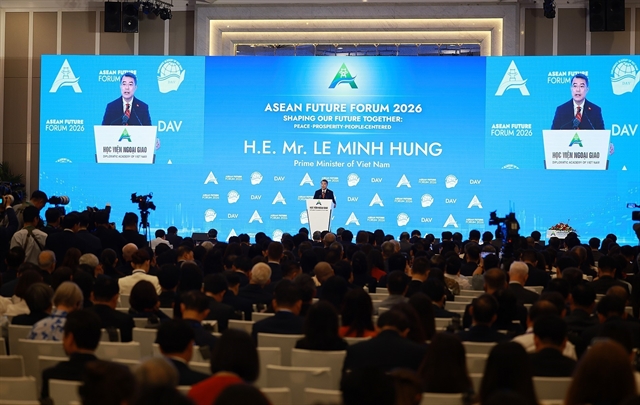
HÀ NỘI — ASEAN must strengthen unity, resilience and strategic autonomy while ensuring development remains centred on its people as the region navigates mounting geopolitical, economic and technological challenges, regional leaders said at the opening session of the third ASEAN Future Forum (AFF) in Hà Nội on Tuesday.
Amid a global landscape marked by intensifying strategic competition, economic fragmentation, supply chain disruptions and rapid advances in AI, leaders stressed that ASEAN's ability to preserve its central role and transform challenges into opportunities will be critical to the region's future.
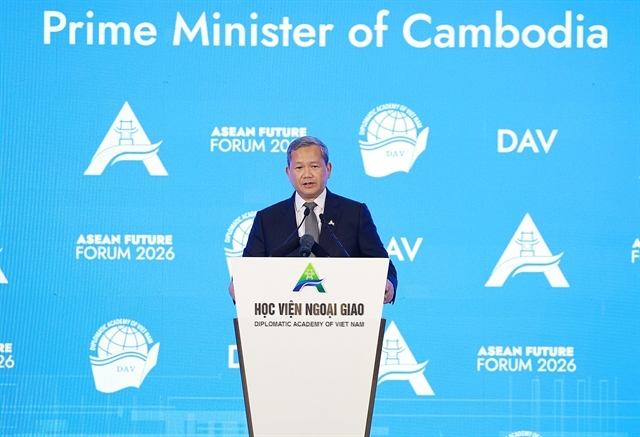 |
| Cambodian Prime Minister Hun Manet addresses the opening session. VNA/VNS Photo Dương Giang |
Cambodian Prime Minister Hun Manet said ASEAN's success over the past five decades demonstrates the value of dialogue, trust-building, respect for sovereignty, non-interference and the peaceful settlement of disputes.
From a region once divided by conflict, ideological differences and mistrust, ASEAN has evolved into one of the world's most stable and dynamic regions, he said, calling on member states to continue strengthening cooperation in the face of emerging challenges.
The Cambodian leader reaffirmed Phnom Penh's commitment to addressing transnational threats, including organised crime, drug trafficking, human trafficking and environmental degradation, while reiterating support for the full implementation of the Declaration on the Conduct of Parties in the East Sea and the early conclusion of an effective and substantive code of conduct.
On the economic front, Manet described a resilient and interconnected ASEAN economy as a strategic imperative.
"No country can meet all of its development needs alone in an increasingly interdependent world," he said, urging stronger support for free trade and investment, deeper regional integration, improved infrastructure and greater innovation.
He also underscored the importance of placing people at the centre of ASEAN community-building through investments in education, skills development and youth empowerment, alongside stronger cooperation on climate change, disaster management and public health.
"Peace is the prerequisite for development, while prosperity is the ultimate goal of ASEAN community-building," he said.
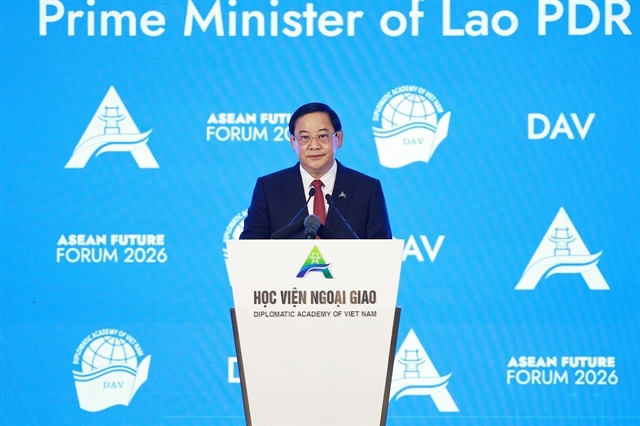 |
| Lao Prime Minister Sonexay Siphandone addresses the opening session. VNA/VNS Photo Dương Giang |
Lao Prime Minister Sonexay Siphandone echoed the call for greater unity, describing solidarity as an urgent priority at a time of intensifying major-power competition, geopolitical tensions and conflicts affecting global energy and food security.
To strengthen ASEAN's long-term resilience, he proposed four priorities: upholding ASEAN's core principles and centrality; building comprehensive resilience in the digital and AI era; accelerating regional connectivity; and enhancing cooperation on energy security through clean and sustainable energy sources.
He highlighted major infrastructure projects, including the Vientiane–Hà Nội Expressway and the Laos–Việt Nam railway along the East-West Economic Corridor, as important drivers of trade, supply chain resilience and people-to-people exchanges.
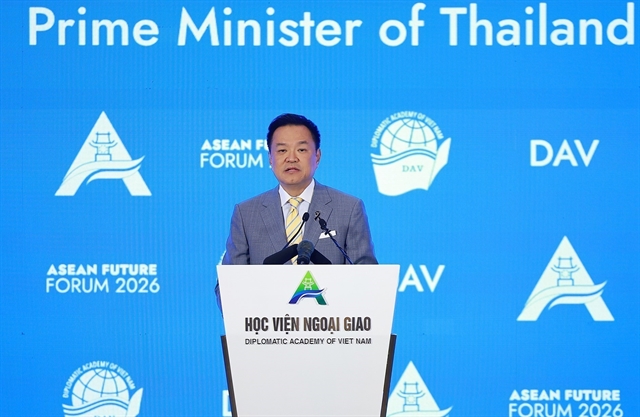 |
| Thai Prime Minister Anutin Charnvirakul addresses the opening session. VNA/VNS Photo Dương Giang |
During his speech, Thai Prime Minister Anutin Charnvirakul described ASEAN as standing at a critical juncture, as global fragmentation deepens and climate, technological and geopolitical pressures intensify.
While these trends present challenges, they also create opportunities for ASEAN to strengthen its influence and position itself as one of the world's most stable and attractive destinations for investment, he said.
According to Anutin, ASEAN's enduring strength lies in its ability to balance national and regional interests, enabling the bloc to maintain cohesion while remaining an attractive partner for major powers.
He stressed that ASEAN should continue promoting engagement rather than division, noting that ASEAN-led mechanisms have helped maintain strategic balance by creating inclusive platforms for dialogue and cooperation.
"ASEAN must continue to maintain this strategic posture," he said.
The Thai leader also argued that ASEAN's success should ultimately be measured not by the number of meetings held or declarations adopted, but by improvements in people's safety, prosperity and confidence in the future.
As AI transforms economies and societies, member states should strengthen cooperation against cybercrime, online fraud, public health risks and natural disasters, while investing more in education, healthcare and social protection systems, he added.
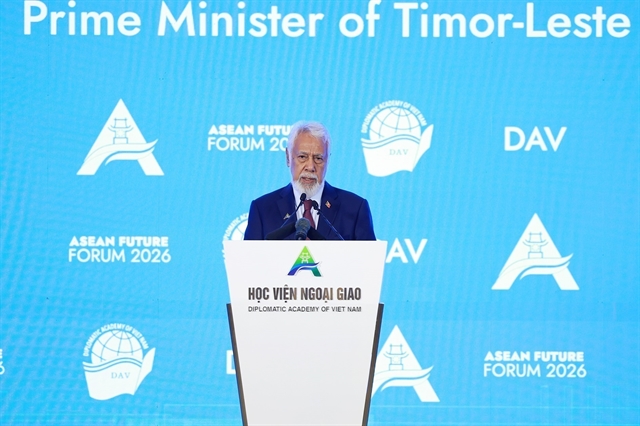 |
| Prime Minister of Timor-Leste Kay Rala Xanana Gusmão addresses the opening session. VNA/VNS Photo Dương Giang |
For Timor-Leste Prime Minister Kay Rala Xanana Gusmão, attending the forum as the leader of ASEAN's newest member state carried special significance.
He described ASEAN as a model of dialogue and cooperation at a time when conflicts, geopolitical tensions and challenges to international law are increasing globally.
ASEAN's diversity has become one of its greatest strengths, enabling the region to preserve peace and stability despite differing political systems, cultures and historical experiences, he noted.
Gusmão called on ASEAN to uphold international law and remain a voice for peace, while preserving its core principles of sovereignty, consensus, peaceful dispute settlement and centrality.
He also warned of the risks posed by AI, including growing inequality and the concentration of technological power, urging ASEAN to develop common digital governance frameworks to ensure technology serves inclusive development rather than deepening social divides.
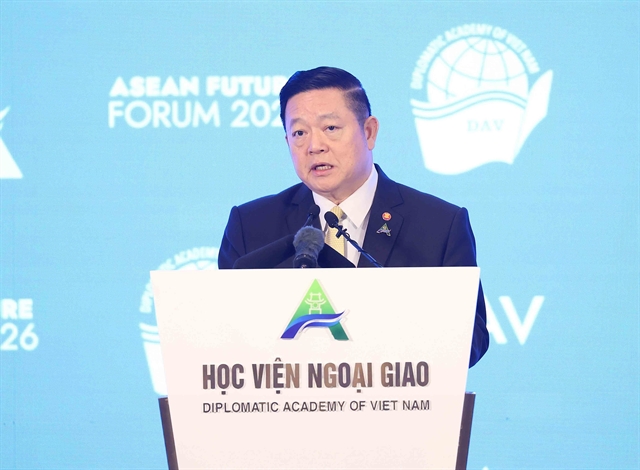 |
| ASEAN Secretary-General Kao Kim Hourn addresses the opening session. VNA/VNS Photo An Đăng |
ASEAN Secretary-General Kao Kim Hourn said the region must focus not only on identifying challenges, but also on strengthening resilience and seizing new opportunities.
He highlighted what he termed the ‘four Fs’, including food, fuel, fertiliser and finance, as areas where global shocks can quickly affect ASEAN economies and societies.
According to Kao, resilience must encompass energy security, food security, financial stability, supply chains, labour mobility and social welfare.
He also called for faster implementation of existing regional frameworks, including the ASEAN Power Grid, the ASEAN Trade in Goods Agreement, the Regional Comprehensive Economic Partnership and the proposed ASEAN Digital Economy Framework Agreement.
Despite growing uncertainty, dialogue and multilateralism remain ASEAN's greatest strengths, he said, pointing to ASEAN-led platforms such as the East Asia Summit, ASEAN Regional Forum and ADMM-Plus as important mechanisms for confidence-building and practical cooperation.
Looking back on nearly six decades of ASEAN's development, Kao said the bloc had learned two enduring lessons: collective action is more effective than acting alone, and every challenge can become an opportunity for transformation.
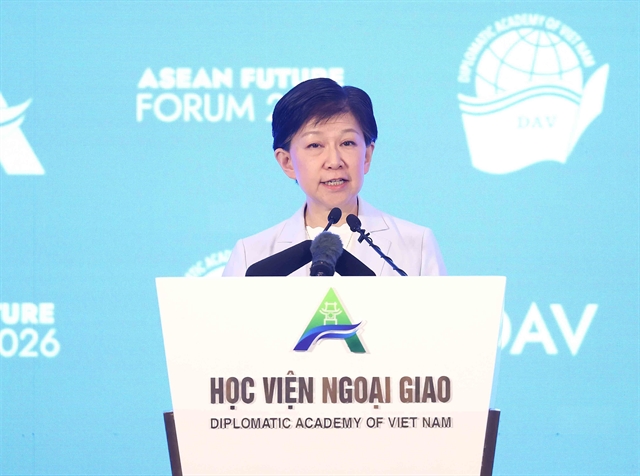 |
| Izumi Nakamitsu, United Nations Under-Secretary-General and High Representative for Disarmament Affairs speaks at the event. VNA/VNS Photo An Đăng |
Meanwhile, Izumi Nakamitsu, United Nations Under-Secretary-General and High Representative for Disarmament Affairs, warned that the world is experiencing its highest level of geopolitical tension in decades.
She cited rising military spending, declining trust among states, weakening disarmament norms and growing militarisation as major threats to international stability.
Nakamitsu praised ASEAN's experience in dialogue, consensus-building and preventive diplomacy, describing the bloc as an important contributor to regional peace and stability.
She also reaffirmed that the Treaty on the Non-Proliferation of Nuclear Weapons remains a cornerstone of international security and commended ASEAN and Việt Nam for supporting disarmament and non-proliferation efforts.
As AI and autonomous technologies continue to develop rapidly, she called for stronger multilateral cooperation to ensure innovation serves peace, development and the common good. — VNS
Politics & Law
 Politics & Law
 Politics & Law
 Politics & Law
 Politics & Law
 Politics & Law
 Politics & Law
 Politics & Law
 Politics & Law
 Politics & Law
 Politics & Law
 Politics & Law
 Politics & Law
 Politics & Law
 Politics & Law