 Politics & Law
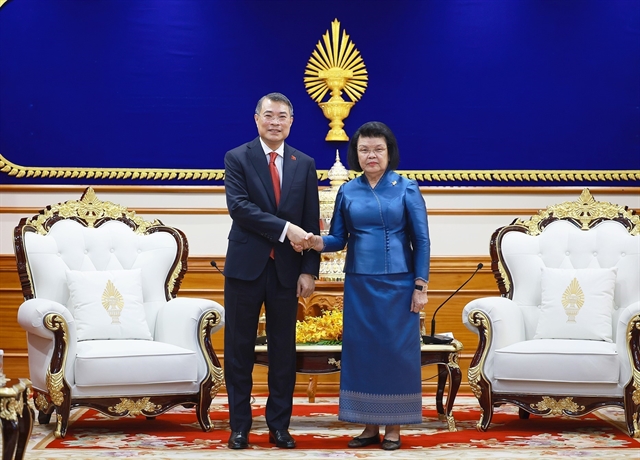
Vietnamese Prime Minister meets Cambodian National Assembly President
1.
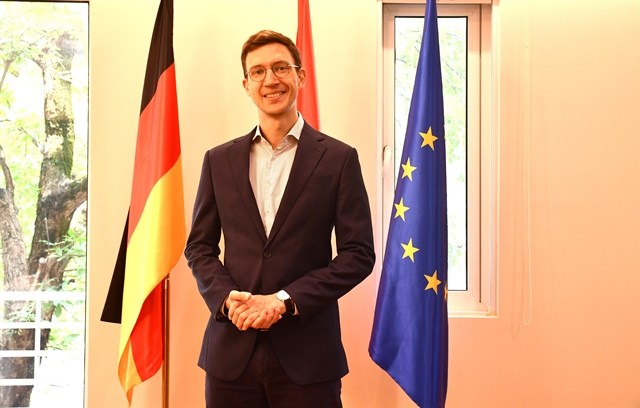 |
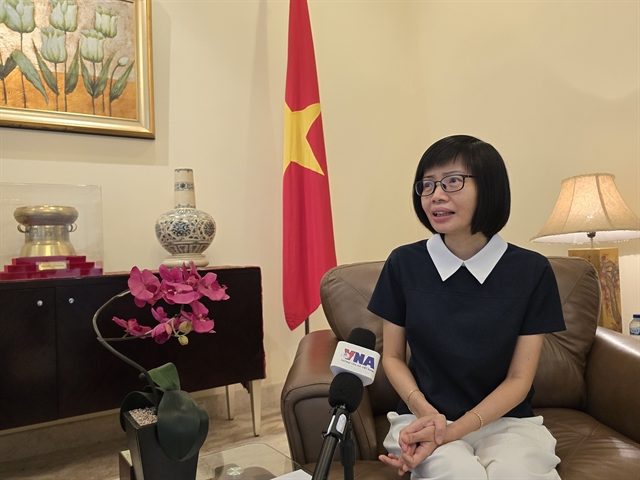
| Resident Representative of the Konrad Adenauer Stiftung (KAS) in Việt Nam Lewe Paul. Photo courtesy of KAS |
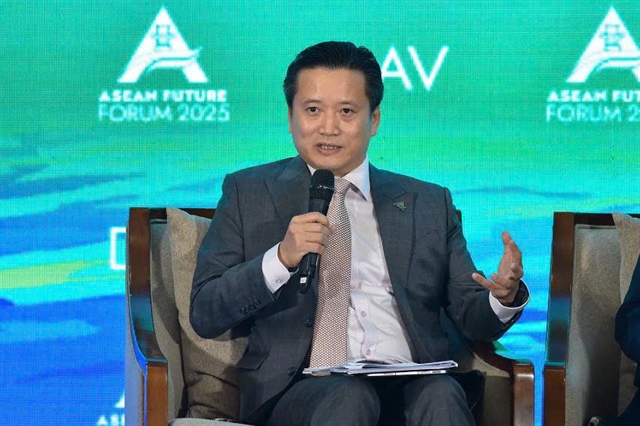
As a long-term partner accompanying the ASEAN Future Forum since its inception, the Konrad Adenauer Stiftung (KAS) in Việt Nam has played an important role in supporting its vision and objectives. On the occasion of the ASEAN Future Forum scheduled to officially open on Tuesday, Việt Nam News reporter Nguyễn Khánh Chi spoke to KAS Resident Representative Lewe Paul.
How do you view the significance of the theme chosen by Việt Nam for the ASEAN Future Forum 2026, particularly in light of Germany’s broader commitment to fostering a peaceful, cohesive, prosperous, resilient, dynamic, innovative and people-centred ASEAN?
The theme chosen by Việt Nam for the ASEAN Future Forum 2026: 'Peace, Prosperity and People-Centred' encapsulates the ambition for ASEAN to be the driving force behind a peaceful and prosperous development of this region. This closely aligns with both Germany’s broader Indo-Pacific engagement, which emphasises a rules-based international order, economic resilience, increased people-to-people links and socially anchored governance. The Konrad Adenauer Stiftung (KAS) in Việt Nam actively promotes these values and is proud to support this Forum.
The Forum emphasises that ASEAN’s future will be shaped not only by governments, but also by businesses, experts, communities and the next generation. In your opinion, how crucial are businesses and communities to advancing ASEAN’s growth, peace, and prosperity?
ASEAN’s future development is increasingly shaped by a multi-stakeholder ecosystem in which businesses and communities play roles that go well beyond economic contribution. With a population of more than 670 million and a rapidly expanding middle class, ASEAN is already one of the world’s most dynamic consumer markets. It attracts sustained foreign investment and has become a critical node in global value chains; Việt Nam exemplifies this through its integration into manufacturing and export networks in electronics, textiles, footwear, agricultural products and increasingly semiconductors.
In this context, the business sector is not only a driver of growth through job creation, trade expansion, and technological upgrading, but also a structural stabiliser that deepens economic interdependence. Businesses make a considerable contribution to regional peace by increasing the cost of conflict and strengthening predictable, rules-based economic cooperation. They also provide the economic and structural foundations of prosperity and interdependence, while communities provide the social legitimacy and cohesion necessary for peace, making both indispensable pillars of a resilient, inclusive, and sustainable ASEAN.
What steps should ASEAN member states and their partners take together to build strong foundations that empower the next generation to contribute meaningfully to the region’s and the world’s future?
ASEAN is one of the youngest regions in the world demographically, and this demographic advantage positions its youth as a decisive force in shaping the region’s long-term peace, prosperity and resilience. Today’s young generation in ASEAN is already contributing meaningfully to regional stability and development, yet they operate in an increasingly complex environment defined by rapid technological change, geopolitical uncertainty, public health risks, and rising demands in terms of skills, languages and adaptability, particularly in the context of automation, digital transformation, and artificial intelligence reshaping labour markets. From the perspective of KAS, this makes youth empowerment not only a development priority but also a strategic investment in the sustainability of a rules-based, resilient regional order. To fully unlock this potential, ASEAN member states and their partners should work together to invest in future-oriented education systems that emphasise digital literacy, civic responsibility, critical thinking, and vocational adaptability.
Energy security is one of the critical issues on the AFF 2026 agenda. Which specific energy challenges should delegates prioritise in seeking solutions, especially given the ongoing instability in the Middle East?
ASEAN is a fast-growing and energy-intensive region, driven by population growth, rapid urbanisation, and expanding service and manufacturing sectors. As of now, its energy mix remains heavily dependent on fossil fuels, alongside significant reliance on hydropower in Mekong sub-region countries such as Việt Nam, Laos, Cambodia and Myanmar, which also raises important sustainability, environmental and transboundary water governance concerns. At the same time, ASEAN possesses substantial untapped potential in renewable energy, particularly solar and wind power, which is critical for reducing external vulnerabilities and advancing long-term energy transition goals. Both the EU and Germany are working closely with ASEAN member states in unlocking this potential.
In this context, delegates should prioritise several interconnected challenges. First, reducing structural dependence on imported fossil fuels, especially Liquefied Natural Gas (LNG) and oil, which exposes ASEAN economies to external shocks and price volatility linked to geopolitical tensions such as those in the Middle East. Second, accelerating the development of regional electricity interconnectivity and market integration, including initiatives like the ASEAN Power Grid, to enable more efficient distribution of renewable energy and enhance system-wide resilience. Third, ensuring a balanced and just transition that avoids trade-offs between decarbonisation and energy security, particularly in rapidly growing economies where demand continues to rise. Fourth, addressing the environmental and governance challenges associated with large-scale hydropower development in the Mekong region, ensuring that energy security does not come at the expense of ecological sustainability or regional water security.
AFF 2026 will also centre discussions on economic connectivity, digital technology, and artificial intelligence. Why do you see these issues as urgent priorities for ASEAN at this moment?
There is no question that these are urgent priorities for ASEAN because they define the region’s ability to remain competitive, cohesive, and resilient in an increasingly fragmented and technology-driven global order. ASEAN’s economic strength has been rooted in its role as a manufacturing hub and a key node in global value chains, however, this model is now under pressure from supply chain restructuring, geopolitical decoupling tendencies, and rising protectionism. Strengthening economic connectivity within ASEAN through improved trade facilitation, regulatory harmonisation, and infrastructure integration, is therefore essential not only for sustaining growth, but also for preserving ASEAN’s ambition to become a more unified economic space rather than a fragmented set of national markets.
At the same time, digital technology and artificial intelligence are powerful drivers of productivity, governance efficiency, and industrial upgrading. For ASEAN, this presents both a major opportunity and a structural risk: countries that successfully adopt digital technologies and AI will move up the value chain, while those that lag behind risk deeper inequality and economic divergence within the region. From a KAS perspective, this makes digital transformation a governance and cohesion issue, not only a technological one, as it directly affects social inclusion, labour markets, and institutional trust. In this context, the work of KAS aligns closely with ASEAN’s priorities by promoting rules-based governance frameworks, policy dialogue, and capacity-building that support digital resilience and responsible innovation. VNS
Politics & Law
 Politics & Law
 Politics & Law
 Politics & Law
 Politics & Law
 Politics & Law
 Politics & Law
 Politics & Law
 Politics & Law
 Politics & Law
 Politics & Law
 Politics & Law
 Politics & Law
 Politics & Law
 Politics & Law