 Politics & Law

Malaysia Secures 20 Recognitions, Including Eight Category Wins, At ASEAN Energy Awards 2026
1.
|
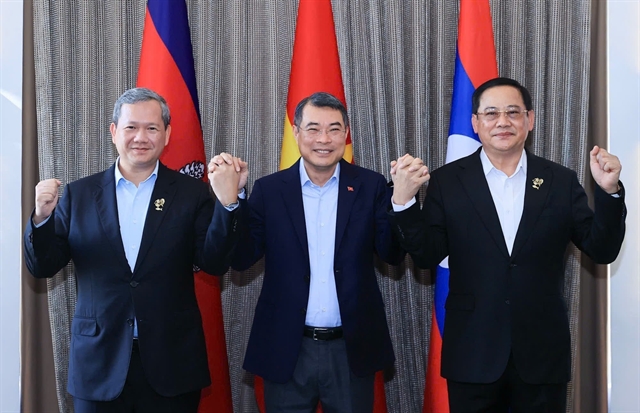
| Prime Minister Lê Minh Hưng, together with Cambodian Prime Minister Hun Manet (left) and Lao Prime Minister Sonexay Siphandone at working breakfast on May 8, 2026 in Cebu, the Philippines. — VNA/VNS Photo Dương Giang |
HÀ NỘI — The presence of senior leaders from Laos, Cambodia, Thailand and Timor-Leste clearly demonstrates regional solidarity and Việt Nam’s role in Southeast Asia, stated the Ministry of Foreign Affairs.
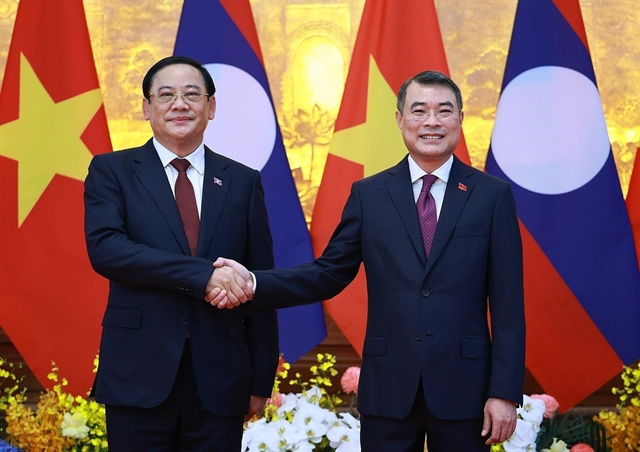
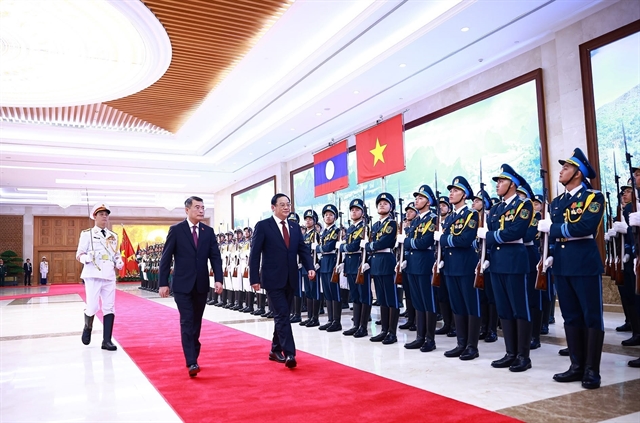
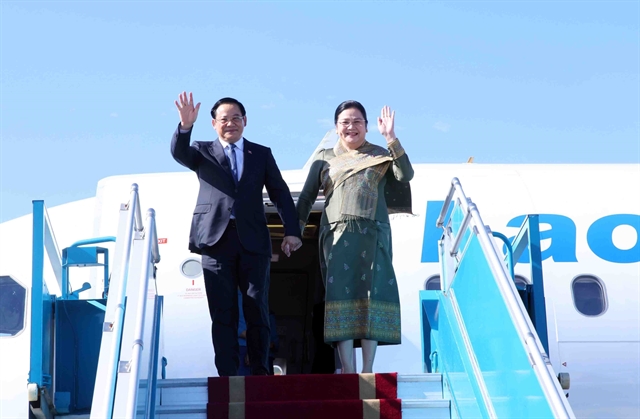
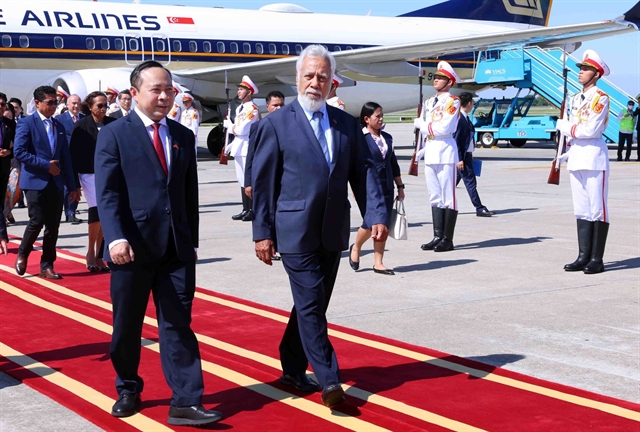
From Sunday to Wednesday, the prime ministers of Laos, Cambodia, Thailand and Timor-Leste will pay official visits to Việt Nam and attend the third ASEAN Future Forum.
Deputy Foreign Minister Nguyễn Mạnh Cường emphasised that the presence of these senior leaders clearly reflects regional cohesion and Việt Nam’s proactive role in Southeast Asian affairs.
Việt Nam-Laos strategic bond
The special solidarity, traditional friendship, comprehensive cooperation and strategic bond between Việt Nam and Laos have always been a top priority in each country’s foreign policy.
Foreign ministry spokesperson Phạm Thu Hằng stressed that Việt Nam–Laos relations have been consolidated and developed substantively and effectively across all areas.
The two countries accord each other special importance and the highest priority, with the notion of a strategic bond added to define the relationship in the new era.
Vietnamese Ambassador to Laos Nguyễn Minh Tâm said that Prime Minister Sonexay Siphandone’s visit carries particularly significant meaning, as it continues the success of the historic state visits by the highest leaders of the two Parties and countries earlier this year.
The ambassador confirmed that the visit demonstrates the senior leadership’s consistent commitment to deepening the relationship and realising the substance of strategic bonding between the two nations.
Lao Ambassador to Việt Nam Khamphao Ernthavanh agreed, noting that Việt Nam and Laos share a profound historical solidarity that goes beyond conventional diplomacy to become a binding force for common development and security.
Ambassador Ernthavanh said bilateral ties have risen to a new level through strategic frameworks for the next five years, demonstrating both countries’ determination to turn political commitments into tangible results to strengthen the sub‑region’s and ASEAN’s resilience.
In terms of economic integration and infrastructure connectivity, the two sides are closely coordinating major strategic projects, such as the Hà Nội–Vientiane expressway and the Vũng Áng–Mụ Giạ–Thakhek–Vientiane railway, to provide Laos with sea access via Vũng Áng Port.
Despite global economic challenges, bilateral trade last year reached nearly US$3 billion, surging 32.7 per cent compared with 2024. The two sides are also actively promoting local currency payments and retail payment connectivity via QR codes.
The Lao ambassador said she hopes this close cooperation will not only bring economic benefits, but also help preserve unity and self‑reliance for the Mekong sub‑region and for ASEAN as a whole in an increasingly volatile world.
Việt Nam–Cambodia cooperation
Cambodian Prime Minister Hun Manet’s visit takes place against the backdrop of both sides actively implementing the strategic orientations agreed by their senior leaders.
According to Việt Nam's foreign ministry spokesperson Phạm Thu Hằng, Việt Nam–Cambodia bilateral relations have diversified, and recent high‑level visits have started a new qualitative phase, orienting the partnership towards greater trust.
Vietnamese Ambassador to Cambodia Nguyễn Minh Vũ said Manet’s visit will create fresh momentum, promoting deeper, more substantive and effective bilateral ties and contributing to a peaceful, stable regional environment.
The most notable development is the strong upswing in economic, trade and investment cooperation.
Vũ noted that in the first four months this year, two‑way trade exceeded $5 billion, up 8 per cent year on year. Việt Nam remains Cambodia’s third largest trading partner and its second largest export market.
As for investment, Việt Nam ranks fifth among investing countries in Cambodia, with 223 active projects and nearly $3 billion in registered capital.
Major Vietnamese firms such as Metfone (Viettel), Thaco Agri and Vinamilk subsidiary Angkor Milk continue to operate successfully in the neighbouring country. Notably, Metfone was the top taxpayer in Cambodia last year, contributing over $1.2 billion to the state budget.
Ahead of the 60th anniversary of diplomatic relations, the Vietnamese ambassador said he hopes the two countries will enhance effective economic connectivity, develop transport and logistics infrastructure, boost border economy ties and accelerate cooperation in new areas, such as digital transformation and the green economy.
Việt Nam–Thailand partnership
|
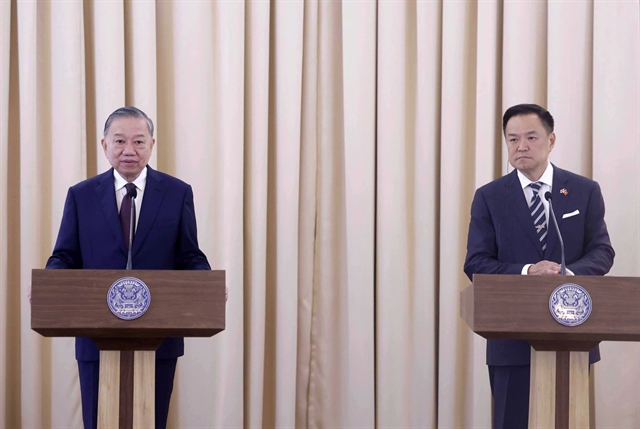
| Party General Secretary and State President Tô Lâm (right) and Thai Prime Minister Anutin Charnvirakul meet with press, informing the results of their talks, on May 28. — VNA/VNS Photo Thống Nhất |
The year 2026 is particularly significant, as Việt Nam and Thailand celebrate the 50th anniversary of diplomatic relations. Thai Prime Minister Anutin Charnvirakul’s visit comes just 10 days after General Secretary and State President Tô Lâm’s official trip to Thailand.
Việt Nam’s Ambassador to Thailand Phạm Việt Hùng said the event is a vivid demonstration of the Thai government’s respect for and determination to further the friendship and cooperation that were elevated to a Comprehensive Strategic Partnership in May last year.
Thailand’s Ambassador to Việt Nam Urawadee Sriphiromya said that bilateral cooperation is “closer than ever.”
The upgrade to a Comprehensive Strategic Partnership was accompanied by a carefully drafted, comprehensive 2026–2031 Plan of Action covering all aspects of cooperation.
Amid global economic turbulence, bilateral trade has continued to grow impressively, surpassing $23 billion and maintaining Thailand’s position as Việt Nam’s largest trading partner within ASEAN. Notably, Thai investment in Việt Nam has climbed from ninth to eighth among foreign investors.
Sriphiromya remarked on the two countries’ vigorous implementation of the 'three connections' strategy: connecting supply chains in sectors such as petrochemicals, agriculture and the manufacture of machinery and electronic components; connecting businesses and localities; and connecting sustainable development strategies (including Việt Nam’s Green Growth Strategy to 2030 and Thailand’s bio‑circular‑green economy model).
The partners are also expanding beyond traditional industries into new cooperation areas, such as semiconductors and the digital economy.
Thai investors have committed around $3 billion to renewable energy projects totalling some 3,000MW in Việt Nam, while exploring deeper cooperation in promising fields such as aircraft maintenance, repair and overhaul, fintech and QR‑based digital banking payment systems.
Việt Nam–Timor‑Leste collaboration
As ASEAN’s 11th full member, Timor‑Leste is accelerating its deeper regional integration. Prime Minister Kay Rala Xanana Gusmão’s visit marks a new milestone, continuing historical ties after Việt Nam formally posted a Chargé d’Affaires and opened its embassy in Dili in April this year.
In media interviews ahead of the visit, Timor‑Leste’s Ambassador to Việt Nam João Pereira expressed deep pride in Việt Nam’s steadfast support for his country’s development, singling out telecommunications cooperation as a major success story.
Viettel Telemor is now the largest service provider in Timor‑Leste with a 52 per cent market share, covering 96 per cent of the population, contributing significantly to digital infrastructure and proudly leading the country’s introduction of 5G.
Looking ahead, Pereira said he hopes the two countries will intensify cooperation in agriculture, aquaculture, mining and oil and gas.
Pereira noted that Timor‑Leste wishes to work with Việt Nam to study the successful Việt Nam–Singapore Industrial Park model to develop a Việt Nam–Timor‑Leste Industrial Park in Dili.
This joint model would allow Timor‑Leste to learn directly from Việt Nam’s industrial planning experience, increase economic benefits and create sustainable jobs.
Deep cultural and religious affinities and shared histories of national liberation will further strengthen people‑to‑people exchanges, drawing the two communities closer within the ASEAN family, he added.
The series of official visits by the prime ministers of Laos, Cambodia, Thailand and Timor‑Leste to Việt Nam in June this year is expected to create a distinctive diplomatic imprint.
Through increasingly substantive bilateral mechanisms and high‑level multilateral platforms such as the ASEAN Future Forum, Việt Nam and regional partners are jointly crafting breakthrough solutions to global challenges, working together to realise the aspiration for a cohesive, resilient, sustainably developing ASEAN Community that places its people at the centre. — VNS
Politics & Law
 Politics & Law
 Politics & Law
 Politics & Law
 Politics & Law
 Politics & Law
 Politics & Law
 Politics & Law
 Politics & Law
 Politics & Law
 Politics & Law
 Politics & Law
 Politics & Law
 Politics & Law
 Politics & Law