 Politics & Law

OPPO Find X10 Pro Max to Debut Globally with MediaTek’s 2nm Flagship Dimensity 9600 Pro
1.
|
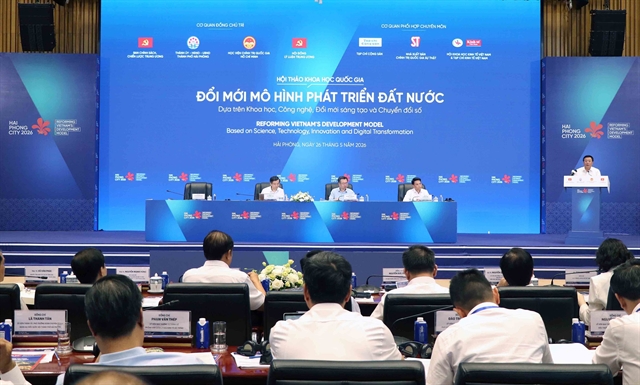
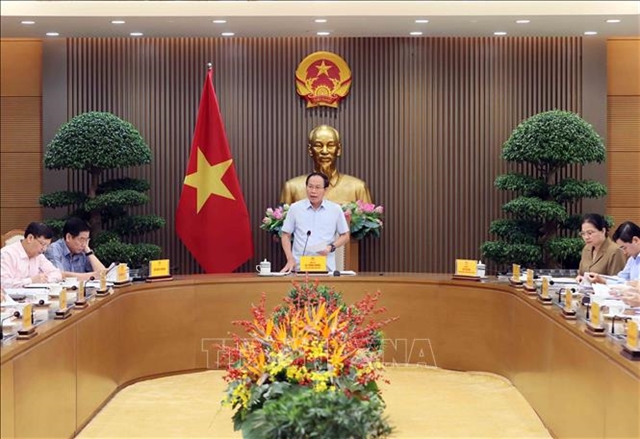
| At the seminar, experts, policymakers and scientists discussed major orientations for renewing Việt Nam’s development model based on science, technology, innovation and digital transformation through 2045. — VNA/VNS Photo |
HẢI PHÒNG — Việt Nam must place people at the centre of its next development phase, with science, technology and innovation driving sustainable growth and national competitiveness, senior officials and experts said at a national seminar on Tuesday.
"People are not only the goal of development but also its most important resource and intrinsic driving force as Việt Nam enters a new stage of rapid, sustainable growth and strategic autonomy," Professor Nguyễn Xuân Thắng, chairman of the Central Theoretical Council, stressed.
He was addressing a national scientific seminar on reforming Việt Nam’s development model based on science, technology, innovation and digital transformation.
The seminar was jointly organised by the Party Central Committee’s Commission for Policies and Strategies, the Hồ Chí Minh National Academy of Politics, the Central Theoretical Council and the Hải Phòng City Party Committee.
Thắng said Việt Nam must cultivate a new generation equipped with patriotism, civic responsibility, innovative thinking, digital skills and lifelong learning capacity to meet the demands of the 21st century.
He added that the country should pursue rapid but sustainable and inclusive growth, ensuring that no one is left behind.
Science, technology, innovation and digital transformation should not only serve as economic growth drivers, but also be integrated with cultural and social development, environmental protection, green and energy transitions, improvements in human resource quality and reforms in national governance models, he said.
At the seminar, experts, policymakers and scientists discussed major orientations for renewing Việt Nam’s development model through 2045, international experiences and policy implications for Việt Nam, as well as strategies for developing human resources to support the transition.
Addressing the event, Nguyễn Thanh Nghị, head of the Commission for Policies and Strategies, said the seminar was held as the Party, people and armed forces work towards implementing the resolution of the 14th National Party Congress, which aims to transform Việt Nam into a developed, high-income country by 2045.
He said the seminar was intended to provide theoretical and practical foundations for a project on reforming Việt Nam’s development model based on science, technology, innovation and digital transformation, which will be submitted to the third plenum of the 14th Party Central Committee.
According to Nghị, reforming the country’s development model is not only an objective requirement but also a strategic choice with decisive significance for Việt Nam’s future.
After nearly 40 years of Đổi mới (Renewal), Việt Nam has achieved major historic accomplishments, transforming from an underdeveloped economy into one of the world’s most dynamic and fastest-growing economies.
Việt Nam ranked 32nd globally in GDP size in 2025 and is now among the world’s top 15 trading economies, while living standards and the country’s international standing have continued to improve.
However, he cautioned that the current development model was showing structural limitations that require comprehensive and fundamental reform in the new context.
Francesca Nardini, deputy resident representative of the United Nations Development Programme in Việt Nam, said the country should foster new growth drivers to sustain long-term development.
In the next stage of development, Việt Nam’s challenge is not only to maintain high growth rates but also to ensure that growth is inclusive and sustainable, according to Nardini. This is closely linked to science, technology and innovation, which can enhance productivity and create new competitive advantages for the entire economy.
On the same day, delegates surveyed operations, technological applications and logistics connectivity at the Hateco Hải Phòng International Container Terminal as part of a field study tour linked to the seminar. — VNS
Politics & Law
 Politics & Law
 Politics & Law
 Politics & Law
 Politics & Law
 Politics & Law
 Politics & Law
 Politics & Law
 Politics & Law
 Politics & Law
 Politics & Law
 Politics & Law
 Politics & Law
 Politics & Law
 Politics & Law