 Politics & Law
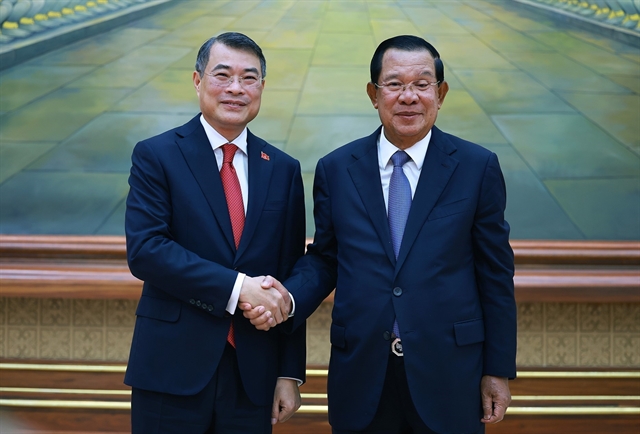
PM Hưng meets with Cambodian People's Party, Senate leader Hun Sen
1.
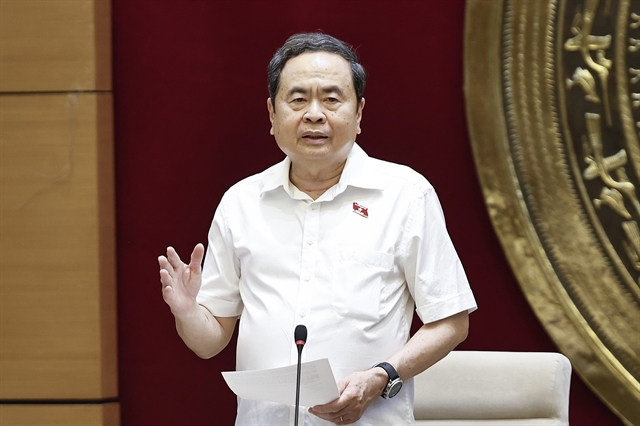 |
| Chairman of the National Assembly Trần Thanh Mẫn chairs a working session with permanent members of the NA’s Committee for People's Aspirations and Supervision on key tasks for 2026 and the 2026–2031 term on Monday. VNA/VNS Photo |
HÀ NỘI — Chairman of the National Assembly (NA) Trần Thanh Mẫn has called for reforms to the settlement of public aspirations to make it more substantive and accountable so that people could see the NA genuinely listen, monitor, supervise and push for solutions to their concerns.
Chairing a working session with permanent members of the NA’s Committee for People's Aspirations and Supervision on key tasks for 2026 and the 2026–2031 term on Monday, the top legislator praised the committee’s sense of responsibility, proactiveness and efforts while also pointing out several major bottlenecks.
He said the committee’s role has yet to shift strongly toward giving strategic advice, public feedback data remain underutilised and fragmented, and post-supervision accountability mechanisms need tightening. In addition, digital transformation has yet to create breakthroughs, inter-agency coordination is at times inconsistent, and resources and specialised capacity have not kept pace with new requirements.
The NA leader stressed that the committee could no longer remain focused solely on receiving, compiling, forwarding and reporting petitions, but must evolve into a strategic advisory body capable of identifying issues early, issuing policy warnings, coordinating supervisory activities and following through on accountability.
Stressing the people are the centre, the key stakeholders, the goal, and also momentum of development, he noted the parliament is pushing ahead with stronger, more substantive, and more effective reforms, including in the settlement of public aspirations.
Outlining future tasks, Chairman Mẫn urged the committee to clearly define its new role during the NA's 16th tenure, ensuring close links between the settlement of public aspirations and supervision. While the work must reflect realities on the ground, people’s recommendations, policy shortcomings and weaknesses in law enforcement, supervision must address emerging issues thoroughly, clarify responsibilities and produce tangible changes.
He also called for a shift from an administrative approach to one based on analysis, forecasting and policy recommendations, with every recommendation backed by evidence, clearly assigned responsibility, practical solutions and monitoring mechanisms.
The leader stressed that monthly public aspirations reports should go beyond statistics on petitions and citizen meetings to identify emerging trends, social concerns, complicated localities, agencies slow to act and cases at risk of becoming hotspots. He said the work must demonstrate that the NA is genuinely listening to the people, truly monitoring and supervising, and promoting real solutions.
On voter engagement, he said citizens should be given opportunities to fully express their concerns, aspirations and views on socio-economic conditions, public security and grassroots issues.
He asked for sharper, more focused and results-oriented supervision, with stronger follow-up mechanisms. The committee should advise the NA and its Standing Committee to focus oversight on major issues such as institutional bottlenecks, law enforcement, resource allocation, public service discipline and service quality. Supervision conclusions, he said, must clearly assign responsibility, deadlines, measurable indicators and reporting mechanisms to ensure recommendations do not “fall into silence.”
Regarding two major supervision projects, one on strengthening the Party’s leadership over supervisory activities of the NA and People’s Councils, and another on key orientations for supervisory work during the legislative term, the NA Chairman said these should become strategic products for 2026 and the entire tenure.
He also underscored that digital transformation must become a breakthrough in public aspirations settlement and supervision, describing it as a fundamental overhaul of working methods rather than merely adopting software systems. He called for the development of integrated data platforms capable of supporting citizen reception, petition handling, supervision of voter recommendations and oversight activities through connectivity, analysis, early warning and accountability tracking.
The committee, he added, should gradually apply digital technology and artificial intelligence in classifying petitions, identifying recurring issues, detecting social concerns and supporting the selection of supervision topics, thereby shifting from reactive case handling to early and from-afar prevention.
Chairman Mẫn requested the building of a professional workforce equipped with strong political resolve, skills, data literacy and policy thinking, alongside standardised procedures, specialised training, greater engagement of experts and scientists, and a more innovative and democratic working environment.
He further urged thorough preparations for the second supervision forum to ensure its success.
During the 15th NA tenure and the first session of the 16th NA, the Committee for Public Aspirations and Supervision helped improve the legal framework for oversight activities, including amendments to the Law on Supervisory Activities of the NA and People’s Councils, while also maintaining citizen reception, petition handling and voter recommendation summarisation and initially promoting digital transformation. — VNA/VNS
Politics & Law
 Politics & Law
 Politics & Law
 Politics & Law
 Politics & Law
 Politics & Law
 Politics & Law
 Politics & Law
 Politics & Law
 Politics & Law
 Politics & Law
 Politics & Law
 Politics & Law
 Politics & Law
 Politics & Law