 Politics & Law
Vietnamese Prime Minister meets Cambodian National Assembly President
1.
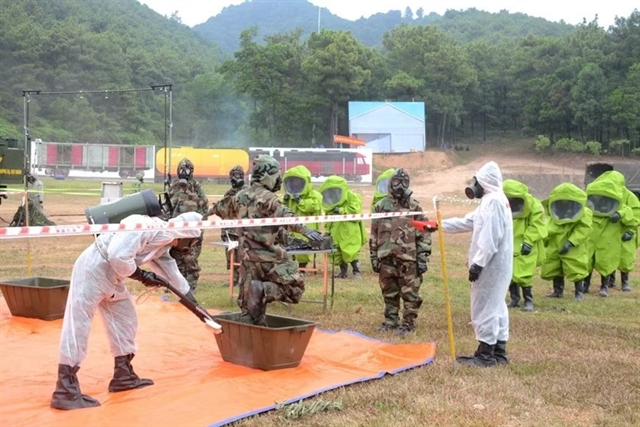 |
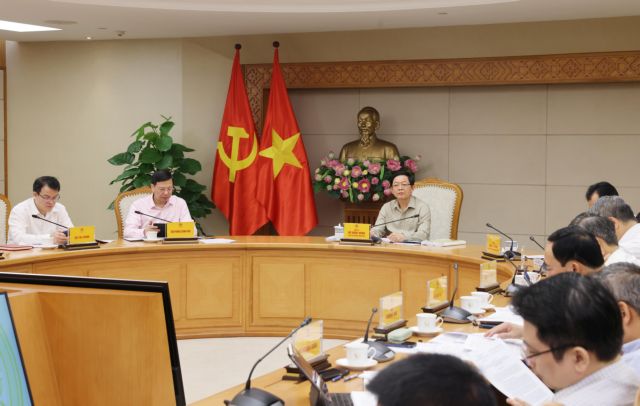
| Preventing the proliferation of weapons of mass destruction. Photo thanhnien.vn |
HÀ NỘI — The Ministry of National Defence has drafted a new law to prevent and combat the proliferation of weapons of mass destruction, covering four chapters and 40 articles and setting out the principles, policies, measures and responsibilities of agencies, organisations and individuals in that effort.
The draft Law on Prevention and Combating the Proliferation of Weapons of Mass Destruction applies to Vietnamese agencies, organisations and individuals, as well as foreign agencies, organisations and individuals in Việt Nam involved in activities related to preventing and combating the proliferation and financing of the proliferation of such weapons.
The draft defines weapons of mass destruction as weapons capable of causing widespread damage to people, property and the environment, including nuclear, chemical, biological and radiological weapons, and other weapons with similar characteristics and effects.
Proliferation is defined as the deliberate act of carrying out, participating in, or directly or indirectly supporting activities involving the research, development, production, manufacture, purchase, sale, stockpiling, transportation, transfer, export, import, transit, transshipment or use of weapons of mass destruction, or of goods, materials, equipment, technology or services related to such weapons, or their delivery systems.
Financing the proliferation of weapons of mass destruction means the provision, mobilisation, transfer, management or use of money, assets, financial resources or financial services, directly or indirectly, for the purpose of carrying out or supporting such proliferation.
The draft prescribes seven categories of prohibited acts. These include: researching, developing, producing, manufacturing, buying, selling, stockpiling, storing, possessing, using, transporting or transferring weapons of mass destruction; and providing, mobilising, transferring, managing or using money, assets, financial resources or financial services to directly or indirectly support proliferation, or providing these to designated persons or for their benefit.
Also prohibited are: exploiting economic, commercial, investment, scientific, technological, training, international co-operation or humanitarian activities for the purpose of proliferating or financing the proliferation of weapons of mass destruction; concealing, falsifying or providing false information, or unlawfully destroying records, documents or data.
Further prohibited acts include: obstructing, opposing or failing to comply with decisions on inspection, examination, supervision, or the application of management, control, preventive, targeted financial sanctions or asset-freezing measures; unlawfully disclosing state secrets, official secrets, business secrets, personal data, early-warning information, or investigative and verification information in the course of preventing and combating proliferation; and other acts prescribed by relevant laws or international treaties to which Việt Nam is a party.
The draft also establishes a control list comprising goods, materials, equipment, technology and services at risk of being exploited for the proliferation or financing of proliferation. The list is to be developed on the basis of international treaties to which Việt Nam is a party, relevant United Nations Security Council resolutions, and national defence, security, public order and social safety requirements.
Activities subject to management and control include: export, import, temporary import, re-export, transit, transhipment and transhipment; research, development, production, manufacture, storage, use, transportation and destruction; technology transfer and provision of services; and financial transactions and other related activities.
Organisations and enterprises carrying out such activities are required to establish and apply internal compliance systems appropriate to their scale, sector of operation, type of goods, technology and services, and level of risk.
An internal compliance system must comprise: internal control policies and procedures; mechanisms for identifying, assessing, classifying and managing risks; controls over end users, end uses and beneficiaries; controls over transactions and the transfer of goods, technology and services; record-keeping, document and data retention, and reporting requirements; and training to raise awareness and responsibility among employees.
On sanctions, the draft stipulates that agencies, organisations and individuals found to be in violation shall, depending on the nature and severity of the breach, be subject to disciplinary action, administrative penalties or criminal prosecution.
Those in violation may also be subject to remedial measures, including being required to cease the offending conduct and to recall or handle related goods, materials, equipment, technology, services and transactions.
Officials and persons with authority who exploit their duties and powers to infringe upon the lawful rights and interests of agencies, organisations or individuals, obstruct lawful activities, cover up violations or seek personal gain shall, depending on the nature and severity of the violation, also face disciplinary action, administrative penalties or criminal prosecution. — VNS
Politics & Law
 Politics & Law
 Politics & Law
 Politics & Law
 Politics & Law
 Politics & Law
 Politics & Law
 Politics & Law
 Politics & Law
 Politics & Law
 Politics & Law
 Politics & Law
 Politics & Law
 Politics & Law
 Politics & Law