 Sci-Tech

AlarmSystemStore.com Earns Alarm.com Silver Premier Partner Recognition for Third Consecutive Year
1.

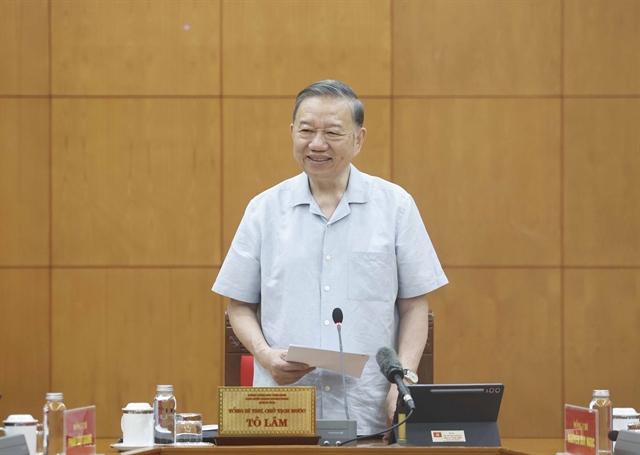 |
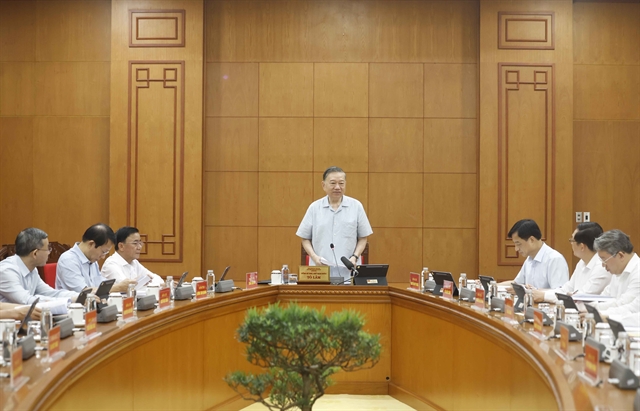
| Party General Secretary and State President Tô Lâm speaks at the working session on Monday. VNA/VNS Photo |
HÀ NỘI — Party General Secretary and State President Tô Lâm has stressed the need to build a modern, self-reliant and internationally integrated system of scientific research in Việt Nam that is capable of generating new knowledge, training elite personnel for policymaking and serving as the foundation for strategic technological development to support the country’s rapid and sustainable growth.
He said that by 2030, Việt Nam must remove institutional bottlenecks and obstacles to establish a national ecosystem for basic research. By 2045, the country should develop several scientific fields that can compete on the international level.
The top leader made the remarks during a working session on Monday with the Standing Board of the Central Steering Committee for Science, Technology, Innovation and Digital Transformation in Hà Nội.
Lâm said that science forms the intellectual foundation of a nation and serves as the basis for core technologies, elite workers, strategic forecasting capabilities, policymaking capacity and long-term development autonomy.
He pointed out that Việt Nam’s current research activities still face numerous shortcomings and have yet to meet the country’s development demands in the new era. Investment remains limited, while the country has not yet built a strong, stable and sustainable national ecosystem for basic research capable of long-term accumulation of knowledge.
Research activities remain fragmented and poorly connected, lacking scientific schools of thought, strong research groups and close links with national development strategies, he said. There is also no clear distinction between pure research, foundational knowledge-oriented research, application-oriented research and research directly serving strategic technologies.
The country's top leader noted that scientific management mechanisms are still mostly administrative in nature. Việt Nam also lacks centres of excellence, modern laboratories, large-scale databases, shared computing infrastructure and long-term investment mechanisms for leading research groups.
A lack of skilled workers in scientific fields has become a strategic bottleneck, with leading experts in many areas remaining limited in number and insufficient to train succeeding generations, he said. Many young scientists still lack a stable environment for long-term development, while the brain drain continues to pose challenges.
Lâm added that the country must clearly define development goals for basic scientific research in the new era.
From now until 2030, Việt Nam should gradually establish several centres of excellence, strong research groups, major scientific databases and shared research infrastructure capable of competing regionally. By 2045, the country should possess several internationally competitive fields in the sciences.
The top leader also stressed the need for balanced development between natural sciences, foundational technologies and social sciences and humanities.
He called for comprehensive reform of scientific management mechanisms, shifting from administrative control to innovation-oriented governance while fostering an academic environment based on integrity, creativity and accountability to both science and the nation.
Lâm also urged reforms to governance institutions for basic research, focusing more on post-evaluation, research quality, outcomes and long-term impacts. Scientific management mechanisms must accept scientific risks, reduce bureaucratic procedures, protect academic freedom and strengthen accountability and scientific integrity, he said.
He went on to propose designing financial mechanisms tailored to different types of research. For foundational knowledge-oriented basic research, stable core funding and long-term financing mechanisms are needed.
For strategic technology-oriented research, the State budget should be combined with competitive funds, national orders and enterprise cooperation to form a continuous chain from basic research and applied research to experimental development, intellectual property, standardisation, technology transfer and commercialisation.
The leader also highlighted the need to develop a comprehensive scientific talent ecosystem, ranging from early talent identification and elite education to doctoral and postdoctoral training, young researchers, top experts and overseas Vietnamese intellectuals.
He called for the development of national data and knowledge infrastructure through investment in key laboratories, shared equipment systems, high-performance computing infrastructure, scientific and social databases, digital libraries and digital repositories for cultural, linguistic and heritage data.
Lâm further stressed the need to reposition the country’s two academies and strengthen links across the scientific ecosystem. He said the two academies should become strategic knowledge institutions serving the Party Central Committee and the nation, while maintaining close ties with research universities, businesses, ministries, local authorities and policymaking agencies to build a deeper and more sustainable research ecosystem capable of supporting major national decisions.
He also urged selective international cooperation, including attracting foreign experts, overseas Vietnamese intellectuals and partnerships with leading global scientific centres to raise research standards, train future generations and narrow knowledge gaps.
The Party chief and President assigned the Standing Board to focus on a series of key tasks, including removing bottlenecks, drafting a national strategy for scientific research development through 2045, establishing a multi-year national research fund and creating specialised financial mechanisms for social sciences and humanities.
Other tasks include launching a national programme for scientific talent development, building national scientific and social data systems, finalising restructuring plans and operational mechanisms for the two academies, issuing national standards on scientific integrity, and establishing research commissioning mechanisms to help draft resolutions, laws, strategies, master plans and national policies. — VNS
Sci-Tech
 Sci-Tech
 Sci-Tech
 Sci-Tech
 Sci-Tech
 Sci-Tech
 Sci-Tech
 Sci-Tech
 Sci-Tech
 Sci-Tech
 Sci-Tech
 Sci-Tech
 Sci-Tech
 Sci-Tech
 Sci-Tech