 Life & Style
Tighter controls on livestream sales
1.
|
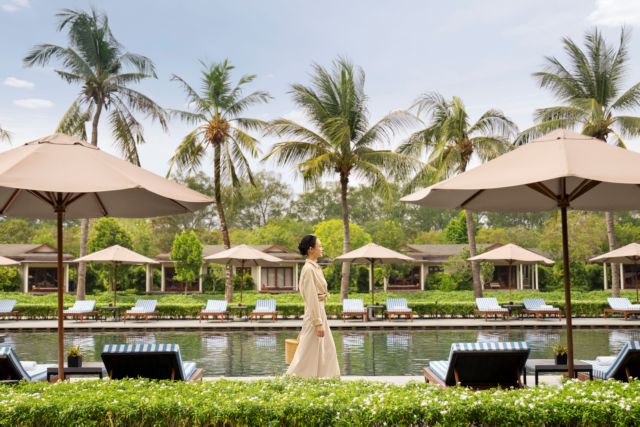
| An image of Legacy Mekong Cần Thơ Autograph Collection. Hotel loyalty is highlighted as a key element of travel loyalty. — Photo Courtesy of Marriott Bonvoy |
HCM CITY — Việt Nam has achieved the highest loyalty member rate in APEC, with 96 per cent of customers participating in loyalty programmes, according to the Loyalty Trends Report 2026 by Marriott Bonvoy.
The report, based on a quantitative survey of 1,731 travellers across Australia, India, Indonesia, Japan, Singapore, South Korea, Thailand, and Việt Nam, reveals that loyalty engagement in Asia Pacific excluding China (APEC) is becoming more complex and mature.
While 89 per cent of travellers across APEC are involved in at least one loyalty programme, their engagement is no longer uniform.
The way they engage is influenced by a combination of travel priorities, everyday value expectations, and distinct local market dynamics, indicating a shift away from one-size-fits-all loyalty models.
Hotel loyalty is highlighted as a key element of travel loyalty, with hotel loyalty programmes being the most widely participated loyalty category across APEC, engaging 66 per cent of travellers, ahead of airlines, retail, and dining programmes.
Membership retention is strong, as most travellers remain enrolled for over two years, showcasing how hotel loyalty continues to play a pivotal role in travellers' brand relationships.
Travel passions are identified as a significant indicator of loyalty engagement, with successful loyalty design needing to cater to diverse interests across various markets.
|
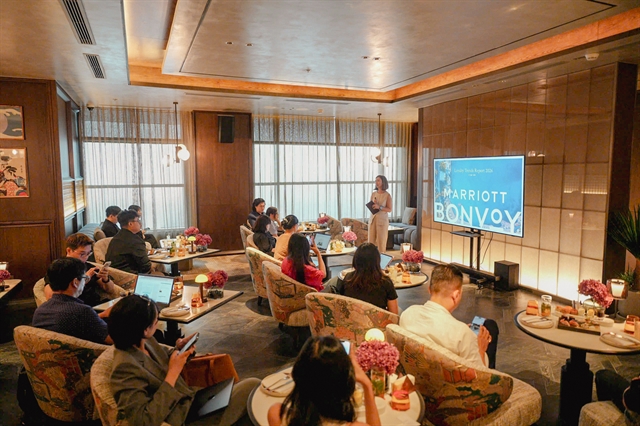
| The launching ceremony of the Loyalty Trends Report 2026 by Marriott Bonvoy. They report encompasses middle, high, and affluent income travelers who have engaged in leisure or business travel within the past year. — Photo Courtesy of Marriott Bonvoy |
The report emphasises that hotel loyalty programmes integrated into a broader partnership ecosystem are more relevant, as APEC travelers seek more ways to earn and redeem points, indicating a stronger connection between loyalty and everyday activities.
Key findings from the report reveal the top five travel priorities across APEC markets, including food and dining, nature and sightseeing, shopping, cultural immersion, and recharge and disconnect. Additionally, the report identifies three distinct loyalty mindsets in APEC markets, each with different expectations of hotel loyalty programmes. The three mindsets include loyalty strategists, value optimisers and experience seekers.
Vietnamese travellers are particularly inclined towards cultural immersion, alongside Indonesia and India. These high-growth markets engage with loyalty emotionally and transactionally, showing interest in partnership ecosystems, exclusivity, status, and memorable experiences, while representing the region's strongest growth engine.
Furthermore, 63 per cent of Vietnamese loyal members earn points through gamification – the highest in APEC – and 47 per cent redeem points for exclusive experiences – also the highest in APEC.
“Hotel loyalty programmes must evolve into adaptive ecosystems that grow with travellers, rather than simply around them. In a region as diverse and fast-moving as APEC, brands that deeply understand local behaviours and cultural nuances will move beyond scale to earn lasting relevance and advocacy,” says John Toomey, Chief Commercial Officer, Asia Pacific excluding China, Marriott International.
The Loyalty Trends Report 2026 encompasses middle, high, and affluent income travellers who have engaged in leisure or business travel within the past year. — VNS
Life & Style
 Life & Style
 Life & Style
 Life & Style
 Life & Style
 Life & Style
 Life & Style
 Life & Style
 Life & Style
 Life & Style
 Life & Style
 Life & Style
 Life & Style
 Life & Style
 Life & Style