 Politics & Law
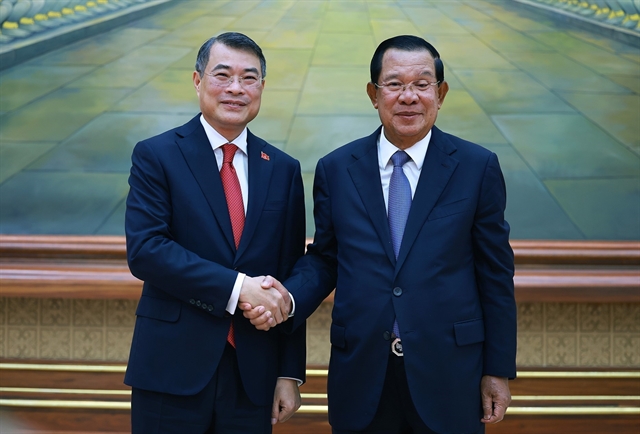
PM Hưng meets with Cambodian People's Party, Senate leader Hun Sen
1.
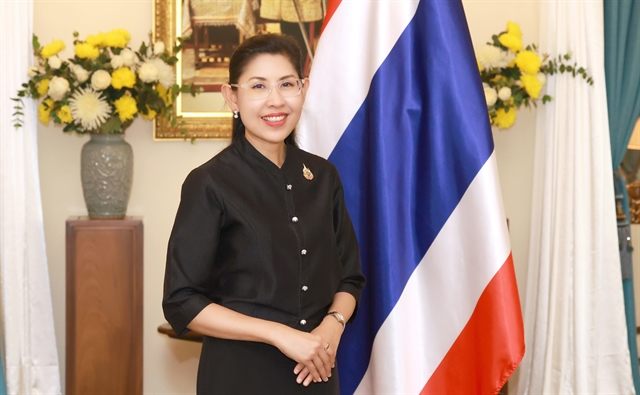 |
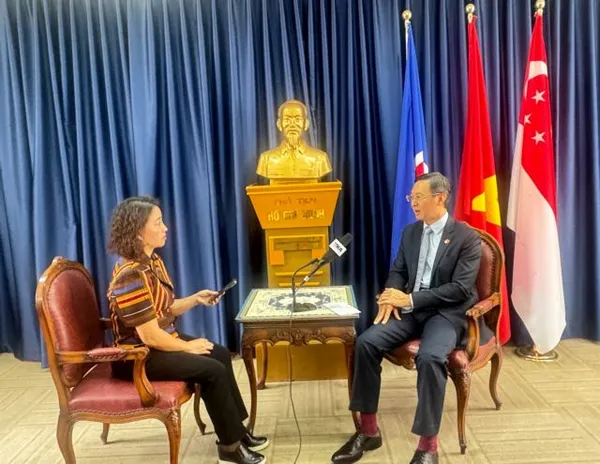
| Ambassador of Thailand to Việt Nam Urawadee Sriphiromya. — VNS Photo Trương Vị |
Ahead of Party General Secretary and State President Tô Lâm's visit to Thailand, Thai Ambassador to Việt Nam Urawadee Sriphiromya spoke to the press about the significance of the trip for Việt Nam–Thailand relations and regional prosperity.
What significance does the upcoming visit by Party General Secretary and State President Tô Lâm to Thailand hold for bilateral relations, and what outcomes can be expected from the visit?
The visit of his excellency Tô Lâm, both in the capacity as the General Secretary of the Communist Party of Việt Nam and the State President of Việt Nam, is very meaningful and significant. Not only is it his first official visit to Thailand after the 14th National Party Congress and the formation of the new administration of Việt Nam, but it also coincides with the year Thailand and Việt Nam celebrate the 50th anniversary of our diplomatic relations. It reflects the mutual trust, mutual respect and the close and cordial cooperation between Thailand and Việt Nam, which are comprehensive strategic partners with strong collaboration.
This is also the first leg of his ASEAN visit. We in Thailand very much look forward to welcoming his excellency and the high delegation from Việt Nam. Last year, our two countries agreed to work on the basis of a Comprehensive Strategic Partnership, which is the highest level of cooperation that Việt Nam has with foreign countries.
We will discuss in detail how we drive forward this partnership. The main outcome should be a plan of action that both countries and all line agencies will be working together to achieve concrete results. This will not be about only one or two areas, but will be very comprehensive, encompassing all dimensions of cooperation. This plan of action from 2026 to 2031 is one that our two countries will drive forward to support each other to achieve security, peace and prosperity together.
Amid a challenging global context, it is very reassuring to see both sides consult with each other on how we can provide mutual support to address the difficulties that have arisen from international challenges. Thus, ways to keep our region peaceful, stable and prosperous, and how we work together to support and lead the ASEAN agenda are also very critical.
We now place high importance on energy security, food security and the changing nature of transnational crimes. Last year, Việt Nam hosted the UN convention against cybercrime, and our minister in charge joined this signing conference for what we now call the Hanoi Convention. Việt Nam also recently finished chairing the review conference of the Treaty on the Non-Proliferation of Nuclear Weapons.
We appreciate Việt Nam’s initiative in hosting the ASEAN Future Forum, which is an important initiative that creates a platform for dialogue not only among government agencies, but also involving academics, the private sector, political parties and local representatives. We look at Việt Nam as a country that has initiated cooperation at many levels, including the multilateral level, such as the UN, for the development agenda.
I therefore believe that the official visit of the Party General Secretary and the State President of Việt Nam will yield fruitful results. We value our longstanding friendship with Việt Nam and its Government and people.
What are the most significant achievements of cooperation between Việt Nam and Thailand in recent years?
Việt Nam–Thailand bilateral relations have never been closer. Our cooperation reaches new heights every year, and last year we agreed to elevate our ties to a Comprehensive Strategic Partnership, which I would say was a remarkable achievement.
In terms of economic cooperation, Thailand had been among the top 10 foreign investors in Việt Nam for several years. Last year, we moved up from ninth to eighth place, which is not an easy thing to do. This shows the strong interest of Thai people and businesses in working and investing in Việt Nam, built on mutual trust and mutual respect as well as confidence in the policies and the measures that the Vietnamese Government have provided for the private sector to create an enabling environment for them.
I have also observed that since taking up my assignment here, the number of tourists travelling between our two countries has grown significantly. Of course, both our countries have faced external challenges in recent years, but people-to-people exchanges remain robust, providing a strong foundation for the continued growth of our cooperation.
Last year, Hà Nội was among the six capitals to hold the Thai Festival, our flagship project, for the first time. This year, the event was also meant to celebrate the 50th anniversary of Thailand–Việt Nam diplomatic relations, and we welcomed over 20,000 visitors to our festival throughout the three days at the Imperial Citadel of Thăng Long.
Regarding politics and security, we just received a Thai royal ship in HCM City – the last time a Thai royal ship came to the city was 11 years ago. This time, the specific purpose of the visit is to celebrate the 50th anniversary of Việt Nam–Thailand relations.
I think our trust and confidence in each other have grown. We have been working together and supporting each other in regional and international forums such as ASEAN and APEC, and we will continue to do so in the future.
With trade and economic cooperation between Thailand and Việt Nam steadily growing, where do you see new opportunities for businesses on both sides?
The volume of our bilateral trade keeps growing despite challenges. According to the latest statistics, our bilateral trade reached over US$23 billion, and the target is to reach $25 billion in the near future. Thailand remains the largest trading partner of Việt Nam in ASEAN, and Việt Nam remains our second-largest trading partner in the region.
A majority of the exports from Thailand to Việt Nam are intermediate goods that will support Việt Nam’s export-led economy, and that means our countries mutually benefit from this bilateral trade, as we are trying to minimise the risk by diversifying the markets.
The two countries and their economic cooperation are driven by the ‘three connects’ strategy – connecting supply chains, connecting local economies and connecting sustainable development. With high technology, our products will shift from traditional merchandise goods to high-tech products, especially semiconductor chips. We are in discussions on how to promote each other to transform our economies and use science, technology and innovation as our drivers for economic growth.
We have companies specialised in developing industrial parks that conform to international standards for green investment, and this is also something that we have been doing in Việt Nam. We are now looking for more opportunities in areas that will be designated for this kind of green investment. In terms of retail, major retail businesses from Thailand have been instrumental in providing a market for Vietnamese products, not only within the country but also as a window for Vietnamese products in other countries that these businesses have also invested in.
In addition, we see significant potential in emerging sectors, such as fintech, digital banking and QR payments. Thailand is also interested in cooperating with Việt Nam in renewable energy and aviation, particularly in aircraft maintenance, repair and overhaul services, building on the presence of airlines such as Vietjet Air, which has operated in Thailand for more than a decade. We also hope to explore cooperation in research and training in healthcare and medical services – areas that directly affect people’s quality of life.
What is the significance of the Việt Nam–Thailand partnership for regional stability and development in Southeast Asia?
Today, we see a lot of challenges from within the region and from the changing global environment, particularly the competition between superpowers and instabilities across the world. For Thailand and Việt Nam, I believe that our positions are very similar. We are promoting regional peace, stability and prosperity. ASEAN is rules-based, and it stresses the unity of member countries. We need to use a balanced approach to keep our region out of conflict so that we can continue to work on the socioeconomic development of our region.
Thailand is one of the founding members of ASEAN, and we have consistently worked to strengthen respect for ASEAN, both within the region and beyond, and to address the issues among the countries in a peaceful manner. Việt Nam and Thailand share the same ultimate development goal, which is sustainable growth. There are a lot of policy issues that have been implemented in Việt Nam that support the transformation of ASEAN towards green development, green economy and digital economy to gain comparative advantages.
Connectivity is an area that we, as countries in mainland Southeast Asia, can work together to promote. We are part of the global supply chain, and the connectivity of infrastructure will contribute to an enabling environment for overseas investors. We can both support each other in this agenda.
Regarding climate change response and water resource management, Việt Nam and Thailand both have net zero targets. The two countries are working together under the Mekong–Lancang cooperation agreement, and Việt Nam is also the chair of the Mekong River Commission.
We are also both maritime countries with long coastlines. Maritime security is an important issue today, and we have been working together to promote freedom of navigation and international law, including the United Nations Convention on the Law of the Sea code of conduct for cooperation in the maritime domain. This is also another area that we can work together. — VNS
Politics & Law
 Politics & Law
 Politics & Law
 Politics & Law
 Politics & Law
 Politics & Law
 Politics & Law
 Politics & Law
 Politics & Law
 Politics & Law
 Politics & Law
 Politics & Law
 Politics & Law
 Politics & Law
 Politics & Law