 Politics & Law
Vietnamese Prime Minister meets Cambodian National Assembly President
1.
|
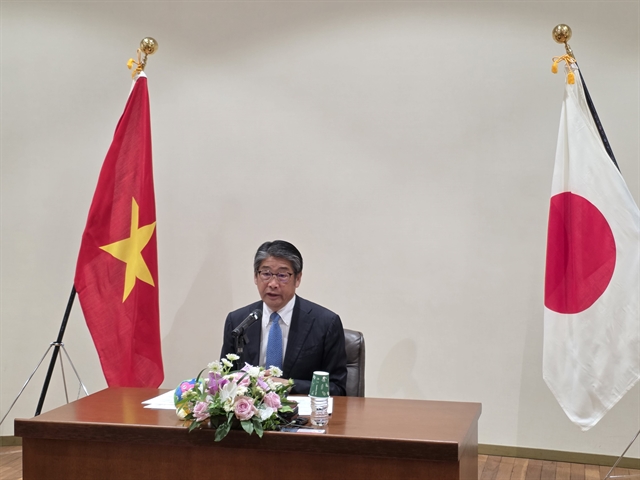
| Japanese Ambassador to Việt Nam Ito Naoki at the press briefing on April 29 in Hà Nội. — VNS Photo Trọng Kiên |
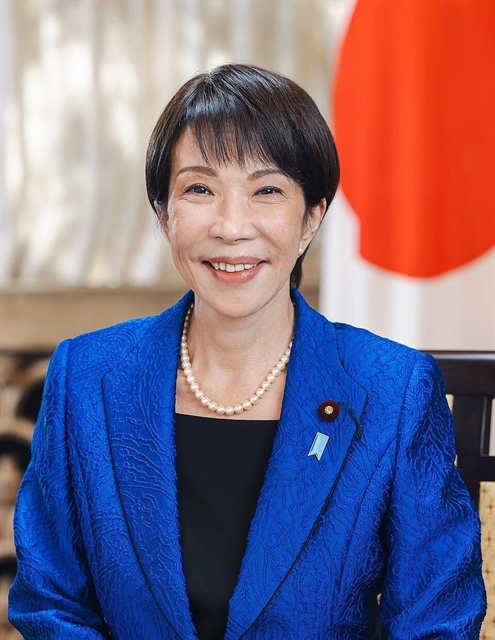
HÀ NỘI — Japanese Prime Minister Takaichi Sanae's upcoming official visit to Việt Nam in the beginning of May is meant to strengthen personal relations with the new leadership of Việt Nam, as well as to reaffirm bolstered coordination within the framework of the Comprehensive Strategic Partnership amid regional and global complexities.
Japanese Ambassador to Việt Nam Ito Naoki made the statement as he held a press briefing on Tuesday ahead of the Japanese leader's visit.
A number of high-level meetings are expected to be held with the top leaders of Việt Nam – General Secretary and President Tô Lâm, Prime Minister Lê Minh Hưng, and National Assembly Chairman Trần Thanh Mẫn – to discuss topics such as energy, economic security, rare earths, and people-to-people and academic exchanges.
Japan welcomes the accelerated reforms under the new leadership and supports Việt Nam's “100-year goals” for 2030 – 100th anniversary of the Communist Party of Việt Nam, and 2045 – 100th anniversary of the country's independence. Through both public and private partnerships, Japan will contribute its strengths to Việt Nam's "new growth model," Ambassador Ito told the local media.
Beyond bilateral ties, a central feature of the Việt Nam's visit will be a major policy address by Prime Minister Takaichi at the Việt Nam National University (VNU) in Hà Nội. The speech is expected to focus on the evolution of the "Free and Open Indo-Pacific" (FOIP) initiative, originally championed by the late Prime Minister Shinzo Abe a decade ago.
Ambassador Ito noted that the global landscape has shifted significantly since 2014, citing advancements in artificial intelligence (AI) and heightened geopolitical competition. "Japan believes it is necessary to upgrade the FOIP vision to suit a 'new era,'" the Ambassador said, positioning Việt Nam as a "very important" partner in this updated strategy.
Economic security has become an increasingly critical issue for many countries, and building resilient supply chains is now one of the most urgent priorities. In response to these changes, Japan will continue to develop FOIP in a strategic direction. Through comprehensive efforts adapted to the new context, Japan aims to proactively fulfil its role and responsibilities in meeting the expectations of the international community, according to the Japanese Ambassador.
"To further realise and advance FOIP, strengthening cooperation with Việt Nam – a country with remarkable growth in Southeast Asia and an increasingly elevated international standing – is of paramount importance," Ambassador Ito said, emphasising that the choice of Việt Nam as the venue for this policy speech therefore "carries significant meaning."
Four pillars
According to the Japanese ambassador, within the Việt Nam–Japan Comprehensive Strategic Partnership framework, PM Takaichi's visit is expected to further advance Việt Nam–Japan relations, focusing on four main pillars: cooperation in advanced sectors, energy security and strategic infrastructure, diplomacy and security cooperation, and people-to-people, cultural, and academic exchanges.
With regards to the first pillar – advanced technology, cooperation in semiconductors, digital transformation (DX), green transformation (GX), AI, innovation, and science and technology will be promoted, including through the utilisation of “new-era” ODA.
On March 20, Japan provided Việt Nam with a programme loan of approximately US$330 million for climate change and GX to support efforts in addressing climate change and natural disasters.
Beyond financial support, both sides are working to establish mechanisms to expand markets through investment promotion and to develop policies for implementing Nationally Determined Contributions (NDCs) under the Paris Agreement.
This represents a form of “new-era” ODA contributing to Việt Nam's new growth model. By leveraging GX technologies and disaster prevention technologies from Japanese enterprises, both sides aim to contribute to Việt Nam's development and strengthen bilateral economic ties.
In the semiconductor sector, Việt Nam aims to train 500 PhD-level researchers by 2030. Japan has pledged to accept and support the training of around 250 – half of this target – in Japan. In the first selection round, five research topics were approved and 63 Vietnamese students will be accepted. A second round has begun this month, with up to 10 additional topics expected.
At the Việt Nam–Japan University in Hà Nội, 106 students are currently enrolled in the undergraduate semiconductor chip technology programme launched last October, according to the embassy.
The second pillar focuses on energy security and infrastructure – seen as critical to sustaining Việt Nam's rapid growth. Japan is seeking to deepen cooperation through both public financing and private investment, including support for major urban rail projects in Hà Nội and HCM City.
At the regional level, Tokyo has also introduced new initiatives such as “Power Asia” to bolster supply chain resilience, alongside a $10 billion loan package to help Southeast Asian economies cope with rising energy costs. These efforts align with Việt Nam's push to accelerate strategic infrastructure development while transitioning towards greener energy systems, with Japan aiming to position itself as a long-term partner in both areas.
The third pillar underscores growing alignment in diplomacy and security, as both countries navigate an increasingly complex regional environment. Japan has welcomed Việt Nam's emphasis on “strategic autonomy” and its expanding international role, including leadership positions in major multilateral frameworks such as the CPTPP, the NPT review process, and APEC.
Bilateral defence and security ties have also gained momentum, highlighted by the inaugural “2+2” vice-ministerial dialogue on foreign and defence affairs. Tokyo is expected to further advance cooperation in this domain, including through capacity-building support and potential transfers of defence equipment under its Official Security Assistance framework.
Responding to Việt Nam News' queries over the information that the Japanese Government is lifting restrictions on exports of certain lethal weapons including to about 17 countries – including Việt Nam, the ambassador elaborated that on March 21, the Japanese government revised its "Three Principles on the Transfer of Defense Equipment and Technology".
The primary objective is to contribute to regional peace and stability by enhancing the self-defence capabilities of "friendly" nations, Ambassador Ito noted, underscoring that any transfers would be strictly for peaceful purposes.
Japan is currently in the process of discussing and evaluating specific requirements with Vietnamese authorities, Ambassador Ito noted.
The fourth pillar highlights the people-to-people dimension of the relationship, which has been describe as the foundation of Việt Nam–Japan ties.
Travel and exchanges between the two countries have rebounded strongly, with hundreds of thousands of Vietnamese visiting Japan in the first months of the year alone.
Both sides are targeting more than two million annual exchanges by 2030.
Education remains a key bridge, with growing numbers of Vietnamese students studying in Japan and joint programmes such as those at Việt Nam–Japan University expanding in scope.
Cultural exchanges – from music to manga – are also gaining visibility, reinforcing mutual understanding and adding depth to an increasingly multifaceted partnership, Ambassador Ito remarked. — VNS
Politics & Law
 Politics & Law
 Politics & Law
 Politics & Law
 Politics & Law
 Politics & Law
 Politics & Law
 Politics & Law
 Politics & Law
 Politics & Law
 Politics & Law
 Politics & Law
 Politics & Law
 Politics & Law
 Politics & Law