 Politics & Law

LANDMARK Launches ‘Destination CENTRAL’: A District-Wide Invitation to Explore the Dynamism, Luxury, and Soul of Central
1.
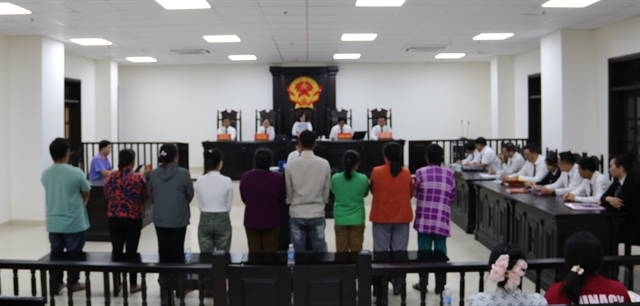 |
| A trial in Cà Mau Province. The Ministry of Public Security considers to reduce capital offences. — VNA/VNS Photo Tuấn Kiệt |
HÀ NỘI — The Ministry of Public Security (MPS) has proposed continuing efforts to narrow the scope of offences subject to the death penalty.
The ministry is also looking at increasing prison sentences for offences that cause public outrage and yield substantial illicit gains while expanding the scope of fines.
The regulations are part of a draft policy document for the amended Criminal Code, which has been released by the MPS for public consultation.
The consultation period will run until May 7.
The Criminal Code 1985 stipulated 44 offences punishable by death.
They were reduced to 29 by 1999, 22 in 2009, and 18 in 2015.
Most recently, at the 9th session of the 15th National Assembly, amendments abolished the death penalty for a further eight offences, leaving just 10.
According to the MPS, the provisions in the Criminal Code reflect the State's policy of leniency and humanity towards offenders. However, the range of offences subject to death penalty remains too broad and fails to meet international standards.
The drafting agency therefore proposes further narrowing the scope of these 10 remaining offences.
The draft does not yet specify which offences will have the death penalty removed, but it emphasises the principle of retaining it only for offences of a 'particularly serious' nature that infringe on especially important protected interests or cause severe economic, social and human security consequences.
The MPS assesses that narrowing the death penalty will align more consistently with judicial reform directions, fit international legal trends, and enhance the protection of human rights, particularly the 'right to life' under criminal law.
But, it could reduce its deterrent effect on crime without accompanying legal measures such as life imprisonment, asset confiscation, compensation and asset recovery mechanisms.
Another key proposal is to amend Clause 1, Article 60 of the current Criminal Code so that if the enforcement period for a death sentence expires (20 years), it converts to life imprisonment.
Alongside narrowing the death penalty's scope, the MPS proposes raising prison terms for certain offences with complex manifestations that directly harm human dignity, honour and freedom.
This includes fraudulent offences that have caused widespread outrage recently, and those yielding large illicit profits, where penalties are currently disproportionate to boost deterrence and ensure fairness.
At the same time, it expands the use of fines for certain offences, aligning with the Party's stance on strengthening fines in Politburo Resolution No 49-NQ/TW, and anti-corruption views in the 13th and 14th National Party Congress documents.
It adds provisions allowing fines instead of prison for less serious or serious offences if the offender confesses fully, shows remorse, cooperates actively during investigation, prosecution and trial, as well as fully remedies consequences and compensates all damages.
Additionally, it raises fine levels to ensure severity and deterrence, accounting for economic and social development, changes in base salary, and average per capita income compared to 2009 and 2015. — VNS
Politics & Law
 Politics & Law
 Politics & Law
 Politics & Law
 Politics & Law
 Politics & Law
 Politics & Law
 Politics & Law
 Politics & Law
 Politics & Law
 Politics & Law
 Politics & Law
 Politics & Law
 Politics & Law
 Politics & Law