 Politics & Law
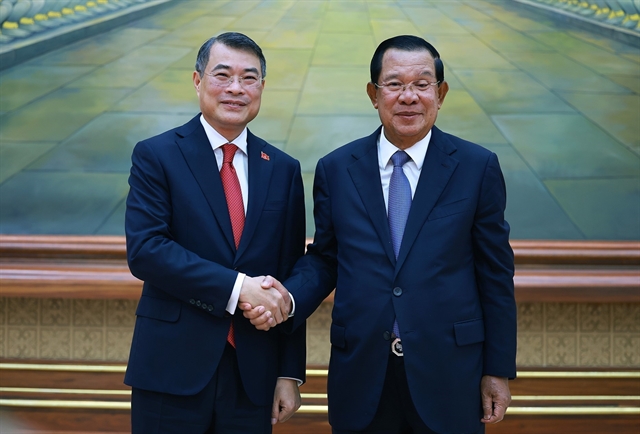
Vietnamese Prime Minister meets Cambodian National Assembly President
1.
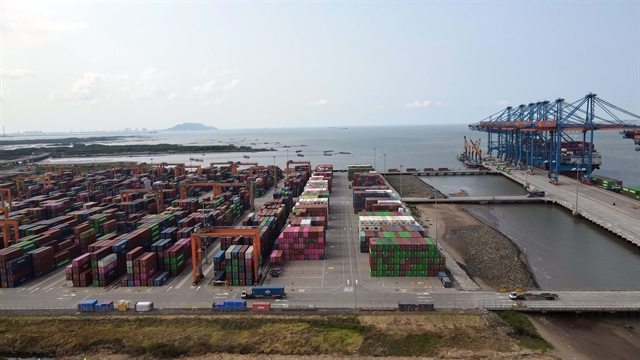 |
| Phase 1 of the Germalink deep-water port is under operations at the Cái Mép - Thị Vải deep-water port complex in Tân Phước Ward, HCM City. — VNA/VNS Photo Mạnh Dương |
HÀ NỘI — The National Assembly on Friday morning adopted a resolution setting out a goal of achieving rapid and sustainable national development, with average GDP growth of at least 10 per cent per year in the next five years, while maintaining macroeconomic stability, controlling inflation, ensuring major economic balances, and comprehensively improving living standards.
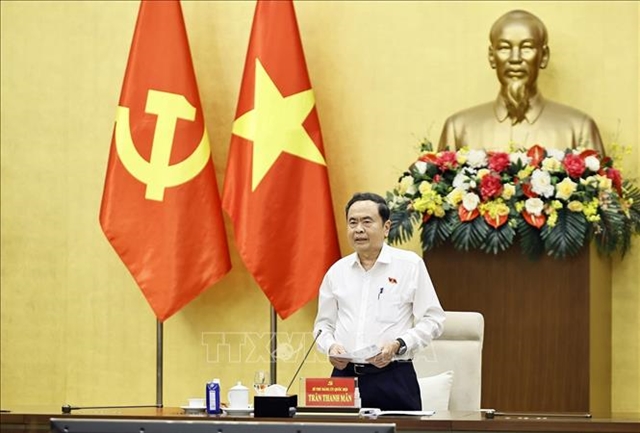
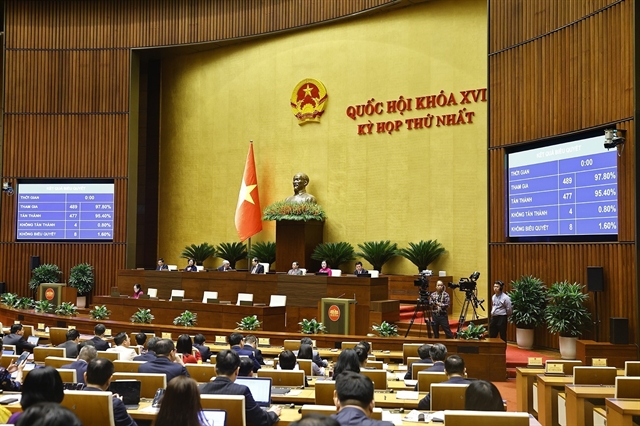
The resolution for socio-economic development goals in the 2026-30 period was passed during the last day of the first session of the 16th National Assembly (NA) in Hà Nội, with 494 out of 494 deputies present voting in favour, representing 100 per cent approval among those in attendance and 98.9 per cent of all NA deputies.
The resolution also sets a target for Việt Nam to become, by 2030, a developing country with modern industry and upper-middle income status, ranking among the world’s 30 largest economies by GDP.
The resolution outlines the creation of modern, sustainable development institutions; a synchronised infrastructure network; and enhanced capacity in science, technology, innovation and digital transformation, alongside improvements in workforce quality.
It further emphasises the comprehensive development of Vietnamese culture and people, environmental protection and climate resilience, and the building of a democratic, equitable, disciplined and safe society.
National defence and security are to be firmly ensured, while Việt Nam’s international standing and reputation are to be elevated.
Key socio-economic targets include achieving GDP per capita of US$8,500 by 2030, and raising average life expectancy to 75.5 years.
The resolution also aims to reduce the multidimensional poverty rate by 1-1.5 percentage points per year, achieve universal health insurance coverage, and increase forest cover to 42 per cent.
Key solutions
To realise these goals, the resolution sets out 11 major groups of tasks and solutions.
A central focus is the transition in State management from pre-emptive control to post-audit supervision, alongside the development of standards, technical norms and strengthened inspection and oversight mechanisms.
It calls for improved enforcement of laws and the establishment of criteria to assess legal documents after promulgation, shifting the evaluation of legislation from being “sound on paper” to being “effective in practice”.
The resolution also stresses the urgent removal of institutional bottlenecks and policy barriers, acceleration of administrative reform, and the full standardisation and digitisation of administrative procedures.
Data connectivity and sharing among State agencies are to be enhanced, with the aim of placing Việt Nam among the top three investment environments in ASEAN and the world’s top 30 by 2028.
A shift towards a new growth model is envisaged, driven primarily by science, technology, innovation and digital transformation.
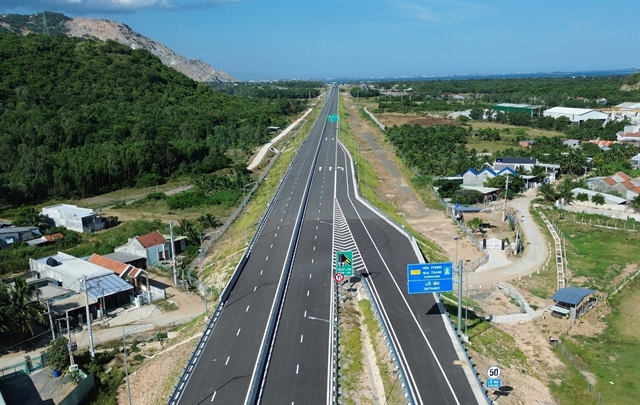 |
| Photo shows a section of Vân Phong - Nha Trang Expressway. — VNA/VNS Photo Quốc Khánh |
The resolution highlights the need for breakthroughs in developing all economic sectors, alongside the effective implementation of Politburo resolutions.
Priority will be given to building large economic groups and corporations capable of competing regionally and globally.
It also calls for more selective attraction of foreign investment, with a shift in FDI policy away from tax incentives towards other forms of support, including performance-based incentives.
Greater emphasis will be placed on technology transfer and stronger linkages between the FDI sector and domestic enterprises, as well as more effective outward investment.
The development of domestic capital markets is identified as a priority to mobilise long-term funding and reduce reliance on the banking system.
Special and breakthrough mechanisms are to be introduced to enhance the effectiveness of international financial centres and free trade zones in attracting indirect investment flows and global funds.
The resolution further underlines the need to remove barriers in science, technology and innovation, linking policies more closely to outcomes while accepting controlled risks.
Priority will be given to acquiring, transferring, mastering and creatively applying core, strategic and advanced technologies, including digital technologies.
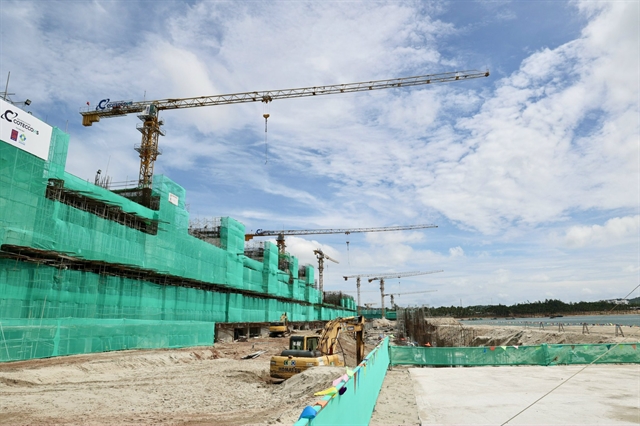
Infrastructure development is another key focus, with accelerated investment in expressways, international gateway seaports, major airports, high-speed rail along the North-South axis, international railway connections and urban rail systems.
By 2030, more than 5,000 kilometres of expressways are expected to be in operation.
Efforts will also be made to utilise low-altitude and underground space more effectively.
A comprehensive review and classification of delayed and stalled projects, both public and private, will be undertaken to ensure their decisive resolution, with outstanding issues reported to competent authorities for timely handling.
The resolution also addresses pressing urban challenges, including air pollution, traffic congestion and flooding in major cities such as Hà Nội and HCM City, as well as broader environmental pollution in urban areas, industrial clusters, craft villages, river basins and rural regions.
Other key measures include building an advanced Vietnamese culture, rich in national identity, modernising the national education system, improving training quality, attracting and nurturing talent, ensuring sustainable social development, and promoting social progress, equity and improved living standards for the population. — VNS
Politics & Law
 Politics & Law
 Politics & Law
 Politics & Law
 Politics & Law
 Politics & Law
 Politics & Law
 Politics & Law
 Politics & Law
 Politics & Law
 Politics & Law
 Politics & Law
 Politics & Law
 Politics & Law
 Politics & Law