 Politics & Law
Vietnamese Prime Minister meets Cambodian National Assembly President
1.
|
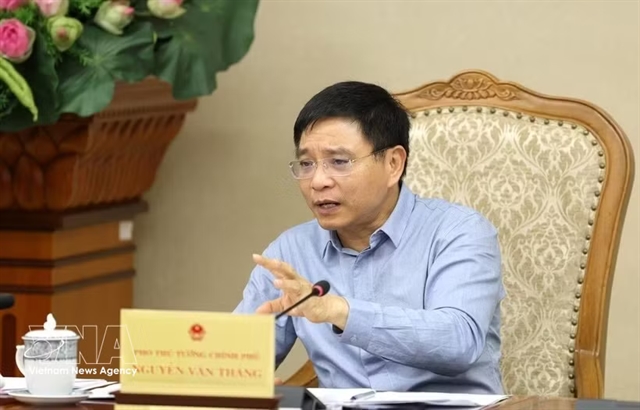
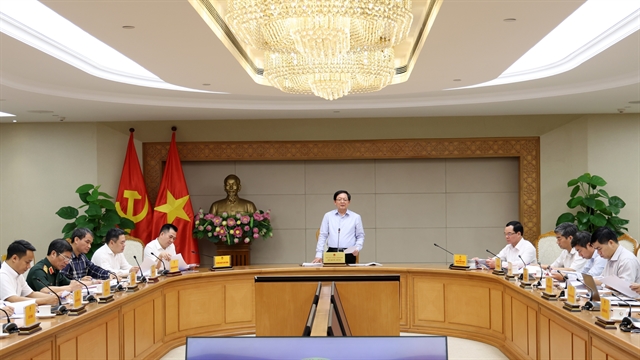
| Deputy Prime Minister Nguyễn Văn Thắng speaks at the meeting of the Steering Committee for Price Management in Hà Nội on Thursday. — VNA/VNS Photo |
HÀ NỘI — Ministries and agencies, within their respective mandates, must request enterprises to strictly follow rules on price declaration and listing, and stop exploiting cost swings to push up prices unreasonably, Deputy Prime Minister Nguyễn Văn Thắng has said.
Chairing a meeting of the Steering Committee for Price Management in Hà Nội on Wednesday, Thắng called for a flexible approach to price oversight. He urged stronger monitoring and analysis of supply-demand balances and prices of essential goods to maintain tight control and prevent profiteering, especially in fuel-sensitive sectors such as transport, logistics, construction materials and food.
It is essential to balance supply and demand, especially for key commodities, including petroleum, electricity, food and critical production inputs, he said, adding that timely coordination of supplies across regions, while factoring in export needs, will be required to stabilise market prices. The People’s Committees of provinces and centrally-run cities must actively roll out market stabilisation programmes tailored to local conditions, Thang noted.
At the same time, authorities were told to ramp up inspections, examinations and market surveillance to enforce pricing rules, quickly detect and tackle speculation, hoarding, price manipulation, and failures to cut prices when input costs fall. Strict action was also demanded against violations in cross-border fuel trading that exploit price gaps.
Efforts to improve public communication and transparency on pricing and price management must continue, with timely information released on major commodities that affect production and daily livelihoods.
The Deputy PM suggested that ministries, agencies and localities issue pricing decisions within their authority and fully shoulder price management responsibilities under the revised Law on Prices and related guidelines.
Ministries, agencies and localities were assigned to track supply-demand and price movements of goods under their purview, then adopt appropriate pricing measures, particularly for items directly hit household budgets such as food, electricity, construction materials, education and healthcare. They must also keep a close watch on indirectly influential sectors like gold, foreign exchange and real estate.
For state-priced goods and services under review for adjustment, they must carefully examine cost factors and evaluate impacts on both local and national price levels, avoiding rushed hikes. Enterprises were ordered to control input costs, cut production expenses, boost efficiency and share responsibility to balance interests among the State, businesses and consumers. Price cuts should be made promptly when input costs decline, and any adjustments must be timed and calibrated to preserve market stability and keep inflation targets in check.
The Ministry of Industry and Trade was tasked with partnering with relevant agencies to ensure a sufficient domestic supply of petroleum and liquefied petroleum gas (LPG) under all circumstances, while managing fuel prices according to regulations.
It will also explore ways to diversify supply sources and build petrol reserves to allow flexible intervention and stabilisation during market swings or disruptions. At the same time, the ministry must simultaneously strengthen market inspections, crack down on violations, and prevent any fuel shortages or disruptions.
The Deputy PM also assigned other specific tasks to relevant ministries and local authorities. — VNA/VNS
Politics & Law
 Politics & Law
 Politics & Law
 Politics & Law
 Politics & Law
 Politics & Law
 Politics & Law
 Politics & Law
 Politics & Law
 Politics & Law
 Politics & Law
 Politics & Law
 Politics & Law
 Politics & Law
 Politics & Law