 Politics & Law

Lotte, Phát Đạt combine strengths in Thu Thiem project
1.
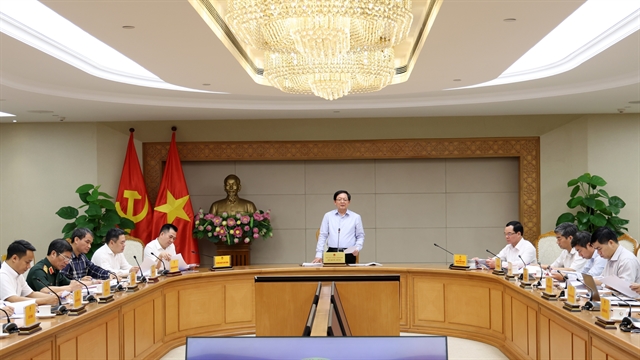 |
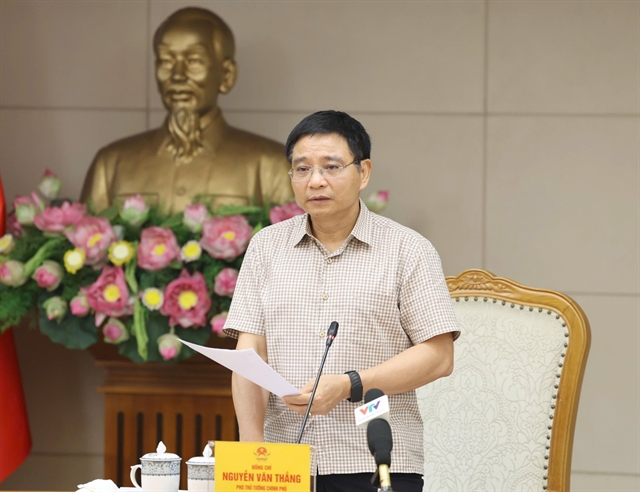
| Deputy Prime Minister Hồ Quốc Dũng on April 23 chaired a meeting in Hà Nội to review the implementation of the national target programme on new-style rural area building, sustainable poverty reduction and socio-economic development in ethnic minority and mountainous areas for 2026–35. — VNA/VNS Photo |
HÀ NỘI — Deputy Prime Minister Hồ Quốc Dũng on Thursday chaired a meeting reviewing the implementation of the national target programme on new-style rural area building, sustainable poverty reduction and socio-economic development in ethnic minority and mountainous areas for 2026–35, while outlining key tasks through 2026.
A report by the Ministry of Agriculture and Environment showed that following the National Assembly’s Resolution No. 257/2025/QH15 that approves the programme, ministries and agencies have largely completed mechanisms, policies, and guiding documents for the 2026–30 phase.
Localities are currently issuing detailed guidelines, completing procedures to carry over 2025 funds and drafting plans to meet programme targets by 2030. The One Commune, One Product (OCOP) programme continues to play a growing role in boosting the economic value and competitiveness of rural products.
The ministry is also working with relevant agencies to develop the medium-term public investment allocation plan for 2026–30 and the 2026 central budget plan for programme implementation. Total central funding demand for 2026–30 is estimated at over VNĐ20.5 trillion (US$778.6 million) for public investment and about VNĐ7 trillion for tasks under the programme.
Concluding the meeting, Deputy PM Dũng commended ministries and agencies for close coordination in merging three programmes into a unified framework, calling it a significant reform step. However, he pointed out shortcomings, including delays in issuing guidelines and slow public investment disbursement.
He urged the swift establishment of steering committees and supporting bodies at all levels, and requested ministries to promptly issue necessary guidance documents.
The Ministry of Agriculture and Environment was tasked with compiling a concise and user-friendly handbook to guide the programme implementation.
Dung stressed the need to fully disburse funds carried over from 2021–25, remove procedural bottlenecks, and avoid capital staying idle or being reclaimed, particularly in disadvantaged areas.
For the 2026–30 period, he emphasised prioritising resources for ethnic minority, mountainous, border and insular regions, focusing on essential areas such as clean water, farmland, health care, education, and housing while steering clear of fragmented investment.
The State Bank of Việt Nam was assigned to develop preferential credit policies for disadvantaged regions to support livelihood development. Meanwhile, local authorities were told to proactively implement policies, address challenges, report any difficulties or bottlenecks arising to the Government for consideration and resolution, and prioritise key infrastructure projects to ensure targeted and efficient spending.
The Deputy PM called for breakthroughs in rural and mountainous development, particularly through digital transformation linked with tourism, to improve life quality and ensure effective and targeted implementation. — VNA/VNS
Politics & Law
 Politics & Law
 Politics & Law
 Politics & Law
 Politics & Law
 Politics & Law
 Politics & Law
 Politics & Law
 Politics & Law
 Politics & Law
 Politics & Law
 Politics & Law
 Politics & Law
 Politics & Law
 Politics & Law