 Politics & Law

Lotte, Phát Đạt combine strengths in Thu Thiem project
1.
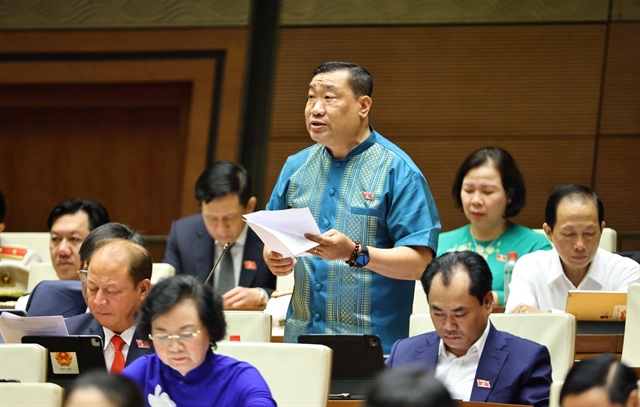 |
| National Assembly Deputy Thạch Phước Bình delivers his speech on Thursday morning. — VNA/VNS Photo Minh Đức |
HÀ NỘI — Việt Nam needs to fundamentally overhaul its approach to overseeing significant projects and strategic infrastructure systems, including the North-South high-speed railway, Long Thành International Airport as well as key ring roads and expressways.
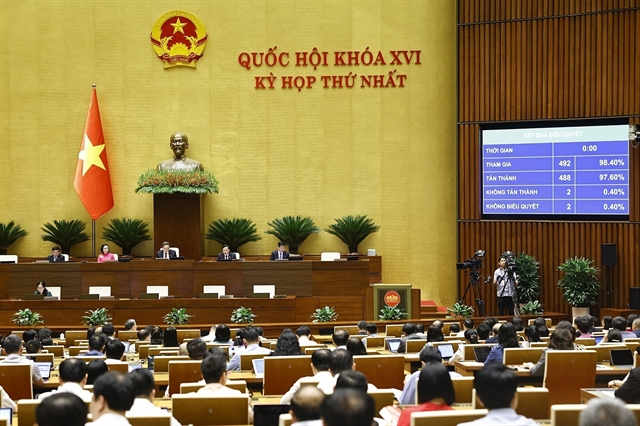
National Assembly (NA) Deputy Thạch Phước Bình, from the Mekong Delta province of Vĩnh Long’s delegation, made the comments on Thursday morning during a plenary discussion on the draft Resolution on the 2027 supervision programme.
Supervision should not be confined to monitoring disbursement progress or construction timelines, it must assess overall effectiveness and real socio-economic impacts.
“It must answer core questions: Have projects achieved their original strategic objectives? Is there a risk of wasting national resources due to cost overruns or delays?” Bình said.
He also stressed the need to strictly implement provisions in the draft resolution requiring clear accountability for individuals and agencies in carrying out post-supervision conclusions.
Bình said that only when oversight is tied to transparent accountability mechanisms and firm action is taken against persistent shortcomings, can it drive substantive improvements in national governance and strengthen public trust.
Addressing the plenary session, Venerable Thích Bảo Nghiêm, a NA deputy from Hà Nội’s delegation, said the draft resolution broadly covers key areas such as the economy, society, the State budget, anti-corruption efforts, environmental protection and major national projects.
However, given the extensive scope, Nghiêm urged a clearer prioritisation of oversight to avoid spreading resources.
Without appropriate prioritisation, supervision risks lacking depth and failing to deliver meaningful outcomes, he said, recommending that the NA focus on a number of urgent thematic areas with wide-ranging and direct impacts on people’s lives and national development.
On the supervision of major national projects, he expressed support for including large-scale initiatives such as the high-speed railway, expressways and Long Thành International Airport in the programme.
However, he called for clearer criteria, with particular emphasis on implementation progress, the efficiency of capital use, and the accountability of relevant agencies, organisations and individuals.
He also underscored the need for stronger oversight of risks such as delays, cost overruns, losses and wastefulness, alongside robust post-supervision follow-up mechanisms to ensure recommendations are fully and effectively implemented.
Stepping up digital data use
Bình said that accelerating the application of information technology and building integrated data systems for oversight purposes is an urgent requirement.
He called for the development of a national supervision database to enhance transparency and enable NA deputies to independently and objectively access and analyse information.
With accurate, timely and multi-dimensional data inputs, oversight activities can become a vital feedback channel to help the NA make decisions grounded in reality, he said.
He urged the NA and its Standing Committee to promptly finalise a comprehensive support framework, as outlined in the proposal and draft resolution, including measures to promote digital transformation and establish interconnected data systems.
Echoing Bình’s views, Bế Trung Anh, a NA deputy from the Central Highlands province of Đắk Lắk’s delegation, said that achieving the goal of 'supervision for development' requires a shift towards data-driven oversight.
As Việt Nam moves towards an 'adaptive State' model, with a streamlined two-tier local government model, accelerated digital government, and data-based, real-time governance, if the NA does not change its oversight methods, it will fall into the trap of 'overseeing the past', while challenges lie in the present.
He proposed three adjustments to the resolution.
First, the annual supervision programme should be made more flexible, serving as a guiding framework rather than a rigid scope, allowing adjustments in response to emerging issues.
Second, an adaptive and ad hoc supervision mechanism should be introduced, enabling the NA Standing Committee to launch immediate oversight when major issues arise, without waiting for formal sessions.
Third, the resolution should incorporate data-driven supervision, assigning clear responsibilities for building a parliamentary oversight data system linked with the Government’s operational systems and developing monitoring dashboards.
As Việt Nam advances towards a digital NA, real-time supervision should be established as standard practice from the outset, he said. — VNS
Politics & Law
 Politics & Law
 Politics & Law
 Politics & Law
 Politics & Law
 Politics & Law
 Politics & Law
 Politics & Law
 Politics & Law
 Politics & Law
 Politics & Law
 Politics & Law
 Politics & Law
 Politics & Law
 Politics & Law