 Politics & Law
Rural tourism needs to cash quantities over goods sold
1.
|
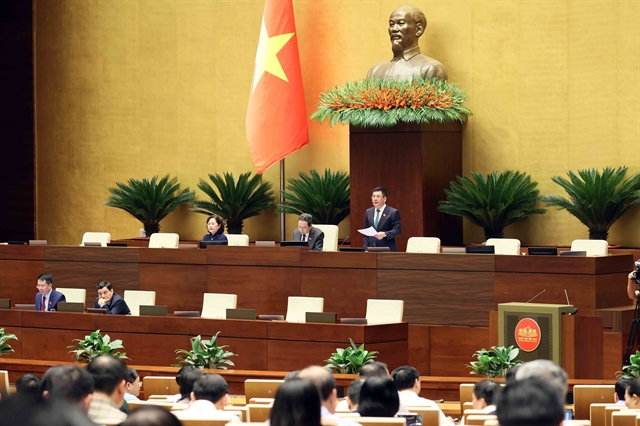
| National Assembly Vice Chairman Nguyễn Hồng Diên chairs the working session discussing draft amendments to the Law on Emulation and Commendation. — VNA/VNS Photo An Đăng |
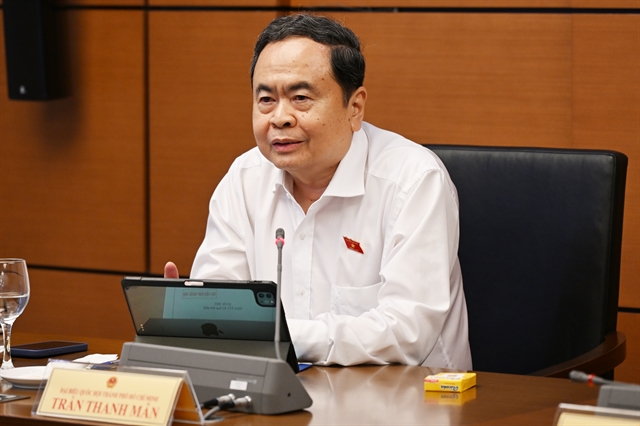
HÀ NỘI — The first session of the 16th National Assembly continued its agenda on Friday afternoon, with lawmakers discussing draft amendments to the Law on Emulation and Commendation, calling for a shift towards more substantive and transparent evaluation of achievements.
Acknowledging the drafting body’s efforts, Deputy Bế Trung Anh of Đắk Lắk Province said the revised draft shows positive changes, placing greater emphasis on real effectiveness, innovation, and digital transformation, while broadening the range of eligible recipients.
However, he stressed that any reform must begin with how the system identifies and evaluates value.
“In education, high school graduation rates in many localities have reached 98–99 per cent, yet independent assessments show students’ competencies do not match those figures. In administrative reform, over 95 per cent of applications are processed on time, but public satisfaction does not appear equally high,” he said, arguing that what is measured does not necessarily reflect what truly matters.
He proposed a fundamental shift in approach.
First, moving away from allocating titles based on quotas towards recognising genuine value where any individual or organisation meeting defined standards should be acknowledged, without being constrained by fixed administrative ratios.
Second, reducing reliance on accumulated past achievements and placing greater weight on current contributions, particularly those with tangible impact.
Third, broadening evaluation criteria to include factors that directly reflect social value, such as citizen feedback, real-world data, and service outcomes.
|
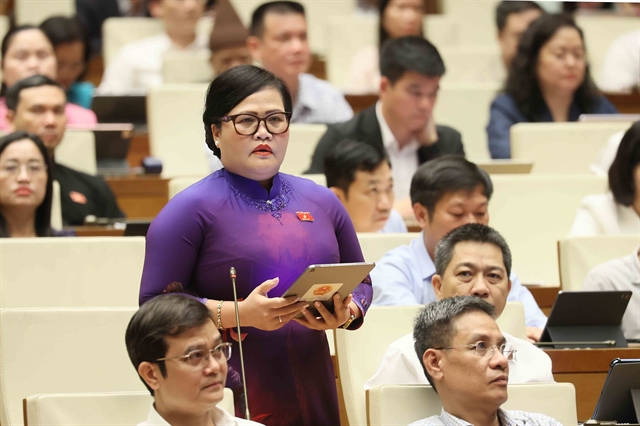
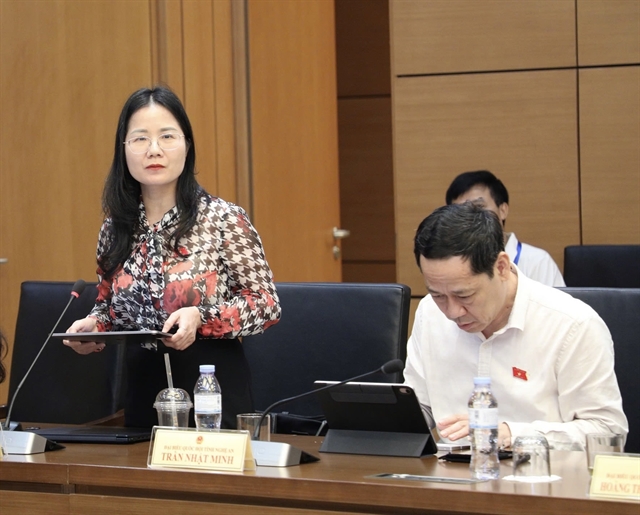
| Deputy Nguyễn Thị Sửu from Huế City speaks at the working session. — VNA/VNS Photo |
Sharing similar views, Deputy Nguyễn Thị Sửu from Huế City supported many of the draft’s innovations but stressed the need for clearer limits and quantitative criteria to ensure transparency and feasibility, and to avoid widespread, unselective or even excessive commendations.
She proposed capping the number of awards an individual can receive. She gave an example such as no more than three times per year or five times over five years, alongside clearer criteria for evaluating achievements and periodic review mechanisms to ensure quality control.
Regarding Article 14 on receiving commendations from foreign individuals and organisations, Sửu said while it is necessary to prohibit the abuse of foreign awards, the draft lacks clear guidance on authority and criteria for identifying violations. This could lead to rigid interpretations that may hinder international cooperation and recognition.
She recommended clearly distinguishing between legitimate acceptance of foreign awards and acts of abuse, assigning oversight authority to relevant bodies such as the Ministry of Foreign Affairs, the Ministry of Justice, or security agencies.
She also proposed introducing reporting and appraisal mechanisms prior to recognition, while continuing to encourage international integration.
On the criteria for awarding titles under Article 20, Sửu noted that the concept of “exemplary communes, wards and townships” remains too qualitative and lacks specific benchmarks. She suggested adding measurable indicators such as poverty reduction, sustainable economic development, technological application, and administrative reform, and assigning the Government or the Ministry of Home Affairs to issue detailed regulations and establish periodic monitoring mechanisms.
During the same session, the National Assembly also discussed a draft resolution on environmental protection tax, value-added tax, and excise tax policies for petrol, oil and aviation fuel. — VNS
Politics & Law
 Politics & Law
 Politics & Law
 Politics & Law
 Politics & Law
 Politics & Law
 Politics & Law
 Politics & Law
 Politics & Law
 Politics & Law
 Politics & Law
 Politics & Law
 Politics & Law
 Politics & Law
 Politics & Law