 Politics & Law

"Thai Night Busan 2026" Makes a Grand Return, Connecting Thai Content with Global Partners to Create Business Opportunities and Strengthen Industry Collaboration
1.
|
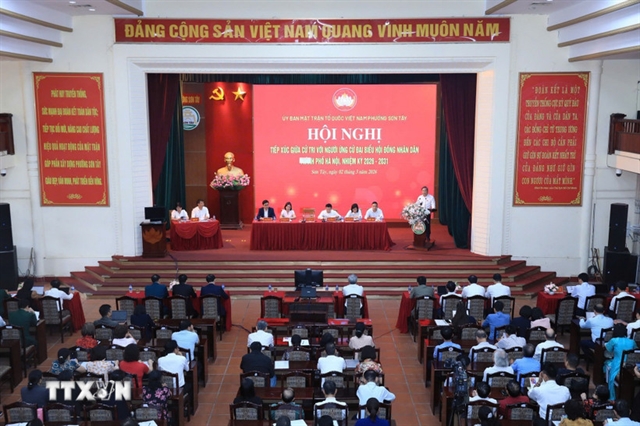
| The meeting between the Hà Nội People's Committee chairman and candidates with voters in Sơn Tây Ward, and Tùng Thiện and Đoài Phương communes. — VNA/VNS Photo |
HÀ NỘI — Hà Nội authorities have pledged decisive action to tackle five persistent urban 'bottlenecks,' traffic congestion, environmental pollution particularly air pollution, flooding, violations of construction and land use regulations and food safety, which leaders say are testing both governance and public trust.
Chairman of the Hà Nội People’s Committee Vũ Đại Thắng made the commitment on Monday while meeting voters in Sơn Tây Ward, in a session held online with Tùng Thiện and Đoài Phương communes. The event formed part of campaigning by candidates from Electoral Unit No.14 for the 17th-term Hà Nội People’s Council for 2026–2031.
Amid demands for rapid and sustainable development in the next phase, the city continues to face mounting pressure from traffic congestion, pollution, flooding, construction and land violations and food safety concerns.
At the meeting, Thắng underscored the determination to resolve these five bottlenecks, describing progress on them as a key measure of effective governance and public confidence.
Electoral Unit No.14 has five candidates for the municipal People’s Council. They presented their action programmes and pledged, if elected, to maintain close ties with voters, remain subject to public oversight and faithfully convey voters’ opinions and recommendations to the council and relevant authorities.
The candidates said they would conduct substantive voter outreach rather than formalistic meetings and would publicly report the outcomes and resolutions of each session to keep residents informed. They also committed to accurately transmitting voters’ views to central and city agencies to help improve policies and address public concerns.
Thắng noted that the election of deputies to the 16th National Assembly and People’s Councils at all levels for the 2026–2031 term comes as the country enters a new stage of development, continues to reform its growth model, improves institutions, streamlines the administrative apparatus and implements a two-tier local government model following the reorganisation of administrative units.
“The demands placed on elected representatives for the next term are very high, not only in terms of qualifications and capabilities, but more importantly, they must be truly close to the people, listen to them, and represent their legitimate will and aspirations,” Thắng said.
“Hà Nội will focus on effectively implementing the goals set forth by the 18th City Party Congress; synchronously implementing the Capital City Planning with a 100-year vision; and concretising and putting the amended Capital City Law into practice.”
The city aims to maintain rapid and sustainable growth and strives for double-digit economic expansion during 2026–2031. It will strictly manage the budget, improve the efficiency of public investment and ensure transparency in the use of public funds, he said.
In transport, the city plans to accelerate construction of ring roads, expand the urban railway network and reorganise traffic to curb private vehicle use while boosting public transport.
On the environment, authorities will continue tree planting, cut emissions, relocate polluting facilities from the inner city and invest in modern waste and wastewater treatment technologies.
In land management and urban order, the city will tighten discipline, promote the digitisation of land data and enhance transparency in planning to facilitate public oversight.
Food safety enforcement will be strengthened through inspections and digital traceability systems.
Voters at the meeting raised concerns about heritage preservation, tourism development, infrastructure and education, including proposals to preserve, restore and promote the value of the Đường Lâm Ancient Village relic site alongside the construction of the Tích River Park.
Thắng said the Sơn Tây–Tùng Thiện–Đoài Phương area has been identified as a key cultural axis in western Hà Nội, with the Đường Lâm Ancient Village and Sơn Tây forming the core of eco, cultural and historical tourism.
“The city's perspective is that preservation must be linked to promoting values and creating livelihoods for the people,” the chairman said.
“The Tích River Park is envisioned as a comprehensive cultural space, connecting the riverside landscape with the ancient village, forming a unique tourism product of the Đoài region.”
He added that the city would fully implement compensation, support and resettlement policies in accordance with regulations while focusing on vocational training and job transition to enable residents to participate directly in tourism and service activities in the heritage area. — VNS
Politics & Law
 Politics & Law
 Politics & Law
 Politics & Law
 Politics & Law
 Politics & Law
 Politics & Law
 Politics & Law
 Politics & Law
 Politics & Law
 Politics & Law
 Politics & Law
 Politics & Law
 Politics & Law
 Politics & Law