 Politics & Law
Top leader meets with staff of Vietnamese agencies in Belgium, Vietnamese community in Europe
1.
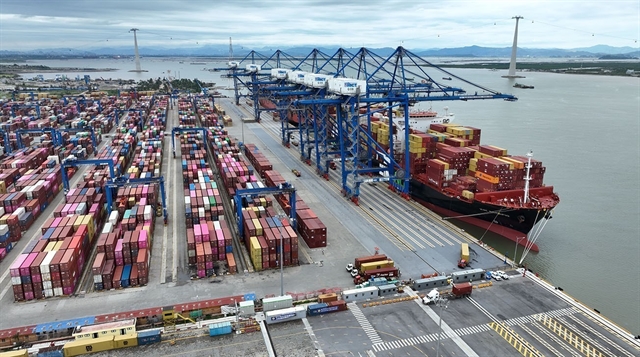 |
| Import and export containers at Lạch Huyện Port in the coastal city of Hải Phòng, December 25, 2025.— VNA/VNS Photos |
HÀ NỘI — The National Assembly (NA) has approved revisions to Việt Nam’s long-term national development plan, setting out some of its most ambitious growth targets to date.
Việt Nam aims to sustain average annual GDP growth of more than 8 per cent between 2021 and 2030, with growth accelerating to at least 10 per cent a year in the second half of the decade, according to Resolution 252.
The Resolution was formally certified by National Assembly Chairman Trần Thanh Mẫn, revising an earlier framework adopted in 2023.
By 2030, Việt Nam aims to become an upper-middle-income developing economy with a modern industrial base, driven primarily by science, technology, innovation and digital transformation.
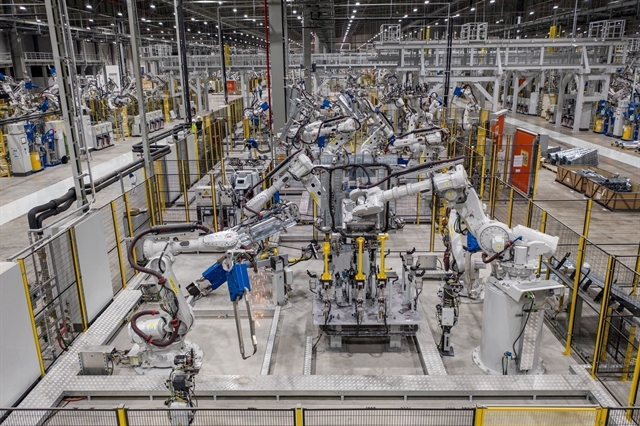 |
| A robot-automated production line for electric vehicles at VinFast. |
The plan envisions services accounting for more than half of GDP by the end of the decade, while industry and construction are expected to exceed 40 per cent, led by manufacturing.
GDP per capita is projected to reach around US$8,500 at current prices.
Productivity growth is a central pillar. The country is targeting average annual labour productivity growth of about 7 per cent between 2021 and 2030, rising to more than 8.5 per cent from 2026 onwards, with total factor productivity contributing over 55 per cent of overall growth.
Officials also set out goals to position Việt Nam among the leading upper-middle-income economies in science, technology and innovation, while expanding the digital economy to roughly 30 per cent of GDP through large-scale investment in data and digital infrastructure.
Education and human capital feature prominently. Việt Nam aims to place at least eight universities among Asia’s top 200 by 2030, and at least one institution among the world’s top 100 in selected disciplines.
The revised plan places renewed emphasis on regional development, identifying six socio-economic regions and establishing coordination mechanisms to strengthen inter-regional linkages and improve resource allocation.
Two major growth poles – Hà Nội in the north and HCM City in the south – are expected to anchor development, supported by key economic corridors and modern, integrated infrastructure.
The country plans to build around 5,000km of expressways by 2030, alongside new international gateway ports, airports, rail connections and urban transit systems.
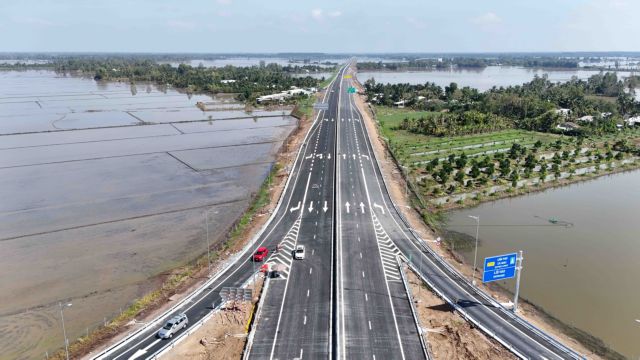 |
| A section of the Cần Thơ–Cà Mau Expressway passing through Vị Thủy Commune in the southern city of Cần Thơ. The expressway opened to traffic on December 19, 2025. |
Regional growth targets are uniformly high.
The Red River Delta is expected to post average annual growth of around 11 per cent between 2026 and 2030, while the Southeast is projected to grow by between 10 and 11 per cent annually, positioning it as the country’s largest growth engine and a future centre for high-tech manufacturing, logistics and finance.
The Mekong Delta is slated to become a modern, high-value agricultural centre, with annual growth targeted at up to 9.5 per cent, supported by technology-driven farming and processing industries.
The Northern Midlands and Mountainous Region is projected to grow at an average rate of approximately 10 per cent a year between 2026 and 2030, with development oriented toward green growth and more balanced socio-economic outcomes.
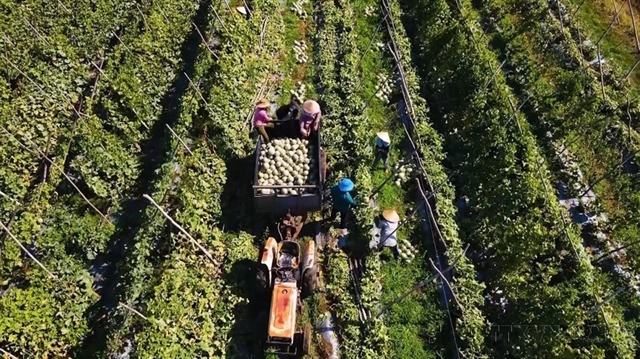 |
| Farmers in the southern province of Quảng Ngãi harvest melons grown under clean agriculture standards on December 25, 2025. |
The North Central region, stretching along Việt Nam’s central coast, is expected to expand by more than 10 per cent annually over the same period. The country is prioritising the marine economy, coastal industrial zones and port infrastructure, seeking to turn the region into a new driver of maritime-led growth.
Meanwhile, the region covering the South Central Coast and the Central Highlands is targeting an average growth of between 9.5 and 10 per cent during the period.
The revised blueprint signals Việt Nam's determination to lock in high growth through the end of the decade – a strategy that will test the country’s capacity to deliver productivity gains, manage regional disparities and mobilise investment at an unprecedented scale. — VNS
Politics & Law
 Politics & Law
 Politics & Law
 Politics & Law
 Politics & Law
 Politics & Law
 Politics & Law
 Politics & Law
 Politics & Law
 Politics & Law
 Politics & Law
 Politics & Law
 Politics & Law
 Politics & Law
 Politics & Law