 Politics & Law
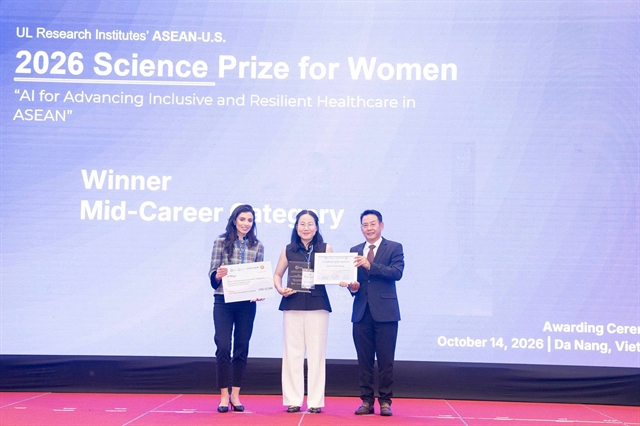
Vietnamese scientist wins ASEAN-US Science Prize for Women
1.
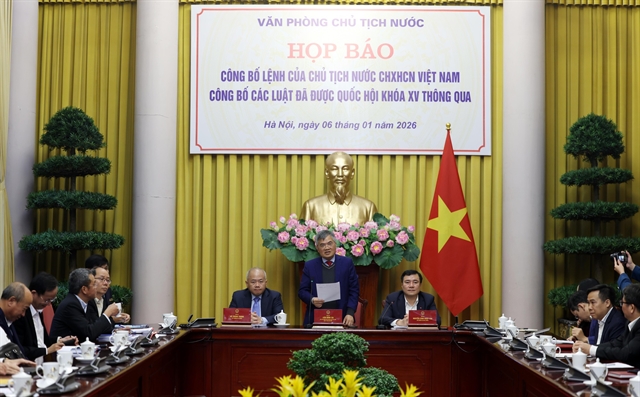 |
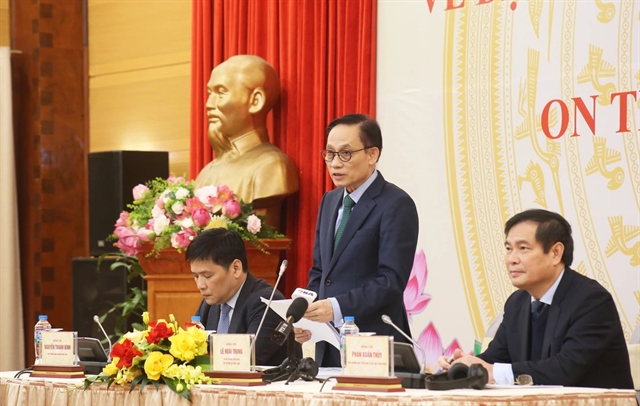
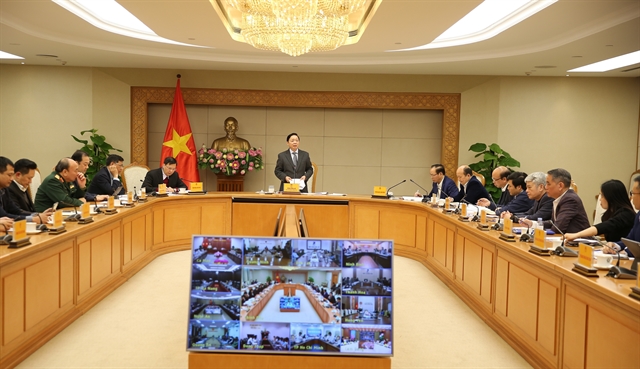
| The Office of the President held a press conference to announce the President's Order promulgating 12 laws on January 7 in Hà Nội. Photo chinhphu.vn |
HÀ NỘI — The Office of the President yesterday announced an order from President Lương Cường promulgating 12 laws passed by the 15th National Assembly at its 10th session.
Laws set to take effect include amendments and supplements to the Law on Education, the Law on Vocational Education and the Law on Higher Education; amendments and supplements to the Law on Anti-Corruption; amendments and supplements to the Law on Citizen Reception, the Law on Complaints and the Law on Denunciations; the Law on Rehabilitation and Bankruptcy; the Law on Specialised Courts at the International Financial Centre; and amendments and supplements to the Law on Treaties.
Other laws included in the order are amendments and supplements to fifteen laws on agriculture and the environment; amendments and supplements to the Law on Geology and Minerals; the Press Law; and the Law on Deposit Insurance.
Quality of education
A new law outlining amendments and supplements to the Law on Education, Law on Vocational Education and Law on Higher Education institutionalises a series of major Party orientations on developing education in the new era.
Specifically, the law defines lower secondary education as compulsory and implements universal pre-school education for children aged three to six.
It also provides regulations on scientific, technological and innovation activities in education, under which the State adopts policies to encourage the controlled application of technology and artificial intelligence, promote comprehensive digital transformation and build a national database on education and training.
The Law on Vocational Education completes the legal framework, ensuring a coherent and unified system of laws on vocational education, suited to the country’s new development context and international integration requirements.
A major goal is to improve the quality and effectiveness of vocational education to meet the needs of learners and the labour market, align with skill requirements within ASEAN and international integration, and meet demand for workers as required for national development in the new era. This would help boost the quality of local workers, especially highly skilled workers, and help implement strategic breakthroughs for national development.
The Law on Higher Education is designed to complete the legal framework for the development of modern higher education. It ensures substantive autonomy for higher education institutions associated with accountability and which is not dependent on financial capacity.
It lays the foundation for reforming university governance, training high-level workers, promoting closer links between training and scientific research and innovation, and meeting the country’s socio-economic development and international integration requirements in the new stage of development.
All three laws take effect from January 1, 2026.
Expanding press operations
The Law on Press, which comes into effect on July 1, 2026, adds provisions on the position of the press. It notes that “the press in the Socialist Republic of Việt Nam is revolutionary”, upholding its historical character and building a professional, humane and modern journalism sector.
Provisions on the right of citizens to request corrections in the press have also been added, ensuring citizens’ freedoms as stipulated in the Constitution.
Also outlined in the law are principles related to operational models and the press economy, expanding the operating space for press agencies to develop journalism after the reorganisation of the political system apparatus, and meeting information and communication requirements in the new era.
The law provides for stricter management of press activities to ensure efficiency and efficacy in State management of the press.
Under the law, four types of journalism are clearly defined: print journalism, electronic journalism, radio and television.
Anti-corruption work
Amendments and supplements to the Law on Anti-Corruption provide criteria for assessing anti-corruption work and adopting general assessment contents appropriate to the State management functions of ministries, sectors and localities.
The changes assign the Government to issue detailed assessment criteria to ensure proactiveness and accountability of ministries and provincial-level People’s Committees in anti-corruption efforts.
Provisions on asset values and income thresholds subject to declaration and additional declaration are also amended and supplemented, to better reflect current conditions.
The value of each type of asset subject to declaration is set at VNĐ150 million (US$5,700) or more, while the threshold for assets and income requiring additional declaration is VNĐ1 billion ($38,000) or more.
These changes take effect from July 1, 2026. VNS
Politics & Law
 Politics & Law
 Politics & Law
 Politics & Law
 Politics & Law
 Politics & Law
 Politics & Law
 Politics & Law
 Politics & Law
 Politics & Law
 Politics & Law
 Politics & Law
 Politics & Law
 Politics & Law
 Politics & Law