 Politics & Law
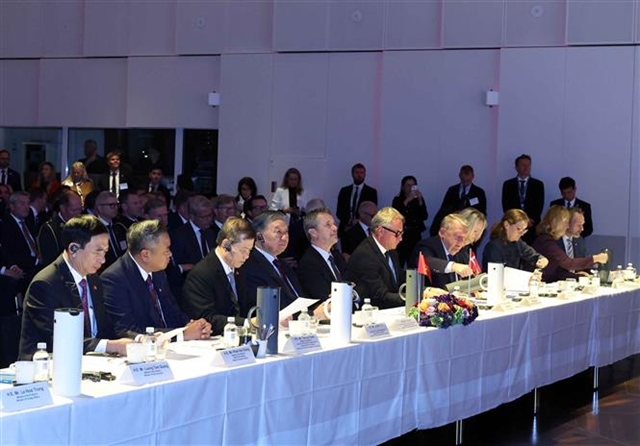
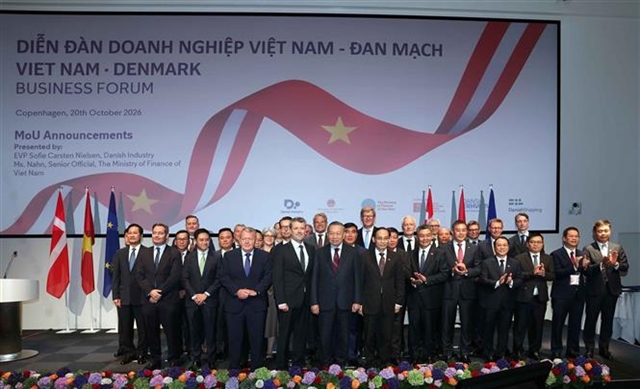
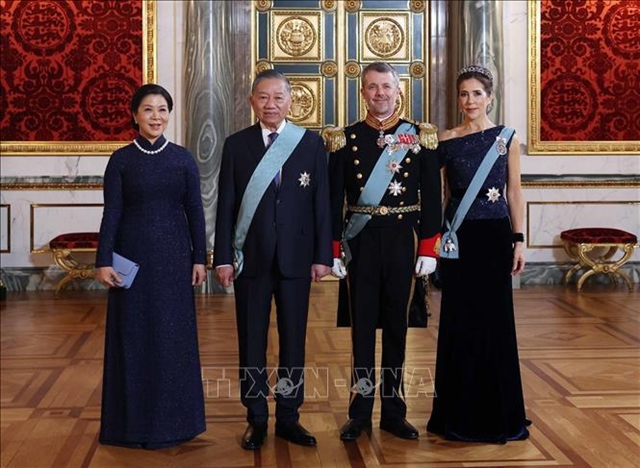
General Secretary and President Tô Lâm witnesses exchange of Việt Nam-Denmark cooperation agreements
1.
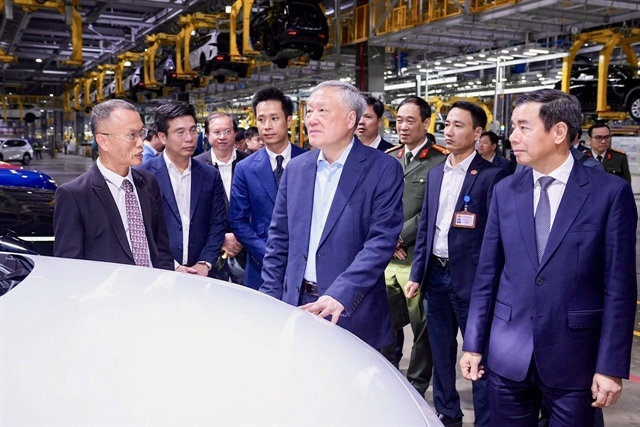 |
| Permanent Deputy Prime Minister Nguyễn Hoà Bình on December 15 led a Government delegation inspect Vinfast plant, along with other numerous projects in Hải Phòng City. — VNA/VNS Photo |
HẢI PHÒNG — Permanent Deputy Prime Minister Nguyễn Hoà Bình on Monday led a Government working delegation in a meeting with the northern port city of Hải Phòng to review the situation of production and business activities, public investment, import and export, infrastructure development, social housing, national target programmes, and the implementation of the two-tier local government model.
Reporting to the Government delegation on socio-economic development and business performance, Chairman of the Hải Phòng People’s Committee Lê Ngọc Châu said the city’s GRDP growth continued to maintain double-digit momentum, estimated at 11.81 per cent in 2025, ranking second nationwide after Quảng Ninh Province at 11.89 per cent.
For the whole of 2025, total state budget revenue is estimated to exceed VNĐ187 trillion (over US$7 billion), equivalent to 127 per cent of the target assigned by the central government, up 23.1 per cent year-on-year. This marks the fourth consecutive year that budget revenue has surpassed VNĐ100 trillion ($3.8 trillion).
As of December 11, 2025, the city had disbursed more than VNĐ32.5 trillion in public investment capital, reaching 90.6 per cent of the plan assigned by the Prime Minister. Hải Phòng ranked fourth out of 34 provinces and centrally run cities in both total disbursed capital and disbursement rate, and first nationwide in terms of disbursement rate against its locally assigned plan.
Under targets set by the Prime Minister for the 2021–2030 period, Hải Phòng is required to complete 49,400 social housing units. In 2025 and 2026, the city is expected to complete and hand over 17,910 units, exceeding the assigned target of 17,384 units.
Regarding the implementation of national target programmes, by 2024, the former Hải Phòng City had eliminated poor households and substandard housing. In the former Hải Dương Province, the poverty rate stood at 0.25 per cent, and the eradication of temporary and dilapidated houses had been completed with 1,452 units, four months ahead of the Prime Minister’s schedule.
By the end of June 2025, all 228 communes in Hải Phòng had met new-style rural area standards; 152 communes had reached advanced standards; 77 communes had achieved model new-style rural status; and all 18 districts, cities and towns had completed new-style rural development tasks.
Five months after administrative consolidation, the city has focused on resolute leadership and direction in implementing the two-tier local government model. To date, the model has been operating effectively and smoothly, with facilities, civil servants and information technology infrastructure initially meeting requirements.
The head of the Hải Phòng People’s Committee outlined key tasks and solutions for 2026, including developing and implementing an economic growth scenario and a public investment disbursement plan; proactively reviewing the production and business situation of enterprises; and accompanying businesses to address difficulties and bottlenecks.
The city will continue administrative reform, with a strong focus on digital transformation, aiming to cut administrative processing time by at least 50 per cent, and to enhance the accountability of agency heads in addressing business concerns. Hải Phòng will also continue to strictly implement central and municipal directives on the two-tier local government model.
At the meeting, the city submitted 37 proposals to the Government and central ministries and agencies, including 14 urgent and important issues directly related to Hai Phong and 23 broader institutional recommendations.
Largely concurring with the report and opinions presented at the meeting, Deputy PM Bình highly praised Hải Phòng's efforts in achieving socio-economic development goals.
He said Hải Phòng had recorded many notable and comprehensive achievements across sectors, particularly in meeting growth targets. All tasks assigned by the Government had been met or exceeded, budget revenue results were positive, and the organisation of the two-tier local government model had been implemented effectively, with many bottlenecks already addressed.
Looking ahead, the Permanent Deputy Prime Minister urged Hải Phòng to continue removing obstacles to production and business development to sustain high growth, and to improve planning work. The city should step up investment attraction, especially private investment, promote the application of science and technology, develop value chains, and unlock and foster new growth drivers.
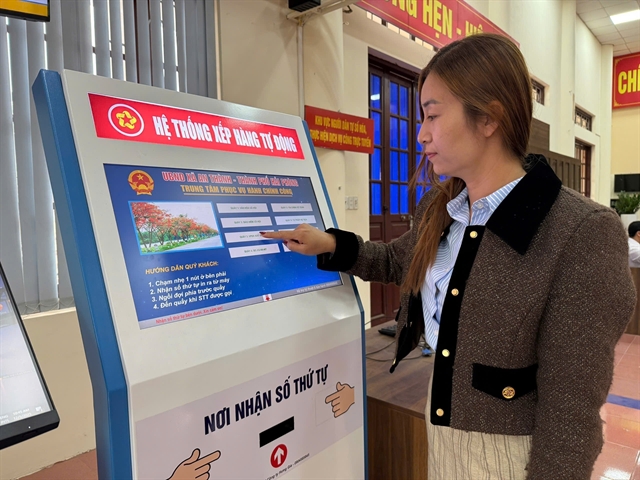
Hải Phòng should also continue to effectively implement tasks and solutions in culture, healthcare and education; promote digital transformation, digital government and administrative reform; and create favourable conditions for people and businesses. The application of information technology and digital working environments should be strengthened to reduce administrative processing time.
At the meeting, the Permanent Deputy PM and leaders of ministries and agencies provided specific feedback on Hải Phòng’s proposals regarding mechanisms and policies to boost production, business, import and export, public investment disbursement, investment attraction for key projects, and the mobilisation of resources for infrastructure development, particularly transport connectivity.
On behalf of the Party organisation, authorities and people of Hải Phòng, Secretary of the municipal Party Committee Lê Tiến Châu acknowledged and accepted the Permanent Deputy Prime Minister’s guidance, especially on promoting production and business, import and export, infrastructure development, social housing, national target programmes, public investment disbursement, and the implementation of the two-tier local government model.
Immediately after the meeting, the Standing Board of the Hải Phòng Party Committee will direct advisory agencies to study and concretise the guidance of the Permanent Deputy PM and relevant ministries.
“The city is committed to fostering unity and creativity, mobilising all available resources, making the utmost efforts to address shortcomings that have been identified, while strongly leveraging existing potential and advantages, and striving to achieve rapid and sustainable development worthy of its role as an economic centre and growth driver of the region,” Secretary Châu affirmed. — VNS
Politics & Law
 Politics & Law
 Politics & Law
 Politics & Law
 Politics & Law
 Politics & Law
 Politics & Law
 Politics & Law
 Politics & Law
 Politics & Law
 Politics & Law
 Politics & Law
 Politics & Law
 Politics & Law
 Politics & Law
.jpg)