 Politics & Law
The district tier disappeared, but the work did not: how local officials deal with larger caseloads
1.
|
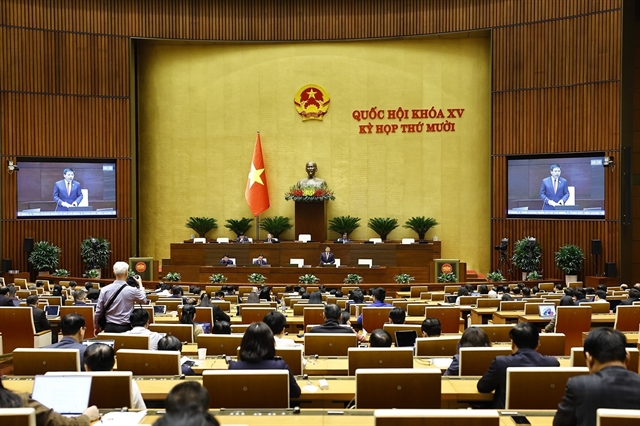
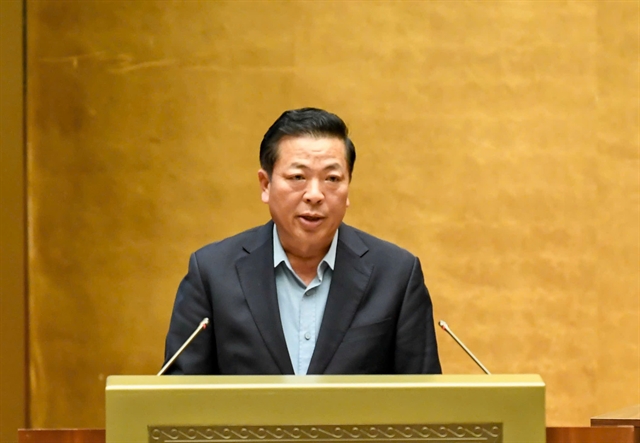
| The National Assembly discusses special mechanisms for Hà Nội, Đà Nẵng and HCM City on Monday. — VNA/VNS Photo |
HÀ NỘI — The National Assembly (NA) is moving to expand so-called 'special mechanisms' for Hà Nội, Đà Nẵng and HCM City, as lawmakers press for decentralisation to unlock growth in the country’s biggest urban centres.
During a session on Monday, deputies debated revisions to Đà Nẵng’s existing special policy framework, a new resolution on major projects in Hà Nội, and amendments to Resolution 98 governing pilot mechanisms for HCM City.
For Đà Nẵng, lawmakers reviewed proposed changes to Resolution 136, which governs the city’s urban administration and special development policies following recent territorial expansion.
Several deputies argued bluntly that the current framework is too tightly bound by sectoral laws to deliver meaningful breakthroughs.
Deputy Dương Khắc Mai of Lâm Đồng recalled that when the NA first granted Đà Nẵng its special status, the city was meant to serve as the central region’s growth engine.
Yet, many key decisions, he said, still require approval from central authorities – hollowing out the promise of local autonomy.
"Once it is 'special', it must be strong enough to break through," he said, calling for exceptions to existing laws to be written directly into the new resolution instead of being diluted through cross-references to sector legislation.
Lawmakers also questioned the practice of listing specific projects inside the resolution itself. They warned that as new investment needs arise, a closed list would force repeated amendments, slowing development and costing the city opportunities.
Several urged an open mechanism instead, in which projects meeting broad criteria could proceed without further legislative permission.
Much of the Đà Nẵng debate focused on transit-oriented development (TOD), seen as central to the city’s long-term growth strategy as it expands into a much larger centrally governed municipality.
Under the draft, Đà Nẵng would gain wide latitude to shape technical planning standards in TOD zones, develop multi-functional land use around stations and depots and retain all revenue generated in these areas for reinvestment in urban rail.
Lawmakers said this aligns with international practices and could help form new urban growth poles.
Yet, the warnings were as strong as the endorsements. Deputy Nguyễn Tâm Hùng of HCM City cautioned that without parallel investment in social infrastructure and firm population controls, TOD could trigger disorderly development.
He and others stressed that land and finance mechanisms must be fully transparent, and that accountability, especially of People’s Councils, must be strengthened.
Concerns also surfaced over proposals allowing private capital to be used for site clearance under TOD schemes. Several deputies warned that unclear rules could open legal loopholes and push fiscal risks back onto local budgets.
In a separate debate, the NA turned to a draft resolution on special mechanisms for major projects in Hà Nội aimed at clearing procedural bottlenecks that have stalled development under the Capital Law.
Deputy Nguyễn Thị Lan of Hà Nội said many of the city’s largest infrastructure schemes have slipped behind schedule because ordinary procedures are too rigid.
A tightly controlled pilot, she argued, is the right way to remove immediate obstacles while testing longer-term institutional reform.
She highlighted the draft's three pillars: stronger decentralisation within constitutional boundaries, targeted relief for chronic bottlenecks in planning and land recovery, and higher-than-normal compensation and resettlement standards to protect residents.
Other deputies supported a five-year pilot covering seven policy areas, from planning and construction to land and finance.
But they warned that the resolution must stay focused on truly necessary exceptions, avoid overlapping with existing laws and spell out clear lines of responsibility to prevent corruption and abuse of power.
Several also pressed for simpler, faster procedures. Vague language in the draft law, one deputy warned, risks replacing today’s bottlenecks with tomorrow’s.
The debate over amendments to Resolution 98 on HCM City revealed even stronger ambitions. Lawmakers agreed that Việt Nam’s economic hub needs far greater flexibility if it is to continue driving national growth.
Deputy Nguyễn Văn Lợi of HCM City criticised rigid provisions that spell out project lists and fixed compensation ratios.
"When reality changes, localities are forced to come back and ask for adjustments again; that wastes time," he said, urging lawmakers to set broad frameworks and let cities decide within them.
He outlined five priorities: greater freedom to adjust planning after administrative mergers, full local authority over intra-regional projects, retention of surplus and land revenue for reinvestment, tougher anti-corruption enforcement along with decentralisation and special talent policies for key sectors.
Deputy Hoàng Văn Cường of Hà Nội went further, arguing that HCM City needs its own broad institutional space instead of wearing the same 'one size fits all' legal framework as other provinces.
He backed a mechanism that would allow the city, when necessary, to adopt measures that diverge from existing law under NA oversight, effectively turning HCM City into the nation's institutional laboratory.
Others urged that special mechanisms should extend beyond HCM City itself into the wider southeastern region, especially for regional rail links connecting the city with Long Thành International Airport in neighbouring Đồng Nai.
As in Đà Nẵng, TOD and land finance dominated much of the HCM City debate. Deputies broadly supported allowing the city to use public funds for compensation and resettlement in TOD zones and to retain all TOD-related land revenue for rail investment.
But they repeatedly warned that land valuation, auctions, BT contracts and revenue use must be independently audited and fully disclosed.
Several lawmakers pushed for mandatory social impact assessments for each TOD area, clear population density controls and ring-fenced infrastructure funds, citing Tokyo and Hong Kong as reference models.
In terms of investor selection, deputies argued that financial muscle alone is no longer enough. Strategic investors, they said, must also be chosen for the technology, solutions and long-term value they bring, backed by binding investment agreements and a dedicated city authority to oversee implementation. — VNS
Politics & Law
 Politics & Law
 Politics & Law
 Politics & Law
 Politics & Law
 Politics & Law
 Politics & Law
 Politics & Law
 Politics & Law
 Politics & Law
 Politics & Law
 Politics & Law
 Politics & Law
 Politics & Law
.jpg) Politics & Law
Politics & Law