 Opinion

City Chamber Orchestra of Hong Kong presents NORDIC SEASONS
1.
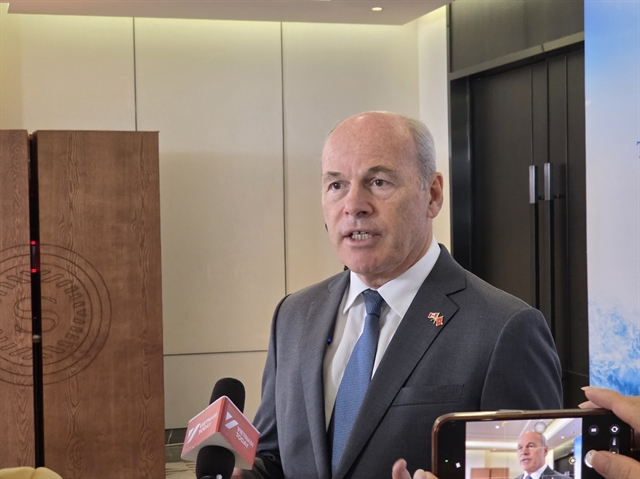 |
| Canadian Ambassador to Việt Nam Jim Nickel. — VNS Photo Trọng Kiên |
HÀ NỘI — International law, particularly the 1982 United Nations Convention on the Law of the Sea (UNCLOS), should remain the foundation for interventions and managing differences and risks in the East Sea, Canadian Ambassador to Việt Nam Jim Nickel has said.
Speaking on the sidelines of the 18th International Conference on the South China Sea (known in Việt Nam as the East Sea) in Hà Nội, Ambassador Nickel said the annual conference provided an important forum for countries and partners to discuss ways to manage differences, strengthen connectivity and promote cooperation among the coastal countries in the East Sea, as well as countries from further abroad like Canada.
The conference, organised by the Diplomatic Academy of Việt Nam under the theme 'Competition, Connectivity and Cooperation: The South China Sea and the Regional Maritime Order', brought together experts, policymakers and representatives from countries inside and outside the region.
For Canada and many other countries, Ambassador Nickel said, an essential principle is that issues in the East Sea should be managed in accordance with international law, with UNCLOS at the centre.
He stressed that respect for international law was central not only to the management of maritime disputes, but also to broader efforts to reduce risks and de-escalation.
The ambassador noted that the East Sea is closely connected to a wide range of issues beyond territorial and maritime disputes, including climate change, environmental protection, biodiversity conservation and the sustainable use of marine resources.
The East Sea is also a major hub for communications, energy and electricity networks, while a very significant share of global trade passes through its waters.
Ambassador Nickel underscored that where risks and differences exist, countries need to prioritise peaceful approaches to managing disputes and preventing incidents from developing into larger crises.
He also underlined the importance of sustained diplomatic engagement and consultation among countries in the region and their partners.
In this context, ongoing negotiations on a Code of Conduct in the South China Sea (COC) between China and ASEAN represent an important process, the Canadian Ambassador remarked, as they demonstrate the value of dialogue and diplomatic engagement in managing differences.
Canada sees Việt Nam as important maritime partner
Nickel said Canada was pleased to work with Việt Nam to support peace and stability, strengthen resilience and promote economic development in the region.
He described Việt Nam as an important maritime actor, noting that the country's livelihoods, economic activities and even aspects of its national identity are closely connected to the sea.
The two countries are already working together in areas related to maritime transport, with a focus on making shipping safer and more secure while also moving towards greener and cleaner operations.
Energy transition is another area with potential for closer cooperation, he said.
Canada's support for the energy transition in Việt Nam can contribute to reducing climate-related risks and cutting carbon dioxide emissions, issues that are closely linked to the health and resilience of the marine environment.
Climate change is particularly relevant to Việt Nam, which is prone to severe storms, flooding and landslides that can damage infrastructure, agriculture and livelihoods.
Nickel said Canada was working with Việt Nam to strengthen climate resilience through cooperation in areas including agriculture, infrastructure and other sectors affected by chaotic weather. — VNS
Opinion
 Opinion
 Opinion
 Opinion
 Opinion
 Opinion
 Opinion
 Opinion
 Opinion
 Opinion
 Opinion
 Opinion
 Opinion
 Opinion
 Opinion