.jpg) Opinion
Opinion
Multi-channel approach pushed to widen market access for local goods
1.
 |
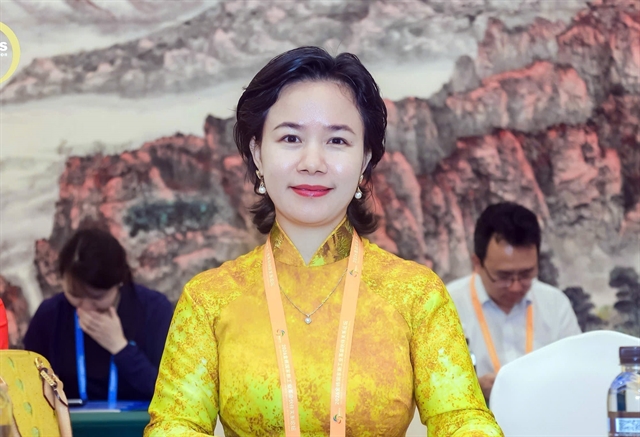
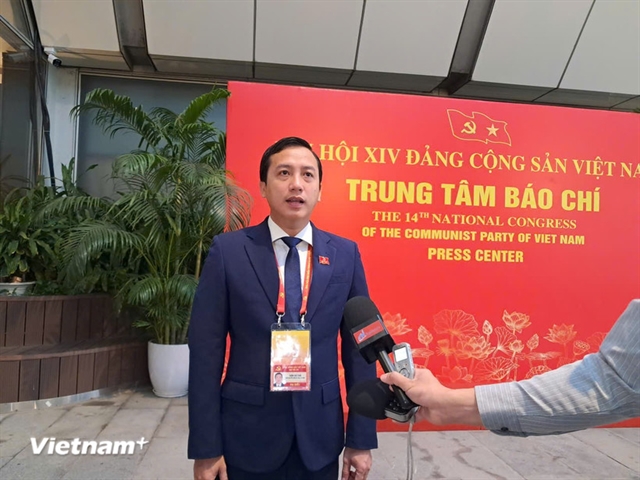
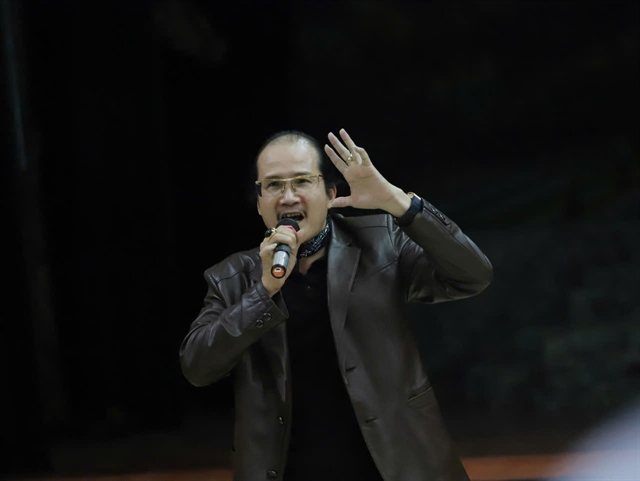
| Dương Đức Huy, Head of the Provincial Commission for Information, Education and Mass Mobilisation of Lào Cai Province. VNA/VNS Photo |
On the occasion of the 14th National Party Congress, Vietnam News Agency spoke with Dương Đức Huy, Head of the Lào Cai Provincial Party Committee's Commission for Information, Education and Mass Mobilisation, about new expectations for the development of border areas and ethnic minority communities.
As an official working in a mountainous border province, how do you assess the country’s achievements over 40 years of Đổi mới (Renewal) and the outcomes recorded during the 2020–2025 period?
After 40 years of Đổi mới, Việt Nam has become a developing country with upper-middle income status while firmly maintaining its socialist orientation. At the same time, the country’s role, position and international standing have been increasingly enhanced.
The scale of the economy has expanded remarkably, from a GDP of approximately US$26.3 billion in the early 1980s to $514 billion in 2025, ranking 32nd globally. Average GDP growth reached 6 per cent per year during 2016–2020, and 6.2 per cent during 2021–2025, with several periods recording growth of around 7 per cent annually, placing Việt Nam among the fastest-growing economies in Southeast Asia.
The economic structure has undergone a strong transformation. Whereas agriculture, forestry and fisheries accounted for the largest share of GDP in 1986, industry and services have now become the main drivers of growth. The agricultural sector’s share has declined from over 40 per cent to below 15 per cent of GDP, while industry and services continue to expand.
In external relations, Việt Nam has established trade ties with more than 230 countries and territories, joined numerous free trade agreements, emerged as one of the world’s 20 largest trading economies, and become an attractive destination for foreign direct investment (FDI).
Thanks to sustained growth, Việt Nam achieved the United Nations Millennium Development Goals ahead of schedule, particularly in poverty reduction and social welfare. The poverty rate fell from over 58 per cent in the early 1990s to 1.1 per cent in 2025, and the country has been recognised by the United Nations as a successful model for poverty reduction.
The Human Development Index (HDI) has steadily improved, reflecting progress in education, life expectancy and quality of life. Việt Nam’s Happiness Index climbed 48 places, from 94th out of 149 countries in 2016 to 46th in 2025. Universal primary education was achieved in 2000, lower secondary education in 2010, and universal preschool education for children under five in 2017.
The most notable and breakthrough achievement of the 13th National Party Congress term was the administrative reorganisation. Nationwide, administrative units were reduced by 46 per cent at the provincial level, 100 per cent at the district level, and 66.9 per cent at the commune level. This was not merely a mechanical merger of administrative units, but a profound reform with unprecedented objectives, marking a significant milestone in the country’s development process.
As an official working in Party communications, what expectations do Party members and people of Lào Cai have for the 14th National Party Congress?
The 14th National Party Congress takes place at a pivotal moment. This congress is expected to crystallise the collective wisdom, will and aspirations of the entire nation, reaffirming the determination to propel the country forward and accelerate development in a new era.
Party members and people in Lào Cai hope that the congress will continue to prioritise institutional improvement, achieve breakthroughs in science and technology, promote innovation and digital transformation and advance economic development in tandem with social security, environmental protection and the preservation and promotion of ethnic cultural identities. They also expect strengthened national defence and security, and the maintenance of social order and safety.
In particular, there is a strong desire for major Party and State policies to further focus on the grassroots level, with priority given to investment in transport infrastructure, education, healthcare and digital infrastructure, thereby creating favourable conditions for people and businesses to confidently engage in production, business and long-term investment.
Party members and people in Lào Cai also place high expectations on building a clean, strong and comprehensive Party and political system. They hope the 14th Party Congress will select truly exemplary leaders, while continuing to develop a grassroots-level cadre contingent with sufficient integrity, competence and dedication. These officials are close to the people, listen to public opinion, and are accountable to the people.
As the country implements sweeping reforms in institutions, organisational structures and state governance, people from localities hope administrative reform will become more substantive, reducing bureaucratic burdens, enhancing transparency, and improving the effectiveness and efficiency of state management to better serve the legitimate needs of citizens and enterprises.
Ethnic communities in Lào Cai also expect the 14th Congress to continue focusing on building a national cultural value system and standards for Vietnamese people in the new era, with greater emphasis on educating ideals, ethics and lifestyles, strengthening political resolve, patriotism and aspirations for contribution among the younger generation.
Within the overall strategy, economic development must go hand in hand with harmonious cultural, social and environmental development. Special attention should be given to border areas and ethnic community regions, viewing their development not only as a matter of social welfare but also as a strategic task related to national defence, security and sustainable development, while promoting culture as an intrinsic driving force of growth.
The Party organisation and people of all ethnic groups in Lào Cai are filled with determination and confidence. United and creative, they are committed to resolutely implementing the Resolution of the 14th National Party Congress and the Resolution of the first Provincial Party Congress, striving to achieve strong breakthroughs and joining the whole country in confidently entering a new era of development – an era of prosperity, strength, civilisation and happiness. — VNS
Opinion
 Opinion
 Opinion
 Opinion
.jpg) Opinion
Opinion
 Opinion
 Opinion
 Opinion
 Opinion
 Opinion
 Opinion
 Opinion
 Opinion
 Opinion
 Opinion